Albania, divided into 3 economic regions - Analysis/ Uneven development, the center dominates

The Albanian economy is being divided into three regions, which do not have equal rates of development.
Referring to an analysis conducted by ALTAX, the national growth of 3.8% per year has hidden a clear geographical division between regions, with a strong economic centralization in the Central Region and especially in Tirana, which today generates 43.8% of GDP and 77% of the country's tax revenues.
The analysis is based on the latest INSTAT data and a 23-year historical series, showing that territorial inequality has increased to a record level. According to the study, the Gini Index for the distribution of regional GDP has reached 0.42, while the difference between GDP per capita in Tirana and Kukës has increased to a ratio of 2.5 to 1. In addition, the coefficient of variation has marked a continuous increase, confirming that the regions are not converging, but are systematically moving away from each other. According to the findings, Albania today functions as three separate economies: the Center, with a modern structure dominated by services and construction; the North, affected by a deepening demographic gap and light industry, exposed to climate shocks and global prices; the South, with high tourism potential, but still blocked by a large traditional agricultural base.
The impact of migration is also visible in the labor market, with unemployment twice as high in some northern counties and significant emigration of the active population.
ALTAX emphasizes that the budgetary policies of the last decade have strengthened the cycle of centralization, as over 60% of capital investments continue to be concentrated in the Center. This leads to a closed circuit where Tirana grows faster, attracts more businesses, population and taxes, while the North and South lag behind with limited development capacities.
The report warns that, if trends continue, by 2030 regional inequality could reach the highest levels in Europe, with consequences for the country's social sustainability, migration and territorial cohesion.
To reverse this trend, ALTAX proposes a series of clear measures, tested in other European countries: the creation of a national equalization fund, special economic zones for the poorest regions, targeted investments in infrastructure, dual vocational education according to the German model, and the development of integrated tourism in the South through public-private schemes.
ALTAX underlines that if the trend does not reverse, the country's future growth risks remaining concentrated and fragile, while with coordinated actions Albania can enter a more sustainable and resilient development phase across the entire territory.
Albanians' money moves towards government bonds - AFSA: Investment funds number 41 thousand members. Net assets increase by 11%
During this year, Albanians have invested more money in government securities through investment funds than in 2024. According to data from the Financial......
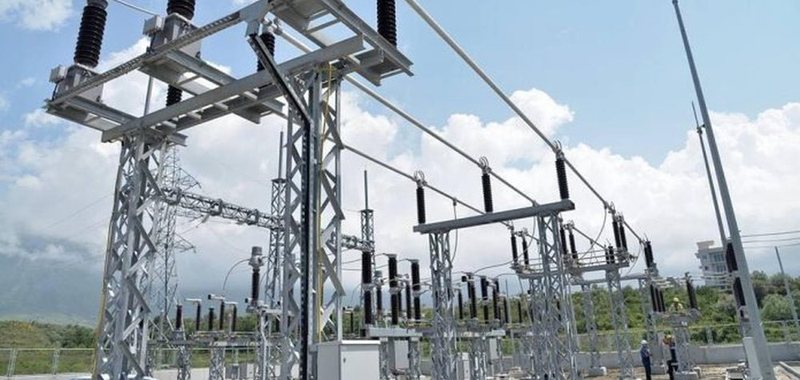
Energy, new distribution tariffs - ERE approves the decision, keeps them unchanged until April
The Energy Regulatory Authority has decided to leave the current electricity distribution service tariffs in force until April 2026, making no changes to the......

E-qeverisja, në rritje gjatë vitit 2025/ Qytetarët marrin më shumë informacion online dhe rrisin shkarkimet e formularëve
Përdorimi i e-qeverisjes në Shqipëri ka shënuar rritje të konsiderueshme gjatë vitit 2025, teksa qytetarët po orientohen gjithnjë e më shumë drejt zgjidhjeve......

"Immigration remains an opportunity for Europe" - Spanish Minister: Data reflects positive contribution
Spain's Economy Minister, Carlos Cuerpo, stated that immigration remains an economic opportunity for the European Union, even though the debate around it is......
EU, 100 million euros for Albania until 2027 - IPA III, the fund with a focus on justice, economy and green transition
The European Union will finance Albania with a fund of 100 million euros for the period 2025-2027, within the framework of the IPA III program. The financing......

Artificial Intelligence is declared “Person of the Year”! - “Time” Magazine Honors Architects of Innovative Technology
Time magazine named the architects of artificial intelligence as its "Person of the Year," citing their ability to usher in the era of thinking machines with......
48 "powerful" projects, ready for implementation - Unique list/ What are the major investments that are taking "life" in Albania?
120 major investments in Albania are part of the Unique List of Projects of National Importance. The list contains public investment projects, which......

Cadastral services, now with online payment - Property procedures become faster
Citizens now have the opportunity to apply and make payments for a range of Cadastral services completely electronically, through the state portal e-Albania.......