Border blockade hits Kosovo businesses and raises fears of higher prices

The Kosovo company "Relux", which produces paints and facades, is experiencing immediate consequences from the blockade of border points between several countries in the region and the EU: its products to the UK have not been able to depart as planned.
The company's director, Ramiz Gashi, tells Radio Free Europe that he is a regular exporter and, according to the agreement, the products should arrive at their destination within this week. Otherwise, the contract risks being violated, renegotiated or failing altogether.
"We could lose this buyer, which is potentially the most important one we have," Gashi tells Radio Free Europe.
He warns that delays could also damage contracts with other partners - in Germany and Croatia - thus jeopardizing investments made with bank loans that must be repaid within certain deadlines.
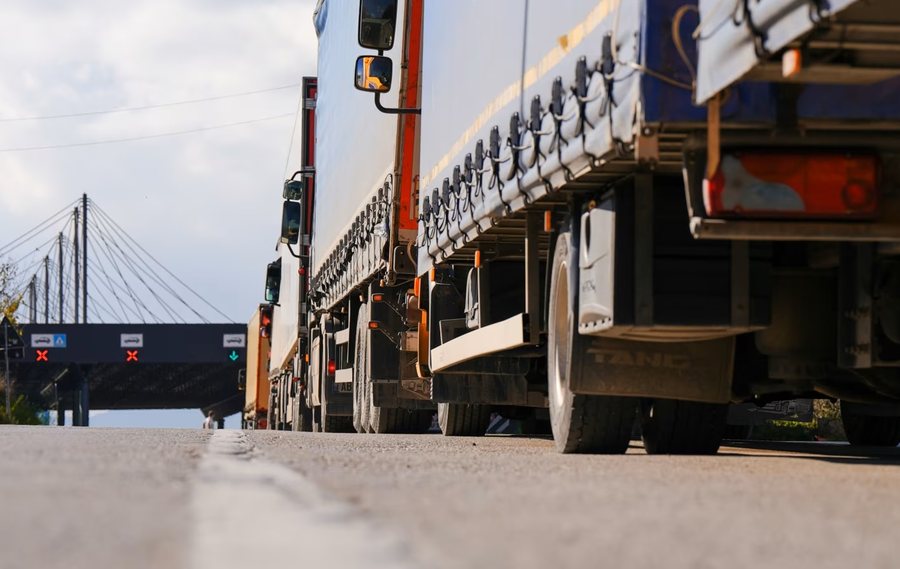
Transporters from Serbia, North Macedonia, Bosnia and Herzegovina, and Montenegro blocked several border crossings since noon on January 26, halting the flow of goods to the European Union's Schengen area.
Their protest is against the EU's new entry-exit control system, known as the EES.
This system provides that non-Schengen citizens can stay in this area for a maximum of 90 days within 180 days, but, according to protesting carriers, this period is not enough - especially for those traveling to more distant countries - and therefore causes economic losses and the risk of deportation.
They demand that transport companies be exempted from this rule and warn that the blockade will last seven days if a solution is not found within this period.
Kosovo does not participate in the protest, but feels its consequences, as most of its imports and exports are carried out through transit through these countries.
Furthermore, Kosovar drivers are also affected by the EES system.
The case of the company "Kalaja Epox" in Shtime shows the consequences of the blockade even on imports.
Ruzhdi Rexhaj from this company says that the order of epoxy resins from an Austrian company, already paid for and shipped, may be delayed or fail.
"What should we tell customers? We have already told them that the ordered goods will be loaded on January 27 and will arrive by the end of the week. Now, we don't know when it will arrive here, while we also have projects that we have started, hoping for this material," Rexhaj tells Radio Free Europe.
According to him, any delay also damages the company's reputation and can result in fines according to contracts.
Risk to contracts and prices
To address the situation, the Kosovo Chamber of Commerce and Industry wrote a letter to the President of the European Commission, Ursula von der Leyen, warning that the week-long protest could cause further consequences for Kosovo companies - including jeopardizing contracts with European partners.
The director of this chamber, Kushtrim Ahmeti, tells Radio Free Europe that the longer the blockade lasts, the greater the damage to companies.
He warns that delays and obstacles in transit not only affect businesses that export and import, but can also be reflected in consumers.
"... it could also have an impact on product prices in Kosovo, because demand for them increases," adds Ahmeti.
According to him, the enormous import of goods also means the importation of crises.
"Whatever happens in the countries you import from, it automatically has an impact. This is extremely problematic," he says.
Kosovo is an importer of almost all products - from food to construction materials and textiles.
According to Customs data, last year's imports amounted to over 7 billion euros, while exports were around 942 million euros - a balance that makes the country sensitive to any obstacles in transit.
Based on this, economic expert Berim Ramosaj, professor at the University of Pristina, says that the border blockade creates direct pressure on the local market.
"It reflects badly on the economy, it also reflects on consumers, because prices are likely to increase," he tells Radio Free Europe.
Importing crises
With its heavy dependence on imports, Kosovo has previously experienced the consequences of external crises.
One of the most prominent examples was 2022, when inflation reached around 14 percent, as a result of disruptions in the global supply chain - first from the COVID-19 pandemic and then from the war in Ukraine.
In the following years, inflation trended downward, but last year it returned to growth, reflecting ongoing market pressures.
According to data from the Kosovo Agency of Statistics, domestic producer prices, in the period January-September 2025, compared to the same period in 2024, increased by 5.5 percent.
Between import dependence and lack of protective mechanisms
Economic experts estimate that no country - including Kosovo - can completely avoid importing certain products.
However, according to them, the high level of import dependence makes the country particularly vulnerable to external crises.
Ramosaj says that Kosovo, as a small country with a weak trade balance and a low level of European integration, will continue to be more of a consumer of crises than a factor that produces them.
"We are such a small country that we are not able to export crises, but always pick up the bills of others. This is the nature of our position - whether in terms of economic development, politics or the relations we have with European Union countries," says Ramosaj.
According to him, this reality should serve as a signal for the country's institutions to intensify efforts towards European integration and the creation of more sustainable economic policies.
He emphasizes that to mitigate the impact of imported crises, well-planned mechanisms are needed that do not harm the free market economy.
He also mentions that many countries have found ways to protect local production, investors and consumers, whether through customs, tariff measures or subsidies.
"We still don't have these policies well regulated," he says.
Along the same lines, Kushtrim Ahmeti, from the Kosovo Chamber of Commerce and Industry, emphasizes that the Government should consider concrete measures to protect consumers and local producers.
According to him, one of the options could be the temporary suspension of Value Added Tax (VAT) for essential and daily consumption products.
He emphasizes that institutions should also stimulate the local production of these products.
"Domestic demand for essential products, which are necessary for every citizen, should be covered at least 50 percent by local production," he says, adding that producers need a clear support strategy, through grants for technology, investment, and protection of their products in the market.
Radio Free Europe contacted the acting Government of Kosovo about the issue of border closures on January 26, but did not receive a response.
In some cases, it has allocated subsidies to producers, but they have failed to generate significant growth in domestic production.
The EU announced that it is working on facilitations that would allow truck drivers and some other professionals longer stays in the Schengen Area.
The citizens of Kosovo would also directly benefit from such a decision.
"...because companies are forced to hire new drivers every three months," Lulzim Rafuna, president of the Kosovo Chamber of Commerce, told Radio Free Europe.
Bekim Bislimi/Radio Free Europe
EU funds for local development, Elbasan a beneficiary for tourism and the environment
Elbasan is ranked among the regions most benefiting from European Union funds within the IPA Program, specifically the Albania - North Macedonia Cross-Border......
Fiscal Cadastre approved, Municipalities will administer the building tax as of February 10, 2026 (FULL DECISION)
At today's meeting, the Council of Ministers approved the decision "On the creation of the state database "Central Register of the Immovable Property......
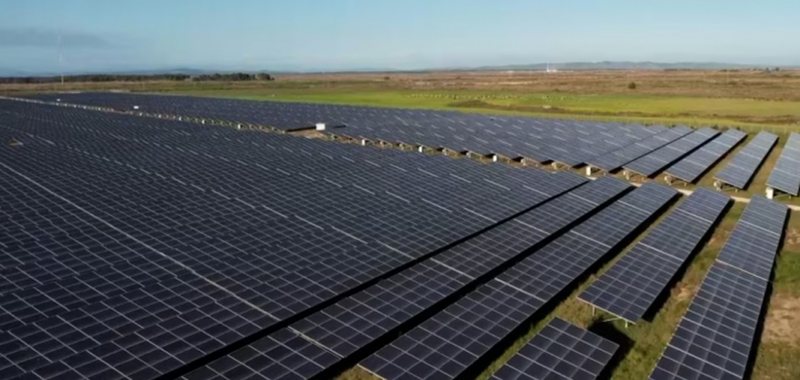
Photovoltaic power plant in Kavaja, Government approves project with installed capacity of 95 megawatts
In its last meeting, the government approved the construction of a photovoltaic power plant and auxiliary works in Synej, Kavaja Municipality. The project......
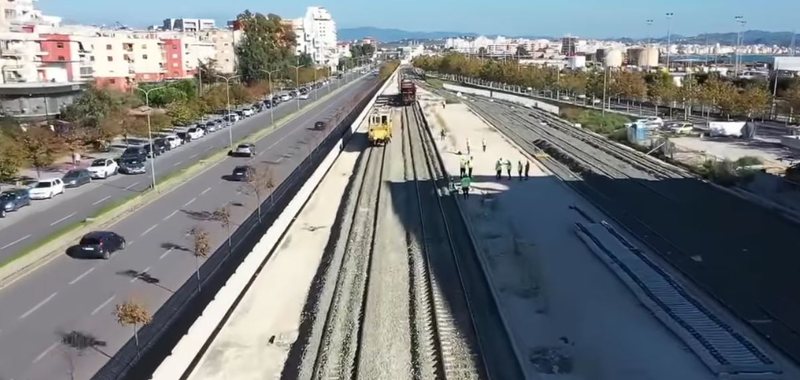
Vendimi i Qeverisë, 377 milionë lekë shtesë për shpronësimet e Hekurudhës Durrës–Tiranë–Rinas
Qeveria ka miratuar ndryshime dhe shtesa në vendimin për shpronësimet e pronarëve të pasurive të paluajtshme që preken nga projekti i rehabilitimit të linjës......
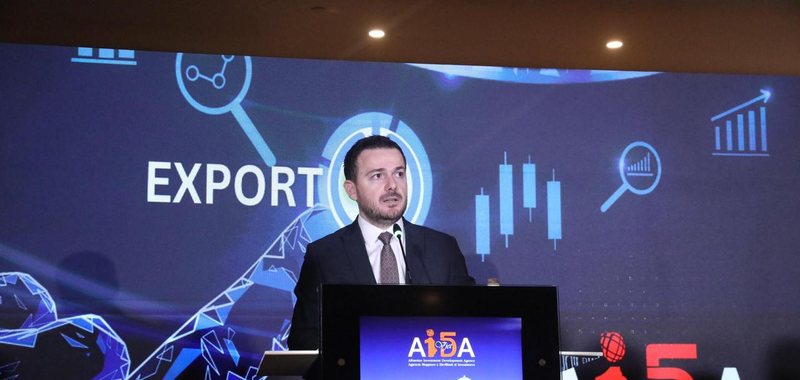
ExportON 2026, Salla: Synojmë që në 2030 të kemi 1 miliard USD eksporte bujqësore
Ministri i Bujqësisë tha në prezantimin e platformës EksporOn se dikasteri I tij ka si synim që deri në vitin 2030 të kemi 1 miliard USD eksporte bujqësore.......
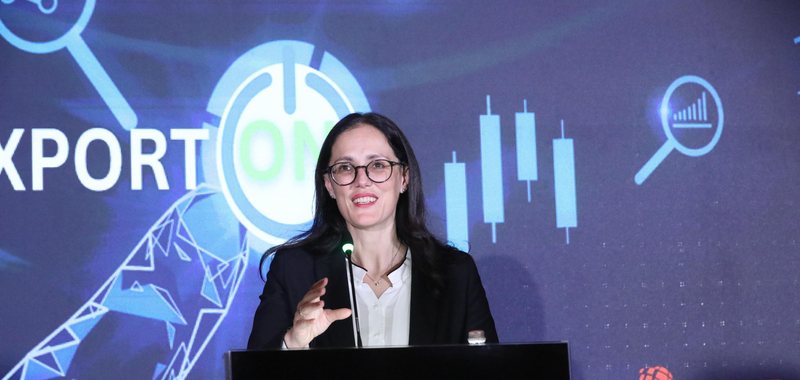
Ibrahimaj: Exports and domestic production, at the center of the new economic development model
The Minister of Economy and Innovation, Delina Ibrahimaj, in the presence of Prime Minister Edi Rama, participated in the "Export On" conference, where she......
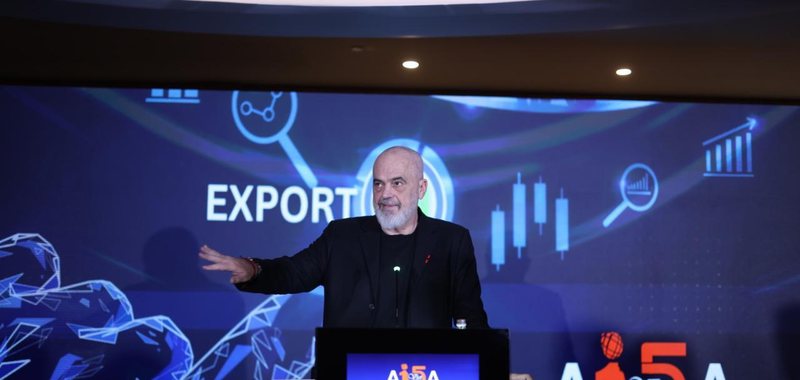
ExportOn 2026, Rama: Prodhimet ‘Made in Albania’ pasaportë për në BE, mbështesim eksportet
Kryeministri Edi Ramna ishte sot në prezantimin e platformës ExportOn, ku premtoi mbështetje për eksportuesit dhe kërkoi përshtatjen e këtij sektori me......

Awareness campaign on personal data protection in schools - Commissioner: Investing in data protection is an investment for the future
On International Data Protection Day, students from the Red School in Tirana visited the Commissioner's Office to learn more about personal data protection......