The Thessaloniki-Skopje oil pipeline resumes operations - It had been suspended since 2013

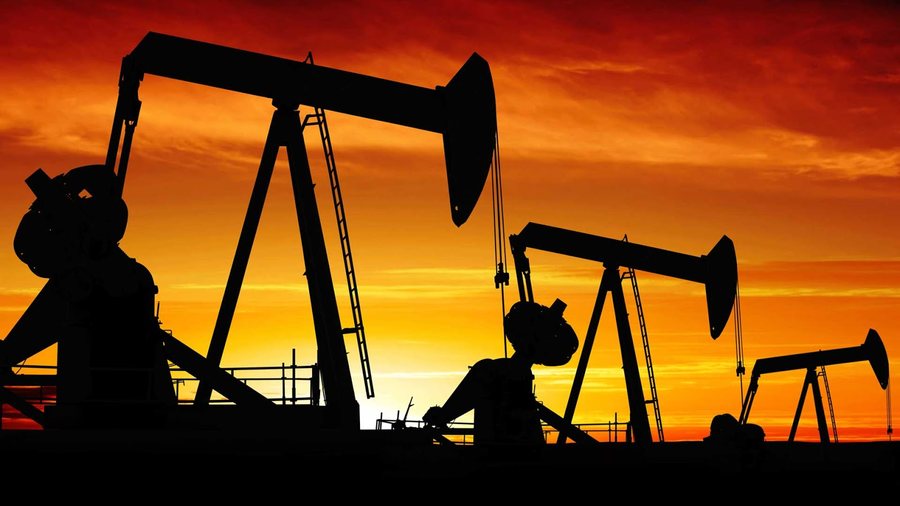
After more than ten years of interruption, the Thessaloniki-Skopje oil pipeline is returning to operation, after in 2013 the Greek company "Hellenic Petroleum", today HELLENiQ Energy, took it out of use, considering it unprofitable.
The resumption of the transport of oil by-products to North Macedonia is expected to occur by the end of the year.
The construction of the oil pipeline was part of the 1999 agreement with the Greek company "Hellenic Petroleum" for the purchase of the only oil refinery in the country, OKTA.
Now this pipeline system will be called a product pipeline, as it will only transport processed oil products from Thessaloniki to Skopje, while the oil pipeline usually transports crude oil from ports or oil fields directly to refineries, where it is then processed.
The Thessaloniki-Skopje oil pipeline is about 213 kilometers long, with a capacity to transport 2.5 million tons of fuel per year, from the terminals of "Hellenic Petroleum" to the OKTA refinery in Skopje, where the fuel will be stored.
According to the agreement between the two governments, the transportation of fuel will cost 20 euros per ton. If the pipeline operates at full capacity of 2.5 million tons per year, the total value of the service would reach about 50 million euros per year.
The revenues will be shared between the government of North Macedonia, which through the state-owned company "Naftovod" has 20% of the shares in the joint company "Vardaks", where the largest shareholder is "Hellenic Petroleum" with 80% of the shares.
The construction of the oil pipeline was completed in 2002, but ten years later, in 2013, oil processing at OKTA completely stopped.

Ibrahimaj: 12 million euros for youth employment in 2026, doubling of funds for training and entrepreneurship
The Minister of Economy and Innovation, Delina Ibrahimaj, participated today in the conference "YOUTH 2030 - Employment, Skills, Entrepreneurship", a meeting......

Employment promotion programs - Rama: 2200 boys and girls benefit from the government's youth guarantee for 4 years
Prime Minister Edi Rama, in a meeting with young people employed by employment promotion programs, shared some data about Albania today and the great......
Who bears the burden of external debt? - BoA: The government leads with 4.75 billion euros. In second place, other sectors
Albania's external debt continues to remain divided between the four main sectors of the economy. The sector that holds the largest share is the General......

The share of employees with minimum wage increases/ The third quarter brings surprises in the labor market
The Albanian labor market has seen a clear shift in the wage structure over the past two years. Lower wages have been shrinking rapidly, the middle class has......
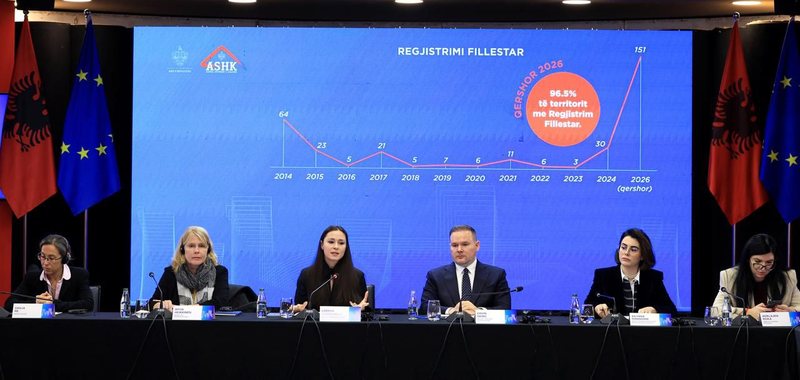
Cadastre, completely digital by the end of 2026 - 10 automated services and direct payment from e-Albania
The State Cadastral Agency is expected to transform into a fully digital institution by the end of next year. Director General Lorena Goxhobelli, at a......

Do Albanian entrepreneurs know how to track European funds? - Sefa: Very few businesses access and manage EU funding
The allocation of funds from the European Union aims to help Albanian businesses raise standards and adapt to the European market. But how prepared are these......
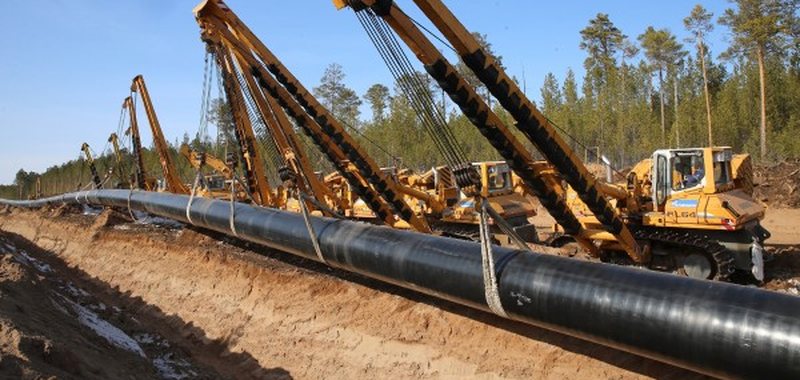
10-year gas plan - ERE postpones approval again, requests additional documents from ALBGAZ
The Energy Regulatory Authority has postponed the approval of the 10-year investment plan of the state-owned company ALBGAZ, due to the incomplete completion......
Albania, divided into 3 economic regions - Analysis/ Uneven development, the center dominates
The Albanian economy is being divided into three regions, which do not have equal rates of development. Referring to an analysis conducted by ALTAX, the......