Spain, at an energy crossroads - From the success of solar and wind, to the battery revolution


Spain is among the European countries that started the transformation of its energy system towards renewable sources early. Continuous investments in solar and wind energy have meant that today around 60% of the country's electricity comes from renewable sources, a level higher than the European Union average and much higher than the global average.
This policy has brought concrete results. Electricity costs have decreased significantly and Spain has positioned itself as one of the European economies with the greatest potential for clean energy production.
Natural advantages have also helped: the country has plenty of sun, wind, large areas for energy parks and a significant network of reservoirs for hydroelectric power generation. But the success so far is creating a new problem: Spain is producing too much energy at times when demand is low and does not yet have enough capacity to store it.
The rapid growth of solar capacity has created a surplus of energy, especially during the hours of greatest sunshine. As a result, market energy prices have increasingly entered negative territory. As of September 4, Spain had recorded 681 hours of negative energy prices during the year, more than in all of 2025.
At first glance, this is good news for consumers. Cheap energy lowers bills and makes the economy more competitive. But for investors and energy companies, the situation is more problematic. When prices fall too low, new renewable energy projects become less profitable. Companies have less certainty about investing in new solar and wind farms, while some projects have lost value.
So the paradox is clear: the more clean energy Spain produces, the more difficult it becomes to preserve the economic value of this energy.
The key solution is energy storage. Batteries can absorb excess energy during the day, when solar production is at its peak, and return it to the grid in the evening, when demand increases and solar production decreases.
They can also play an important role in stabilizing the electricity grid, reacting almost instantly to changes in production and consumption.
But this is where Spain is still behind its targets. In 2025 the country had around 400 MW of battery capacity, while it aims to reach 22.5 GW by 2030. So the current capacity represents less than 2% of the target.
The government has begun to speed up permits and subsidize energy storage projects. About 2 billion euros have also been allocated for programs that include storage systems. However, funding alone is not enough. Batteries are still more competitive for several-hour storage, while technologies that can store energy for much longer periods remain expensive.
Spain's problem is not just a lack of batteries. The electricity grid also needs massive investment. Limited grid capacity is hindering the connection of new renewable energy projects, batteries, and data centers.
The government has planned around €13.6 billion in grid investments by the end of the decade, with the aim of significantly expanding transmission capacity. This is essential because renewable energy cannot expand indefinitely without an infrastructure to transport and distribute it to where it is needed.
The problem became even more apparent after the massive blackout in the Iberian Peninsula last year, which left millions of people without power for hours and raised questions about the grid's ability to cope with rapid frequency changes in a system with a high percentage of renewable energy.
Spain's challenge is not just to produce more clean energy, but to create demand for it. Only about 25% of the Spanish economy is electrified. The rest continues to rely on fossil fuels, including for transportation, heating and various industrial processes.
Electrifying cars, homes and industry could create new demand for the abundant energy that Spain is producing. This would create a virtuous cycle: more demand would justify more investment in the grid, while a more robust grid would enable more renewable energy and storage systems.
Spain has gained a significant advantage by investing early in solar and wind. But the model that made it a leader in renewable energy is entering a new phase. The challenge is no longer simply to produce clean energy, but to store, transport and consume it efficiently.
Massive batteries, grid modernization, and the electrification of the economy will be the three pillars of the next phase. If these investments keep pace with the development of solar and wind power, Spain could transform from a leader in clean energy production into a European model of an integrated and flexible energy system.
Conversely, the lack of storage capacity and infrastructure could turn its success into a paradox: lots of clean energy, but not enough capacity to use it when needed.

Germany risks gas - Reserves are at the lowest level in 15 years
Germany is entering the winter season with gas reserves at worrying levels. The German gas storage industry association, INES, warns that the country could......

The French, on alert for the summer - Heat and drought hit production
French wine production is expected to be among the weakest in three decades, as extreme temperatures and drought have hit vineyards across the country......

Super anti-carbon plant - Netherlands opens largest facility in Europe. 800 thousand tons of CO₂ per year
One of Europe's largest carbon reduction projects has officially started operations in the Netherlands. Yara's Sluiskil plant has become the largest......

Public transport/ 116 entities benefit from around 120 million lek in compensation
The Tax Administration announces that in support of public transport operators, it has realized 100% of the allocated fund of 119.7 million lek, to......

46 billion euros for the economy - Beijing strengthens state-owned banks and insurers
China is undertaking a major intervention in its financial system, advancing a package of 360 billion yuan, about 46.1 billion euros, to strengthen banks and......
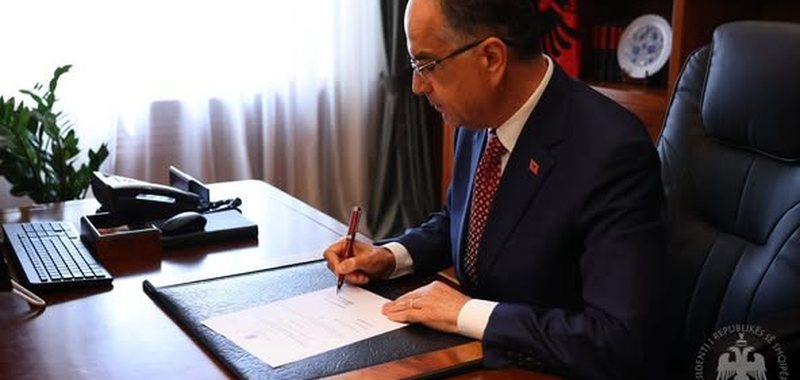
Begaj decrees the appointment of Klodiana Spahiu as Minister of Health and Social Welfare
The President of the Republic, Bajram Begaj, today decreed the dismissal of Evis Sala from the position of Minister of Health and Social Welfare. Also......

Vertical Gas Corridor - Expansion connects the Balkans to European resources and markets
North Macedonia has signed the declaration to join the Vertical Gas Corridor, a regional initiative aimed at diversifying gas supplies and strengthening......

"AI, a danger to humanity" - UN calls for urgent controls on advanced Artificial Intelligence
A stark warning comes from the United Nations about the development of artificial intelligence. The UN's human rights chief, Volker Türk, declared that......