Ownerless Apartments - Lawyer: In whose name is the legalization done? Court obstacles removed

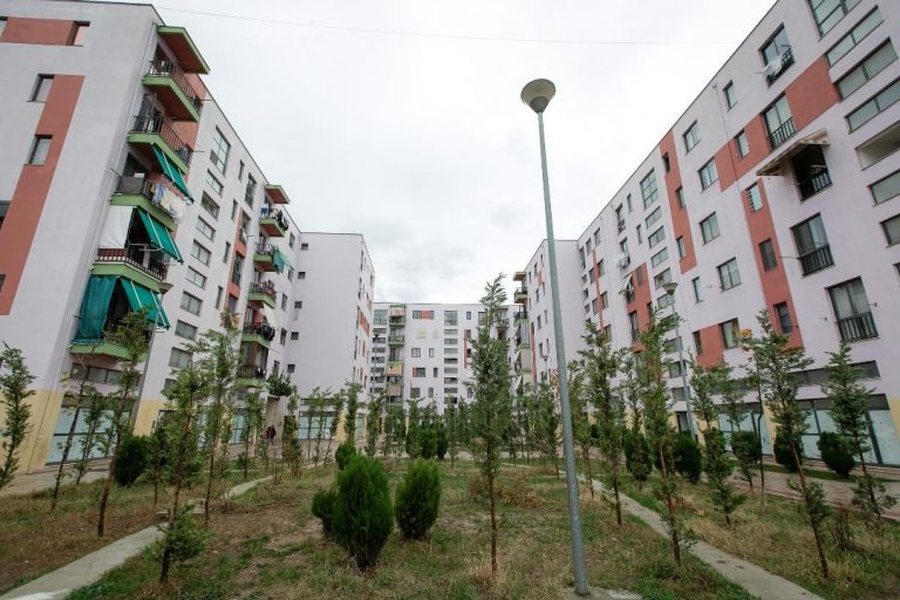
Apartments that have more than one claim to ownership will enter the legalization process, despite the fact that there is no court decision that determines its owner. In an interview with SCAN, Lawyer Fabjan Mehmeti explains the innovations of the draft law, while emphasizing that in this case the legalization will be carried out without a name of the owner and after the court decision, the property will pass into the ownership of the one who won the trial.
"Many properties that are not legalized will be legalized but without the owner's name in the legalization process and will be waited until the conflict is resolved between the builder and the possessor or third parties in court. For example, to simplify it, if there is a dispute about a commercial unit or apartment, in the case where the apartment has been sold three times for example and the dispute is pending in court. This property will be legalized and will remain without an owner, and the conclusion of the legal process will be awaited. At the moment when the court determines the ownership rights between the three parties that are in court, then based on the court's decision, the legalization will have the owner's name. The legalization act will have the owner's name. This is a very important innovation as it seeks to end the legalization process and not wait for the conclusion of legal processes that last for years."
On the other hand, the expert also focuses on the legal changes related to accelerating the legalization process when a development plan exists, emphasizing the benefits that citizens will have.
"This is a novelty of the law, of the legal changes and the legislative framework that is expected to enter into force soon and gives the owner of the illegal construction the right to legalize it and be the owner of the land or illegal construction and in this way when the project that is foreseen, the public project that is foreseen in that area becomes concrete, the owner who has legalized the building, the illegal construction, has the opportunity to be expropriated. That is, to benefit from the property that he has possessed. He has built absolutely without permission, but which he has possessed regularly and the state has given him the right to legalize it. He is declared the owner and benefits from the right of expropriation. That is, he does not lose the property, because the public project has prevalence over all constructions and the state has the right to expropriate any type of property through the expropriation process. He enters into private relations with the owners, legal possessors and expropriates them. In this case we do not have a possessive owner "legal and through this application within 30 days, this is the accelerated legalization procedure, the subject, the individual is declared the owner, becomes the owner and benefits from the right of expropriation later. Of course, it is possible because it depends on the will of the institutions and the commitment that will be required, but as a process it is technically possible."
According to official data from the State Cadastre Agency, during the period 2006–2025, i.e. over a period of 19 years, the Local Directorates of the State Cadastre Agency have carried out technical and legal verification of applications for legalization, resulting in 291,114 final decisions, and 6,082 applications disqualified due to non-fulfillment of legal criteria. In other words, over 285 thousand informal buildings have been legalized in this period.

Housing in the face of prices - Demirxhiu: Reduce quotas, increase values
The new housing reform aims to bring 7,000 apartments to the market through soft loans, extending support to young couples, professionals and young families.......

How did income change? 1 in 4 employees was paid the minimum wage in the second quarter
The level of wages in Albania continues to show significant differences between categories of employees, while the distribution of wages is gradually......

Another blow to global trade - Houthis seize strategic Red Sea point
The Houthi movement in Yemen has raised new concerns about the security of one of the world's most important sea lanes. The Iran-backed group has taken......

New housing reform - Minister Ibrahimaj publishes details: Loans with 0% and 3% interest
The Minister of Economy and Innovation, Delina Ibrahimaj, shared with the public details of the new housing reform. According to her, the reform will not......

Legalization of housing - How is the procedure done when there are claims? Within 30 days when there are development plans
The government aims to finally close the process of legalizing housing in cases where construction companies have exceeded the approved permit, cases where......

Working abroad brings in 426 million euros/ Together with remittances, the inflows exceed 1 billion euros in six months
The income that the Albanian economy benefits from the work of citizens abroad has continued to grow at a strong pace even during 2026. According to data......

German financing in energy - Karakaçi: 110 million euros for 3 projects in Albania. 20 million euros are grants
Albania will benefit from 110 million euros in funding from the German government for the implementation of three projects in the energy and infrastructure......

BoA and UNDP strengthen cooperation - Green finance, financial education and support for small businesses discussed
The Governor of the Bank of Albania, Gent Sejko, held a meeting with the Permanent Representative of the United Nations Development Programme (UNDP) in......