Are fewer Albanians heading to Germany? According to the Federal Statistical Office, the pace has slowed down.

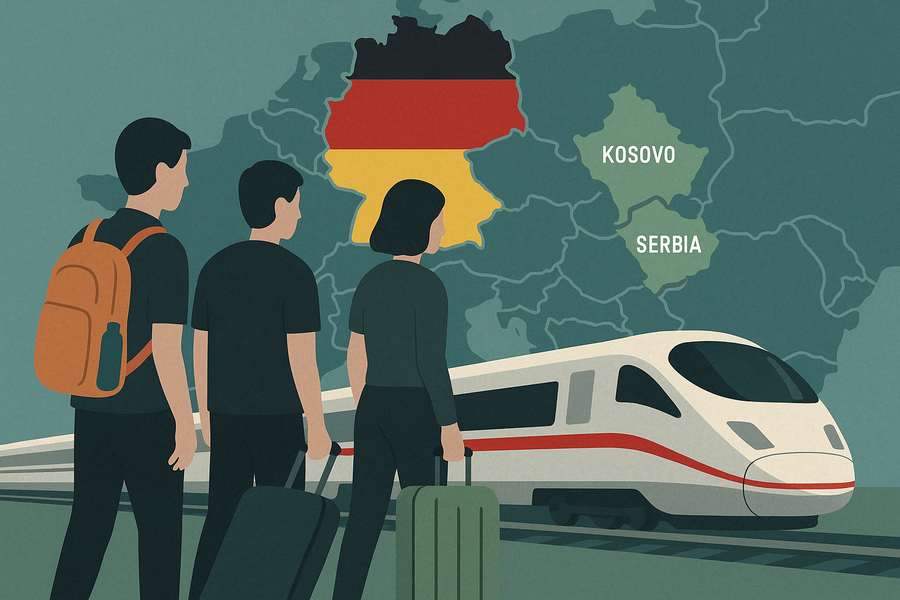
After nearly a decade where Germany was the magic word for thousands of Albanians seeking a better life, the latest figures show that this story is taking a new turn. According to the German Federal Statistical Office (Destatis), during 2024, around 19 thousand Albanian citizens arrived in Germany and around 9 thousand left, bringing a positive balance of around 10 thousand people. Although the balance remains positive, compared to previous years the pace is significantly lower than in 2022 and 2023, where Albania had around 14 thousand and 13 thousand net emigrants respectively.
At the same time, Kosovo and Serbia are maintaining the pace, even increasing it. Kosovo recorded around 28 thousand entries and 9,800 exits in 2024, with a net balance of 18,400 people, while Serbia exceeds the entry figure by over 20 thousand even though net migration is lower, meaning most of them have returned.
In a broader perspective, the top countries of origin for immigrants in Germany in 2024 are Ukraine, Syria, Turkey, Afghanistan and Iraq, which account for the majority of migration movements. Ukraine alone has recorded over 115 thousand net arrivals, followed by Syria with 78 thousand and Turkey with 36 thousand. These figures show that migration waves to Germany are increasingly linked to contexts of war, insecurity and humanitarian crises, while the Balkan countries are experiencing more economic migration.
But why are Albanians more hesitant? Part of the answer lies in changes to Germany's migration policies. The new law on skilled workers requires accurate documents, professional recognition of diplomas and higher language standards.
Another major factor is the economic slowdown in Germany. As the country faces rising living costs, high inflation and lower demand in manual sectors, many companies have cut back on hiring. This has led Albanian workers to seek closer and more flexible alternatives. Italy, Croatia and the UK have become new preferred destinations for seasonal or short-term work.







Live TV


EU tightens cybersecurity - Companies must report attacks within 24 hours
The European Union has started implementing new rules on the cybersecurity of digital devices and software. From September 11, 2026, manufacturers are......
Cybersecurity in schools - Kazia: It will be an elective subject for grades I, VI, X. Training for teachers and parents
Starting this school year, first, sixth, and tenth grade students will have an elective course on cybersecurity, while teachers and parents will also be......
Ownerless Apartments - Lawyer: In whose name is the legalization done? Court obstacles removed
Apartments that have more than one claim to ownership will enter the legalization process, despite the fact that there is no court decision that determines......
Housing in the face of prices - Demirxhiu: Reduce quotas, increase values
The new housing reform aims to bring 7,000 apartments to the market through soft loans, extending support to young couples, professionals and young families.......