US, tariffs of up to 100% on Chinese drones - The measure aims to curb dependence on China and strengthen domestic production

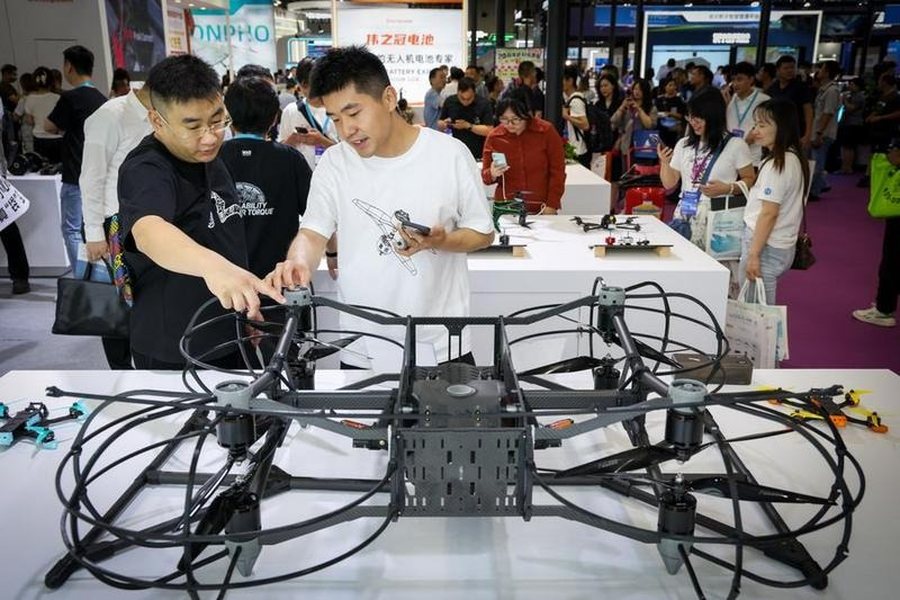
New US tariffs on drones and some of their components have come into effect, in an effort by Washington to limit dependence on Chinese imports in an industry dominated by the company DJI.
US President Donald Trump signed the order imposing the tariffs in August, with the White House linking the move to national security concerns and the need to build more sustainable supply chains within the US.
Drones with a take-off weight of over 25 kilograms, as well as models with thermal cameras or docking stations, face a 100% fee. For smaller drones, the fee is 25%.
Meanwhile, some components considered less sensitive will be included in the tariff in a second phase, starting from February 9 next year.
Drones have become important tools for warfare, surveillance, and infrastructure protection. The experience of the war in Ukraine has shown their importance in modern operations.
US officials argue that dependence on equipment and parts manufactured in China could create risks to US military and critical infrastructure, including supply disruptions and concerns about espionage.
China has opposed the move, urging Washington to withdraw the tariffs. Beijing warned that they could harm global supply chains and competition in the drone market.
The Chinese company DJI, founded in 2006, has dominated the global drone market, accounting for more than two-thirds of it according to some studies.
But the company has been on a US list of Chinese firms linked to the military since 2022, which has led to restrictions on access to American technology.
DJI has opposed inclusion on this list, while the new tariffs mark another step by Washington to limit Chinese influence in the strategic drone sector.
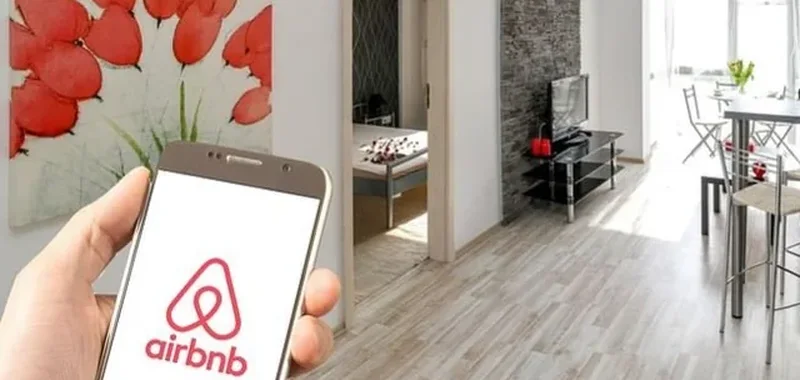
EU "hits" Airbnb, here's what's changing! - Brussels aims to ease the housing crisis in the most problematic areas
The European Commission is expected to propose new rules on housing, which will give national and local authorities more scope to restrict short-term tourist......

Abuses of informal money transfer networks - Technology is giving criminal groups new ways to hide funds
Criminal misuse of informal money transfer networks is becoming a global problem and is growing, warns the Financial Action Task Force (FATF), the......

Supporting foster families - Civil society is involved, the municipality selects and supervises
Foster families and children in alternative care will also be able to receive training, counseling, and psychosocial support from civil society......

Minister Hoxha meets with Commissioner Kos: Albania determined to maintain the pace of negotiations
"For Albania, the objective remains clear: to move forward with determination and close as many negotiation chapters as possible this year, while continuing......

LIS, the land application, Salla: Helps farmers control costs and increase production
An application called LIS has been put into use by the country's farmers. The Minister of Agriculture and Rural Development, Andis Salla, presented in......
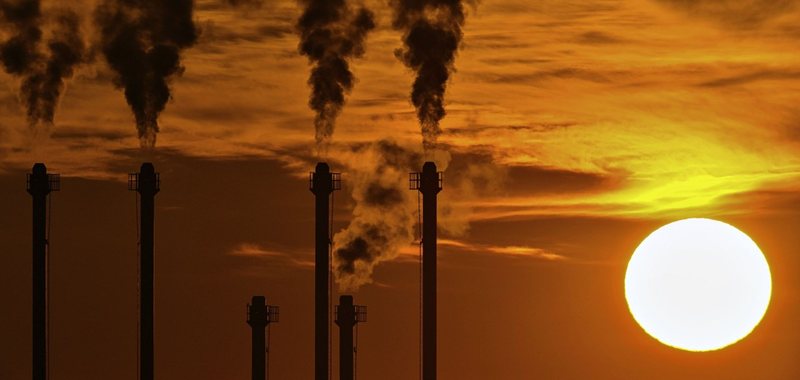
New climate targets are officialized - By 2035, emissions are targeted to be below 9,195 kilotons of CO₂ equivalent
Our country has formalized new targets for reducing emissions and adapting to climate change by 2035. The Nationally Determined Contribution 3.0 has been......

Albanians spend more time online - AKEP: Internet and phone call consumption is increasing. SMS are “going out of fashion”
Albanians are increasingly using the internet and phone calls, while SMS is losing ground. Data on the electronic communications market shows that during the......

Klodiana Spahiu, the new name for the Ministry of Health and Social Welfare
Klodiana Spahiu has been proposed for the position of Minister of Health and Social Welfare, with the aim of strengthening access to health services and......