"AI, a vital opportunity for developing economies"/ World Bank: They will achieve in a decade what could take a century

Artificial intelligence (AI) could enable developing countries to achieve within a decade what would normally take a century if governments act quickly to close the gaps in energy, digital connectivity, skills and the quality of institutions that threaten to leave these countries behind, according to the World Bank Group's World Development Report 2026.
According to the report, jobs in high-income economies are more than three times more likely to be affected by automation through generative artificial intelligence than those in low- and middle-income countries, with 4.5% of existing jobs at risk, compared to 14.2% in high-income economies. At the same time, 16.2% of jobs in developing economies could benefit from significant productivity gains from AI, close to the 18.7% expected in high-income economies.
The greatest promise for developing countries lies not in replacing workers, but in multiplying the contribution they can make.
The report is the first comprehensive assessment of the impact of AI in developing countries, and shows how businesses and governments in these countries have begun to use it. It notes that artificial intelligence is helping people, businesses and governments solve problems, analyze information, improve forecasts and deliver services to a wider range of beneficiaries. These capabilities are particularly valuable in countries where skilled professionals, reliable documentation and the capacity of public institutions are often limited.
Developing economies are currently experiencing their weakest average economic growth in three decades. According to the report, AI could significantly improve this performance before the end of the 2020s, bringing tangible benefits to people. However, this possibility is not guaranteed. The most advanced AI systems are being developed by a limited number of countries and companies, while many developing economies still face shortages in the energy, internet access, data, skills and institutional capacity needed to use AI effectively. Without well-defined actions, artificial intelligence could widen the gap between countries, increase inequality within them, increase the concentration of market power, weaken trust in public institutions and create new risks to security, rights and social cohesion.

July, record heat in France/ The average temperature across the country reached 24.9 degrees Celsius
July was the hottest month ever recorded in France since record keeping began in 1900, national weather agency Meteo France said. According to the agency,......

Works on the Kashari overpass, ARRSH announces traffic restrictions on the Tirana-Durrës highway
The Albanian Road Authority (ARRSH) has announced that temporary traffic restrictions will be imposed on the Durrës-Tirana highway on August 6 and 7, 2026,......

Industria e mbrojtjes, ministri Ermal Nufi zhvillon takim me homologun italian Guido Crosetto në Romë
Romë, Itali, 4 Gusht 2026 - Ministri i Mbrojtjes i Republikës së Shqipërisë, z. Ermal Nufi zhvilloi një takim me Ministrin e Mbrojtjes të Italisë, z. Guido......

EXCLUSIVE/ The Government activates the procedure for the cancellation of the Vlora Airport contract
The Ministry of Infrastructure and Energy has initiated procedures for the termination of the concession contract of the Vlora International Airport. SCAN......

AKSK: 14.6 million attempted cyber attacks on information infrastructures in the first half of 2026
During the first half of 2026, January–June, a total of 14,628,595 cyberattack attempts were recorded against the infrastructures of the Albanian cyber......
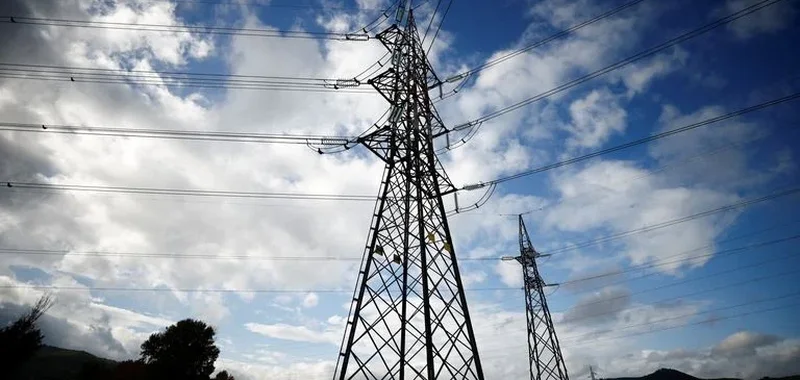
Improving energy supply in the Albanian Alps - From Boga to Theth. OSSH opens the competition for the new electric line
The High Voltage Directorate of the Albanian Public Distribution System (OSSH) has announced the opening of the competition for the construction of the new......

In which country does an iPhone cost the most? Albania is among the cheapest markets in Europe
One of the most sought-after devices in the world, the iPhone, continues to be sold at very different prices from one country to another. According to Visual......

Hungary seeks new president: Social networks propose personalities from science and culture to well-known internet figures
The debate over choosing Hungary's new president has shifted to social media, where citizens are proposing a wide range of candidates, from science and......