Turkey loses momentum - Fewer tourists and less revenue after 2025 record


After a record year, tourism in Turkey is facing a significant slowdown. The latest data shows a decline in the number of visitors, tourism revenues and hotel occupancy, signaling a more difficult season for one of the most important sectors of the Turkish economy.
In 2025, Turkey hosted around 64 million visitors and generated $65.2 billion in tourism revenue, marking one of the best results in the history of the sector. The number of visitors increased by 2.7%, while revenues expanded by 6.8%.
But the pace has changed in 2026.
During the second quarter, from April to June, Turkey welcomed around 15.6 million visitors, 5.1% fewer than in the same period last year. The decline is particularly significant for a market that has been aiming to continuously increase tourist flows and revenues from the sector.
Revenues have also taken a hit. In the second quarter, they fell by 2.6%, to about $15.9 billion. However, average spending per tourist has increased to about $1,005, partially mitigating the effect of the decline in visitor numbers.
So, Turkey is seeing fewer tourists, but those who do travel are spending more.
The pressure has also been reflected in hotels. Their average occupancy during the first half of the year fell from 40.2% in 2025 to 36.8% in 2026. For the hospitality industry, this means fewer rooms filled at a time when operating costs and international competition remain high.
This situation could also put pressure on hotel prices and strategies, especially in destinations that rely more on foreign tourists. For businesses, the challenge is to maintain revenues without losing the competitive edge that has made Turkey a favorite destination.
However, the figures do not mean that Turkey is losing its status as a tourist destination. Istanbul, Antalya, Izmir and Cappadocia continue to be among the most sought-after spots, while the country offers a combination of beaches, historical heritage, culture and urban tourism.
The challenge is now different: not just to bring in more tourists, but to attract tourists who stay longer and spend more.
The 2026 slowdown comes in a global market where travelers are becoming more sensitive to prices and travel costs, while competing destinations are trying to take a bigger share of the market.
After last year's record, Turkey thus faces a new test: to maintain its tourism advantage, but by moving from increasing the number of visitors to increasing the value they bring to the economy.
For a sector that directly contributes to hotels, restaurants, transportation, entertainment and thousands of local businesses, how Turkey manages this slowdown could determine whether 2026 will be simply a pause after a record year, or the beginning of a weaker cycle for tourism.
In this context, the focus of authorities and industry is expected to shift increasingly towards high-value tourism, promoting off-season travel and expanding the offer beyond traditional seaside holidays. This would be a way to compensate for fluctuations in demand and make the sector less dependent on seasonal flows.
Another challenge is maintaining tourists' purchasing power in the face of rising costs. If accommodation, transport and services become more expensive, travelers may turn to alternative destinations in the Mediterranean, forcing the Turkish industry to find a balance between price, quality and the experience it offers.
In this competition, Turkey's advantage remains the diversity of its offer and its developed tourism infrastructure. But after a record year, the 2026 indicators give a clear signal for the sector: growth can no longer be taken for granted and competition for international tourists is becoming increasingly fierce.

August breaks records - Europe experiences hottest summer on record
August 2026 was the hottest month ever recorded in the world, in another alarming sign of escalating climate change. According to data from the European......

118 million euros for Durrës - EU and France finance sewer rehabilitation and wastewater treatment
The Ministry of Finance and the French Development Agency (AFD) have signed an agreement to finance the rehabilitation of the sewage network and improve......

Apartments without ownership certificate - Cadastre, "door to door". How will the verification process be carried out?
All citizens who own apartments without ownership documents will be physically contacted in order to provide a solution to this problem that has arisen over......

Bad loans, new minimum/ Drop to 3.69% in July, the lowest level in over 18 years
Non-performing loans in the Albanian banking system have fallen to another low. According to data from the Bank of Albania, at the end of July 2026 they......
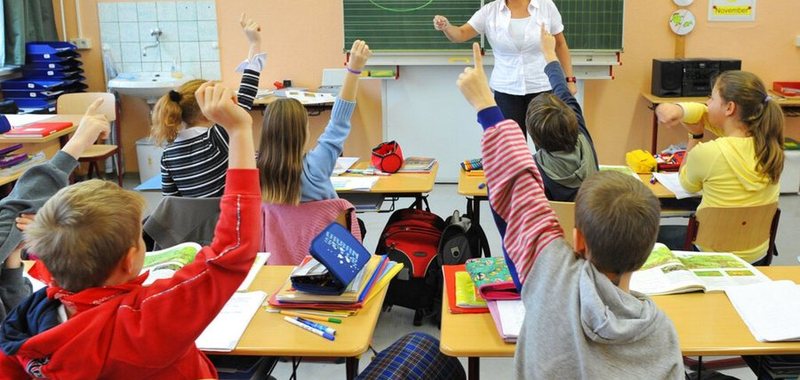
"Afterschool", free from October 1st - List/What are the 85 schools in Tirana?
From October 1, children in 85 public schools in Tirana will be able to stay in school even after school ends, free of charge. The new "After School"......
Confiscated assets - AAPSK, the sole body responsible for the administration and development of facilities
A significant change in the way the state administers confiscated assets is expected to come through a new draft law, which aims to centralize powers under......

Google, 13 billion euro bet - The American giant expands AI infrastructure in Finland
Google will invest at least 13 billion euros in Finland over the next two years, the company's largest investment in Europe. The project aims to......
Integration and Prosperity - IMF: EU Membership Could Boost Per Capita Income Within a Decade
EU membership could boost per capita income in the Western Balkans and Moldova by up to 35% within a decade, according to the International Monetary Fund,......