China, the world's new laboratory - Robots, AI and automated factories attract global business

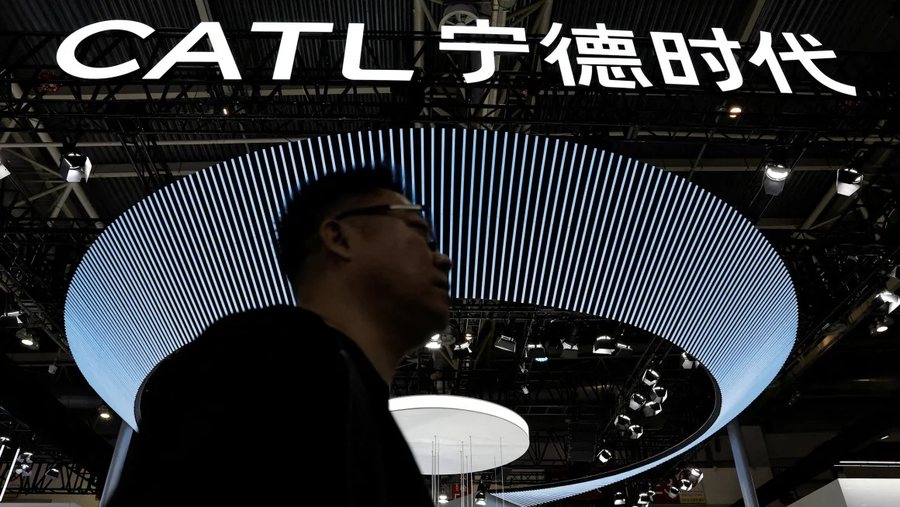
China is becoming a new destination for investors and company executives who want to get a first-hand look at the technologies that are changing industries. Instead of traveling solely for business or tourism, more and more foreigners are paying thousands of dollars to visit factories that make robots, electric cars, batteries and artificial intelligence.
Some companies offer five-day tours that can cost up to $15,000. Demand for these programs has increased significantly in 2026, as visitors seek to understand how companies manage to develop and produce technology in such a short time.
One of the main hubs is Shenzhen, a city that is increasingly gaining a reputation as a laboratory for future technology. Visitors get a close-up look at humanoid robots, electric vehicle factories and automated production lines.
Companies are also taking advantage of this interest to create a new industry around technology. Factories, research centers, and technology companies are becoming destinations for business delegations, investors, and foreign entrepreneurs.
An example is Xiaomi's electric car factory in Beijing, which has been visited by more than 250,000 people since March 2024. Interest is so great that entry is through an online lottery and tickets have also been sold on the informal market at much higher prices.
The phenomenon also shows China's changing role in the global economy. For decades, the country was known primarily as the "factory of the world," focused on low-cost manufacturing. Today, the goal is much more ambitious: to dominate advanced technologies as well.
Electric vehicles, batteries, robotics and artificial intelligence have become areas where China is exerting strong pressure on the United States and Europe. This has revived discussions of a “China shock 2.0”, that is, the fear that Chinese industry could gain an advantage in high-tech sectors as well.
What worries competitors is not just the technology being produced, but the speed and scale of production. Companies can move from prototype to mass production very quickly, combining strong supply chains, competitive costs and a large domestic market.
This is also changing the way Western companies view this market. For many of them, the challenge is no longer simply to compete with a product, but to understand the model behind it: how the technology is developed, how it is produced on a large scale, and how it is brought to market so quickly.
In this race, advantage is not only determined by innovation, but also by industrial capacity. A new technology has limited value if it cannot be produced quickly and affordably. It is precisely the combination of research, production and supply chains that is making the Chinese industrial model increasingly important for the global economy.
This has consequences for European companies as well. Faced with stronger competition, they are facing pressure to invest more in automation, artificial intelligence and advanced manufacturing. Otherwise, they risk losing ground not only in foreign markets but also in strategic sectors of their economy.
However, American and European companies continue to have significant advantages in technology, intellectual property, and capital. But dependence on supply chains remains strong, making it difficult to completely disengage from Asian manufacturing.
Economically, this race could also change the global investment map. Capital is seeking not just large markets, but also countries with the ability to produce technology at scale. This means that competition for factories, talent, and new supply chains will become as important as competition for the products themselves.
For Europe, the challenge is particularly great. If production costs remain high and the pace of innovation slower, European companies could lose market share in strategic sectors such as electric vehicles, batteries and robotics. For this reason, investment in technology is no longer just a matter of innovation, but a direct matter of economic competitiveness.
At the same time, for global businesses, China remains a very difficult market and manufacturing base to replace. This complicates the US and Europe's efforts to reduce dependence on Asian supply chains. Instead of a complete decoupling, the global economy could move towards a model where companies diversify production but continue to rely on Chinese capabilities.
So this “tech tourism” is more than just a new fad. It’s an indicator of a larger shift in the global economy: China is not just aiming to sell more products, but to determine the pace at which they are developed, produced, and brought to market.
Ultimately, the question is no longer just who has the best technology. The economic question is who can turn that technology into mass production, jobs, exports, and commercial advantage. And it is here that one of the most important battles for the economy of the future is taking place.

US, alarm on the dangers of AI - Warnings of the extinction of humanity increase pressure for new rules
Concerns about the dangers of artificial intelligence are growing in the US, as AI security researchers warn that the rapid development of the technology......

40 fires in 24 hours, flames still active - Dajti, Dibra, Shkodra and Mallakastra remain the focus of interventions
40 fires have been reported in the country over the past 24 hours. According to the Ministry of Defense, 6 fires remain active, 9 are under surveillance,......

Ervin Demo heads the Ministry of Interior, Lamallari becomes Prime Minister
Prime Minister Edi Rama has announced a change in the leadership of the Ministry of Interior. Besfort Lamallari will be leaving the ministry, and Ervin Demo,......

260 million euros for energy - Croatia approves package to curb rising bills for families and businesses
Croatia's government has approved a package of measures worth 260 million euros, aimed at cushioning the impact of rising energy prices, driven by the war in......

Inflation in Kosovo, 7.3% - Transport and energy lead price increases in August
Consumer prices in Kosovo increased significantly during August, marking an annual increase of 7.3%, compared to the same month last year. According to data......

Hydrogen exceeds 130 billion USD - Investments increase, but costs remain an obstacle
Global investments in clean hydrogen projects have surpassed $130 billion, as governments increasingly see this resource as a means to strengthen energy......
War brings back coal - Global demand expected to reach record in 2026
The conflict in the Middle East is also changing the global energy market. Coal demand is expected to grow by 1.2% in 2026, reaching a record 8.94 billion......

Europe is abandoning ownership - Renting is becoming the choice of millions of residents
Home ownership is becoming increasingly difficult for a large proportion of Europeans, turning renting from a temporary solution into a long-term reality for......