What does the Energy Community assessment mean for Albania? Heating and cooling: part of national planning

Yesterday, the Energy Community Secretariat welcomed Albania's submission of the Commitment Document for the Decarbonisation of the Heating and Cooling Sector as a clear political and technical signal to accelerate the country's energy transition.
The assessment is not formal. It is related to the fact that for the first time Albania is addressing this sector in a structured and long-term manner. Why is this document important for Albania?
Heating and cooling are not secondary issues. They account for about a third of the country's final energy consumption and exceed 600 million euros per year in market value. Currently, only 22–23% of this demand is covered by renewable sources. This means that a very large part of the energy we use every day in homes, offices and public buildings, at levels of tens of millions of euros, still has great potential for economization and modernization.
By focusing on this sector, Albania is not only fulfilling an obligation to the Energy Community, but is also implementing three key directions of the European Union's "Green Deal", to reduce carbon dioxide emissions, save energy and increase its efficiency in everyday life.
The three main directions of reform in the heating and cooling sector
From the analysis of the report, it is clear that the document is not just a text with declarations, but lays the foundations for concrete reforms.
First, it builds a structured planning. For the first time, a detailed map of heating and cooling demand at the municipal level is created, analyzing energy density and potential for development. To date, the heating sector in Albania has operated largely in an individual and fragmented manner. Each household has chosen its own solution, without a coordinated approach.
With this document, heating and cooling are treated as a separate sector. Decision-making is based on concrete data and not on general assessments. Municipalities can identify areas with high demand concentration and plan specific interventions. Furthermore, the report includes development scenarios up to 2050, analyzing how demand will change if the current model is continued or if efficiency measures are taken. This gives Albania's energy policy a long-term horizon and stability.
Secondly, the document orients the sector towards clean and high-efficiency technologies. For domestic hot water, solar panels are identified as one of the most cost-effective options for Albania, given the country's high solar potential. Combining them with heat pumps increases efficiency and reduces costs in the long term. For space heating, heat pumps are considered as transitional technologies that can replace traditional systems with higher energy consumption and higher emissions.
In high-density urban areas, the report highlights biomass district heating systems or hybrid solutions as cost-effective alternatives. This means that the solutions are not uniform for the entire country, but are adapted to the characteristics of each area. The technical reform that is proposed is clear: a gradual transition from inefficient individual systems towards more modern technologies, with higher efficiency and lower environmental impact.
Third, the document creates a framework that guides investments, both public and private. It goes beyond technical analysis, but identifies priority areas and the most cost-effective technologies, giving clarity to the market on where to focus funds. This is important because investments in the heating and cooling sector are long-term and require regulatory stability.
The Energy Community Secretariat has emphasized that the document sends clear signals to development partners and financial institutions. This means that Albania is creating a more predictable environment for green projects, integrating the heating sector into national energy and climate policies and linking it to European objectives.
Heating and cooling: a strategic priority of the State. Why does this document go beyond energy?
The importance of this document does not lie only in the technical aspect. It changes the way we conceive of our country's energy policy.
For many years, the discussion has focused mainly on energy production, especially on renewable sources in the electricity sector. This document shifts the focus to final consumption, where the real cost for households and environmental impact is generated. Energy policy is no longer measured only by installed capacity, but by the efficiency of energy use in every home and every building.
The document also creates stability and credibility. When a country presents a comprehensive analysis with long-term scenarios and a clear direction for development, it shows that policies will not be temporary or haphazard. And it is precisely this element that increases the confidence of international partners and investors.
Another dimension is institutional. Heating and cooling are no longer treated as a private matter for families, but as part of national planning. This elevates the sector from an individual choice to a strategic priority for the state.
Ultimately, this document creates a reference point. It establishes a basis against which progress, investments and results can be measured in the coming years. Without such a plan, decarbonization would remain at the level of declarations. With this document, it enters the phase of concrete implementation.
And this is why its importance goes beyond energy...
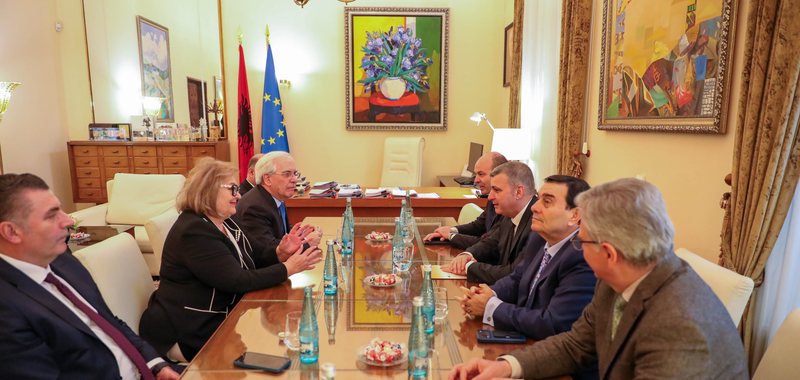
Shqipëri-Kosovë, bashkëpunim për kërkimin ekonomik, Guvernatori Sejko takim me akademikët e dy vendeve
Guvernatori i Bankës së Shqipërisë, Gent Sejko, priti në një takim zyrtar një delegacion nga Akademia e Shkencave dhe e Arteve e Kosovës dhe Akademia e......
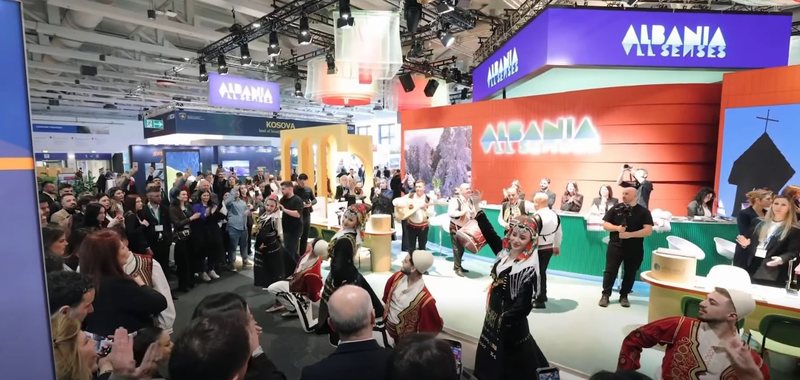
Tourism Minister Gonxha: Dignified representation of Albania, a success story that deserves to be heard
The Minister of Tourism, Culture and Sports, Blendi Gonxhja, participated in the Tourism Ministerial organized by UN Tourism in Berlin, as part of ITB......
The budget collected 754.6 billion lek in 2025/ Payroll tax and VAT led the increase in revenues
The state budget collected around 754.6 billion lek in revenue during 2025. Total revenues were realized at 98% of the period plan and 99.7% of the annual......
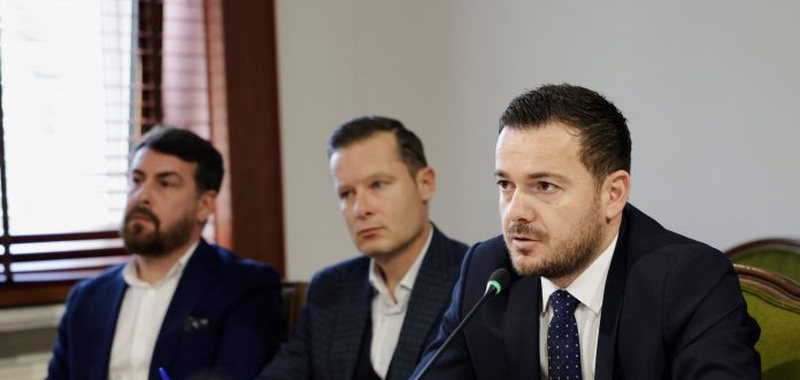
Salla: The National Scheme supported over 65 thousand farmers in 2025
The Minister of Agriculture and Rural Development, Andis Salla, stated today that in 2025, over 65 thousand farmers were supported through the National......
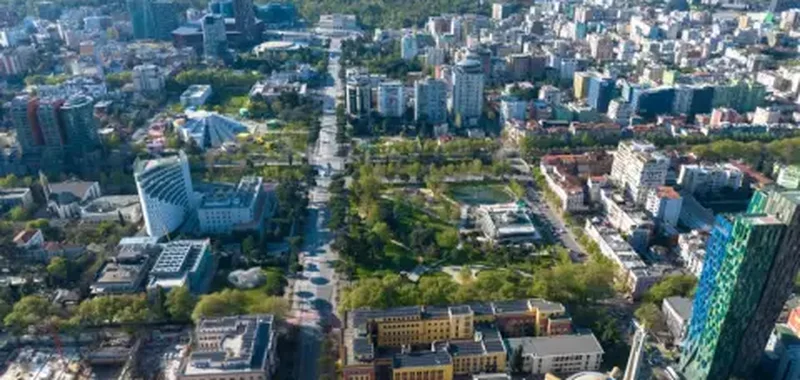
Albania or the region, where is the property market more volatile? Prices have increased at a faster pace than in neighboring countries
According to Investropa's study, since the beginning of 2026, the real estate market in Albania is exhibiting a higher level of volatility compared to more......
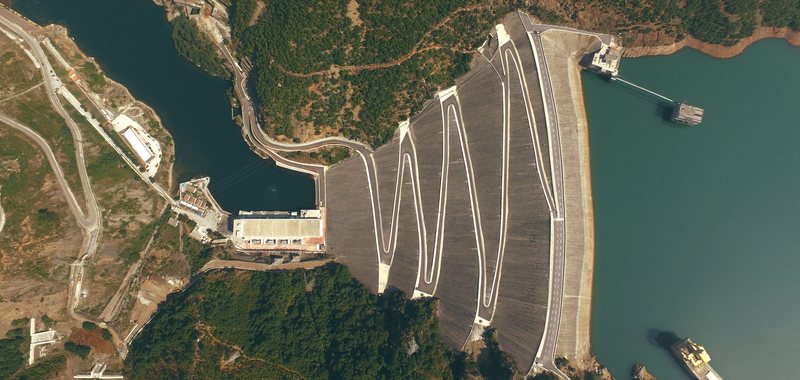
50 million euros investment in Fierza HPP - Bilali: Interventions enable 30 additional years of operation for the hydropower plant
The Committee for Europe and External Affairs has approved a 40 million euro loan for the rehabilitation of the Fierza hydroelectric power plant, one of the......
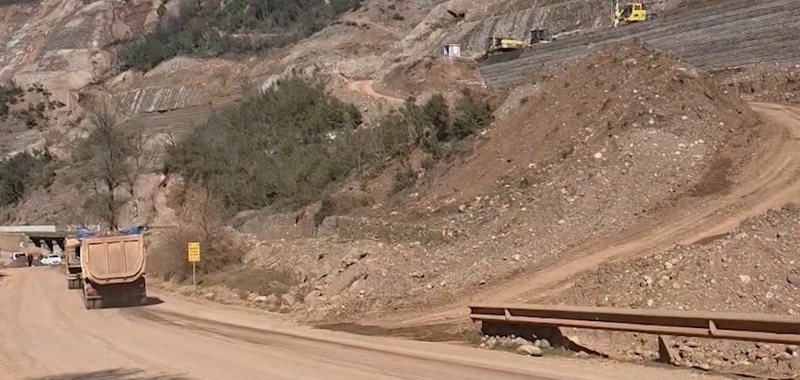
Prrenjas-Librazhd road opens to traffic
At noon, the road connecting Prrenjas with Librazhd and further to the southeastern area of the country was opened to traffic. The head of the Albanian......
“Transparency in party funding sources” - Electoral Reform, Gonzato: Prerequisite for EU membership
At the Special Commission on Electoral Reform, the EU Ambassador to Tirana, Silvio Gonzato, stated that the main criteria of electoral reform are political......