Tirana expands its "monopoly" in the economy/ Together with Fier and Vlora, they increase their weight in the GDP structure

Albania continues to grow economically, but not evenly. While the capital city is experiencing an economic boom and accounts for half of the country’s overall growth, some other regions are moving at a much slower pace, deepening the divide between “developed Albania” and that which is lagging behind. The latest INSTAT data on Gross Domestic Product (GDP) by statistical region for the period 2000–2023 reveal not only steady economic growth, but also an increasing concentration of economic activity in the Tirana and Durrës area.
Tirana, the main generator of growth
In 2023, the Albanian economy grew by 4.02% in real terms, while the national GDP at current prices reached 2.36 trillion lekë. This growth was mainly driven by the Tirana Region, with a contribution of 2.06 percentage points, which accounts for almost half of the country's total growth. It is followed by Fier (0.43 pp) and Durrës (0.42 pp), which shows the importance of the central and western axis for the Albanian economy.
On the other hand, Kukës with (0.04 pp), Dibra with (0.06 pp) and Gjirokastra with (0.07 pp) made the lowest contributions, reflecting the lack of investment and economic activity in these areas.
Regions and their weight in the economy
According to data on the share of regions in the Gross Domestic Product (GDP), a high economic concentration is observed in Tirana, which represents about 43.86% of the national GDP, a clear indicator of the dominant role of the capital in the country's economy. It is followed by the regions of Fier with 10.57% and Durrës with 10.32%, which constitute important industrial and commercial centers. Elbasan (6.2%) and Vlora (6.07%) also contribute significantly, reflecting a significant economic presence in the central and coastal regions. The regions of Shkodër (5.04%) and Korçë (4.85%) have a moderate share, while Berat, Lezhë, Dibër, Gjirokastër and Kukës remain economically weaker, with contributions ranging from 1.44% to 3.59%. This distribution demonstrates a significant regional disparity in Albania's economic development, with a high concentration of economic activity in urban and coastal centers. Compared to 2022, an expansion in the weight of Tirana, Vlora, Fiero and Dibra is noted.
GDP per capita, a reflection of inequality
INSTAT data also highlights the large disparities in well-being between regions. In the North, GDP per capita was 819 thousand lekë, 16.8% below the national average. In the Center, it reached 1.19 million lekë, 21.86% above the average, while the South recorded 845 thousand lekë, 14.12% below the national average.
In the breakdown by region, Tirana stands at the top with 1.36 million lekë per capita, 38.9% above the national average, followed by Durrës and Fier. At the bottom of the ranking are Kukës, Dibra and Berat, which lag significantly behind the rest of the country.
Economic polarization, a growing challenge
The INSTAT report confirms a clear trend towards the concentration of the Albanian economy in the capital. Tirana attracts investments, creates more jobs and offers higher per capita incomes, while the suburbs and the north face economic stagnation and lack of opportunities. The real challenge remains sustainable and distributed development, which can guarantee a more equal Albania in the decades to come.

AIDA launches the second season of "Investor Support Days" to strengthen dialogue with foreign investors
The Albanian Investment Development Agency (AIDA) launches "Investor Support Days" for the second consecutive year, to strengthen dialogue with foreign......

"Budget 2026, cornerstone for pension increase" - Malaj: Increase in minimum wage and indexation for the administration, benefiting 144 thousand employees
The 2026 budget sets a cornerstone in terms of increasing pensions, to ensure a dignified payment for this category.” Minister of Finance Petrit Malaj,......
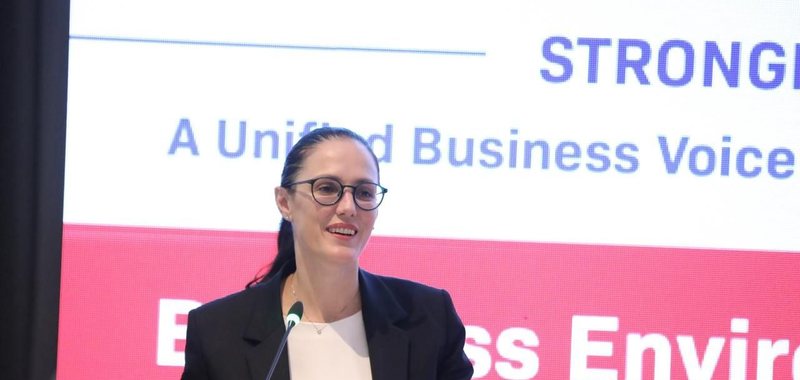
Minister Ibrahimaj: Albanian government committed to a fairer, more transparent and competitive business climate
The Minister of Economy and Innovation, Delina Ibrahimaj, participated today in the presentation of the FIAA report "Business Environment in Albania 2025",......

The budget for roads increases - Projects to be financed next year. From Corridor VIII to the Tirana bypass
The budget for road construction and improvement will increase during 2026. According to the draft submitted to the Assembly, 20.22 billion lek has been......

Administration salary expenses increase by 20.4 billion lekë - From 119.7 billion lekë in the 2024 budget, to 140.1 billion lekë in 2026
The draft budget for 2026 shows that total spending on salaries in the Public Administration is planned at 140.1 billion lek. But how has this trend evolved......
CBK welcomes the positive assessments of the EC on the stability of the financial sector and the advancement of its institutional reforms
The Central Bank of the Republic of Kosovo (CBK) welcomes the European Commission's positive assessments of the financial sector in the Kosovo Report for......

"Breathtaking" for the Eurozone Economy - Expands at the Fastest Pace in More Than Two Years
The eurozone economy expanded at its fastest pace since May 2023 in October, breaking the pattern of slower growth seen earlier this year. Activity in the......
Rama: Additional 100 million euros for pensioners in 2026, in addition to indexation
In a video message, a few minutes after receiving the European Commission's progress report on Albania and the press conference with the EU Ambassador,......