"ProTax Albania" project concludes/ Malaj: Wealth tax reform, key to a modern system according to European standards

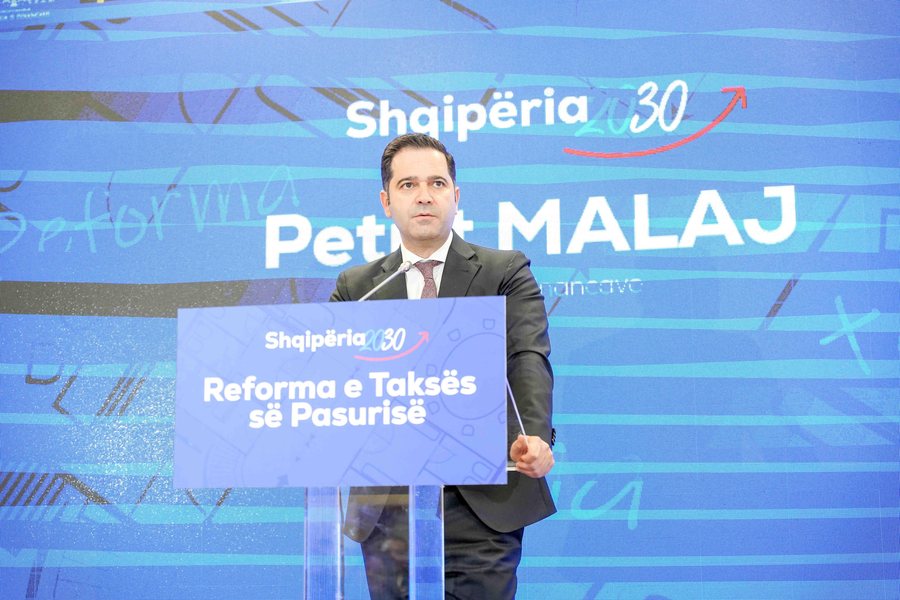
The Minister of Finance, Mr. Petrit Malaj, participated today in the closing event of the “ProTax Albania” project. Also present at this event were the Minister of State for Local Government, Mr. Ervin Demo, the Ambassador of Sweden in Tirana, Mr. Niklas Storm, the Director General of the General Directorate of Property Tax, Mr. Arben Seferaj, the Project Manager, Mr. Bjarni Sigurdsson, as well as leaders of several municipalities in the country.
In his speech, Minister Malaj praised the importance of the "ProTax Albania" project, which is in line with the reforms that the Albanian government is undertaking, also within the framework of the country's EU integration process.
The main goal, said Mr. Malaj, is to guarantee fair and efficient property taxation in Albania, as well as to strengthen the role of municipalities in collecting this very important tax.
The implementation of the project aimed to guarantee the reform of the property tax, based on market value, the creation of the General Directorate of Property Tax and the construction of the Fiscal Cadastre.
The Minister informed that the drafting of the new draft law on Wealth Tax has already been completed, which will soon be approved by the Council of Ministers, while the Fiscal Cadastre has been established, with centralized information, based on a unique system and with European standards.
However, Mr. Malaj said that the journey towards complete reform is not over, while emphasizing that the Property Tax should be the most contributory and important tax for local self-government units. Guaranteeing the collection of this tax, said Mr. Malaj, should not only be considered as more income in the municipal budget, but more services for citizens, in more public investments, but above all in financial independence.
"Today, revenues from this tax in Albania account for about 0.3% of GDP, at a time when countries in the region manage to collect revenues of about 0.8% of GDP. Our objective is to increase the share of this tax to about 1% of GDP, in line with the standards of OECD countries," said Mr. Malaj.
This objective, the Minister further added, is entirely achievable and this requires even greater inter-institutional cooperation, especially with Local Government Units.
The 2026 draft budget has foreseen a further increase in revenues from this tax on behalf of municipalities to the value of 10 billion lek, or about 1.4 billion lek more than in 2025. But, despite the fact that there will be a new law and a functional Fiscal Cadastre, the Minister said that this reform cannot materialize without the full commitment of municipalities to guarantee the most efficient implementation.
Speech by the Minister of Finance, Mr. Petrit Malaj:
Today, we, as the Minister of Finance, in cooperation with the Swedish Development Agency, conclude an extremely important project, such as "ProTax Albania", which is related to the reform of the Property Tax.
This project is of particular importance and entirely in line with the reforms that this government is undertaking, also in the context of the country's integration into the European Union.
Our main goal is to guarantee fair and efficient property taxation in Albania, as well as to strengthen the role of municipalities in collecting one of the most important taxes, not only in the region, but also beyond.
Implementing a functional, unified system according to European standards, although a challenge, is entirely feasible, which is why we are here today to present the concrete results we have achieved.
We began this journey with the International Monetary Fund, identifying and analyzing the problems that characterized the property tax.
Then, with the Swedish International Development Cooperation Agency / SIDA and the Swedish Tax Administration, we launched the implementation of the "ProTax Albania" project to guarantee:
· Reform of the property tax, based on market value, to make it as fair, effective and transparent as possible, but also to turn it into a main source of revenue for local self-government units;
The creation of the General Directorate of Property Tax, under the Ministry of Finance;
As well as the construction of the Fiscal Cadastre, as the only national system that unifies all information on construction units.
It is true that it took almost 7 years, after a very complex process, which was made more difficult by the 2019 Earthquake, but also the Pandemic, to reach the stage we are at today.
We have now completed the drafting of the new draft law on Wealth Tax, which has passed all stages of public consultation and will soon be sent to the Council of Ministers for approval.
Today, we can say with full confidence that we have a functional Fiscal Cadastre, with centralized information, based on a unique system and European standards.
But the journey towards full reform is not yet over.
I say this because it is necessary to emphasize that the Property Tax should be the most contributory and important tax for local self-government units. Guaranteeing its collection cannot be considered simply and only as more income in the municipal budget, but should be translated into more services for citizens, into more public investments, which in turn translate into well-being for the communities where you operate. On the other hand, this tax will guarantee municipalities financial independence.
Today, revenues from this tax in Albania account for about 0.3% of GDP, at a time when countries in the region manage to collect revenues of about 0.8% of GDP.
Our objective is to increase the share of this tax to around 1% of GDP, in line with the standards of OECD countries.
This objective is entirely feasible and we have all the potential to achieve it. Of course, even greater inter-institutional cooperation with municipalities is needed and not without reason, for 2026 the forecast of property tax revenues is 10 billion or about 100 million euros, an increase of about 1.4 billion lek more or 14 million euros more than in 2025.
That being said, and given that we also have municipal leaders present in this room, I would like to underline the importance of your role in this process.
Despite the fact that today we have a new law, despite the fact that today we have a functional Fiscal Cadastre, this reform cannot materialize without your maximum commitment. It will be you who will collect this tax and it will be you who will set your priorities, both for the investments you will make and for the services you will provide for the benefit of the communities.
We, as the Minister of Finance, are committed to continuing to support you, as we have done so far, through ongoing training, so that you not only understand this reform correctly, but also implement it correctly.
Taking this into consideration, the Albanian government has established this reform as the main pillar for several other strategies that we are implementing in parallel, such as:
Decentralization,
Public Finance Management,
Medium-Term Revenue Strategy.
Therefore, these documents treat the wealth tax reform as an instrument to ensure:
· Increase in income
Gradual transition to market-based valuation;
Expansion of the taxpayer base;
Today, we are at a key moment. We have a system built and ready to be delivered, a draft law drafted according to European standards, a consolidated cooperation with Swedish partners, and a clear institutional will to move this reform forward to its final phase.
By 2026, all municipalities will be integrated into the Fiscal Cadastre system. This is the essential prerequisite for any further steps.
In 2027, the national property valuation process will be carried out.
While 2026-2027 will serve as a transitional period until the new law is implemented.
In 2028, it is expected to introduce market-based assessments for buildings, as well as improve rates and reliefs.
And in 2030, the implementation of the land tax will begin, based on a fully integrated system and according to European standards.
This will also be the finalization of the reform!
Dear participants,
We are moving towards a reform that is:
in line with IMF recommendations,
supported by the World Bank,
aligned with OECD principles,
and recognized by the EU as a key element of transparency, digitalization, and sound public finances.
Therefore, in closing my remarks, I would like to emphasize that the wealth tax reform is a story of cooperation, built on ongoing international expertise and support.
I would like to express my gratitude to all local and central institutions that have made their contribution.
A special thank you to the Swedish Embassy and the Swedish Tax Administration, who have been our key partners throughout this journey.

New proposals for VAT compensation in agriculture - MPs: It leaves out a wide category of farmers
The government's proposed scheme to compensate farmers by 10% has sparked discussions in the Economy Committee, because it is considered incomplete and not......

Car insurance, record increase in income - AMF: Companies collected 13.9 billion lek, about 13% more than last year
Insurance companies' revenues from the money Albanians pay for car insurance reached 13.9 billion lek at the end of the first ten months of the year. The......
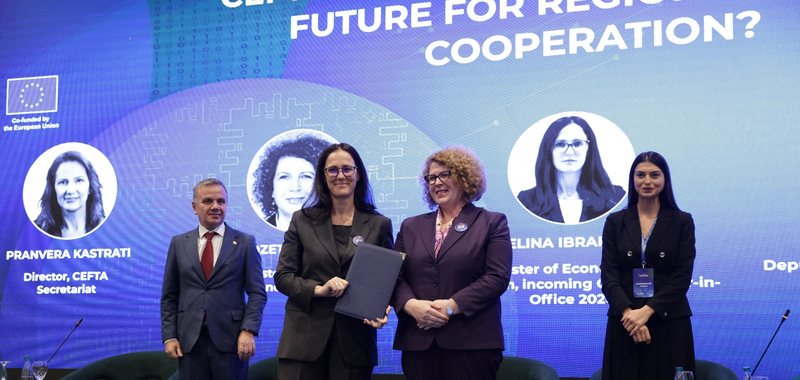
Ibrahimaj at the High-Level Panel “CEFTA Week 2025” - Albania takes over the next Presidency of CEFTA in 2026
The Minister of Economy and Innovation, Delina Ibrahimaj, participated in the High-Level Panel organized within the framework of CEFTA Week 2025, in......
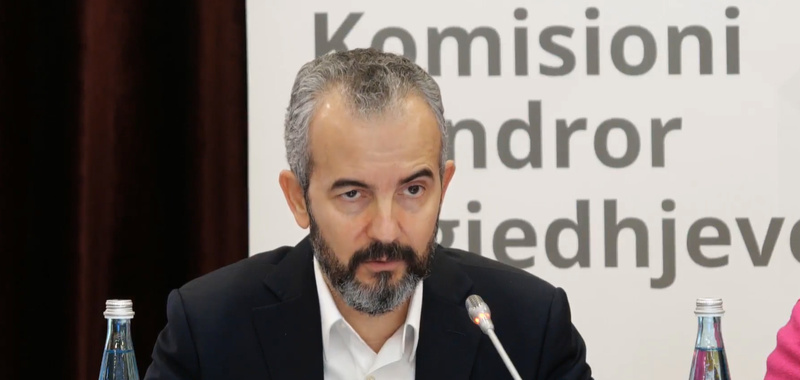
"New law on party financing to be approved by December" - Celibashi and Gonzato: Electoral Reform to ensure transparency
The financing of political parties was the focus of a roundtable discussion between the Central Election Commission, IDEA and the Center for the Rule of Law......
UN chief proposes budget cuts - $577 million less for next year, 20% of staff to be laid off
United Nations Secretary-General Antonio Guterres officially proposed cutting the UN's core budget for next year by $577 million and eliminating more than......

Debit cards, the main means of electronic payments - BoA: Market expands by 2.4%. Around 1.6 million in total circulation
Debit cards are the main means of electronic payments in the country. The latest data from the Central Bank shows that more than 1.6 million bank cards with......
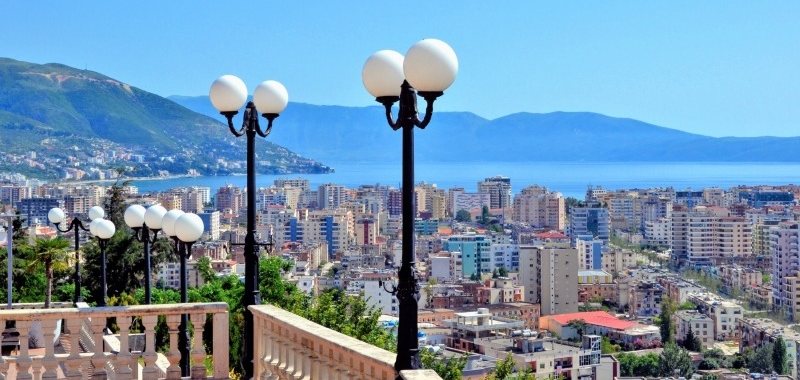
ADF opens the competition for urban transformation in Vlora - Investment of over 688 million lek for recreational spaces, modern market and parking
The Albanian Development Fund has announced the opening of the competition for the construction of multimodal mobility hubs, construction of an underground......
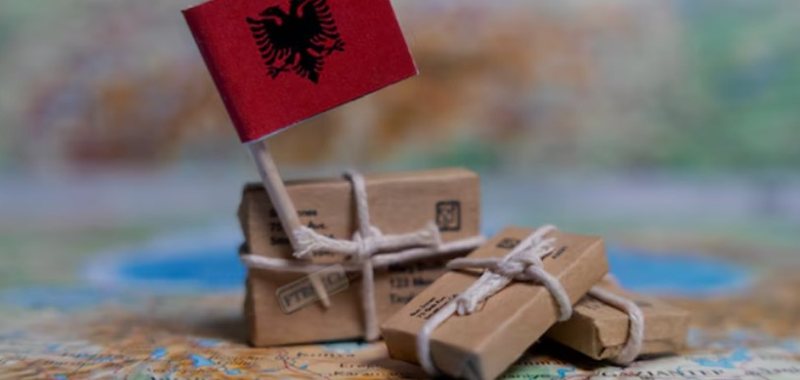
The "unusual" places where Albanian products went/ New trade map: From Jordan and Uganda, to Turkmenistan and Tunisia
If we usually talk about the traditional markets of Albanian exports: Italy, Kosovo, Greece, Germany, the picture of 2025 looks familiar. A decline in the......