Does the financial criterion "burn" municipalities? - The new administrative-territorial reform, the assessment of economic performance


One of the main criteria on which the new administrative-territorial reform has been drafted, where 15 municipalities are planned to be merged, is financial.
According to the draft prepared and presented, the financial-functional criterion simultaneously measures two essential elements: the capacity of the municipality to generate financial resources and its ability to turn these resources into real services for citizens. This criterion is directly related to the principle “funds follow functions”, provided for in Article 9 of the European Charter of Local Self-Government, according to which the financial resources of local units must be commensurate with the responsibilities assigned to them.
According to the document, this criterion is of primary importance for three interrelated reasons. First, it highlights the problem of unfunded mandates: when functions such as preschool education, forest management or fire protection are transferred to municipalities without the corresponding financial resources, the municipality receives the legal responsibility, but not the means to exercise it: either the function is not performed at the appropriate level, or the municipality becomes more dependent on discretionary transfers from the central government.
Secondly, the criterion shows the mismatch between resources and competencies, which creates a measurable institutional dysfunction: municipalities with less than 10 thousand inhabitants have an average of 12.6 administrative employees per 1,000 inhabitants, while municipalities with over 150 thousand inhabitants have only 2.2 employees per 1,000 inhabitants: administrative costs per inhabitant almost six times higher, without necessarily translating into better services.
Third, the criterion is related to economies of scale: fixed administrative costs (salaries, offices, basic infrastructure and specialists) do not decrease to the same extent as the population decreases; the average budget rigidity is 82.7% in municipalities with less than 10 thousand inhabitants, compared to 60.1% in municipalities with over 150 thousand inhabitants.
Thus, the draft argues that taken together, these three elements create a clear cause-and-effect chain. When sufficient resources are lacking, the legal mandate is not accompanied by the necessary financing and the municipality begins to exercise its function from a structural deficit. When the ability to spend efficiently is lacking, even existing resources are used mainly to keep the administration in operation. When a sufficient degree of efficiency is lacking, the problem is not temporary and is not only related to the performance of a particular municipality: the smaller the local unit, the higher the weight of fixed costs in the budget and the more limited the space for investment, development and improvement of services.
The report concludes that under these conditions, the municipality may have the competence recognized by law, but without financial resources, sufficient staff and administrative capacities, self-government remains formal, nominal and dysfunctional.

Diaspora seeks a safer business climate - Bialczak: More protection for investors must be guaranteed
The interest of Albanian entrepreneurs in the United States to invest in Albania remains high. However, according to entrepreneur Marsilda Bialczak, many of......

180 new textbooks in September for grades I, VI and X - Osmani: 15 thousand teachers trained to implement the new curriculum
The curriculum reform will bring 180 new textbooks to the education system for students in the first, sixth and tenth grades. Deputy Minister of Education,......

Solar plant at Zadeja dam - KESH seeks license for 8.25 MW photovoltaic park in Vau e Dejës
The Albanian Electric Power Corporation has applied to the Energy Regulatory Authority for licensing the activity of producing electricity from the......
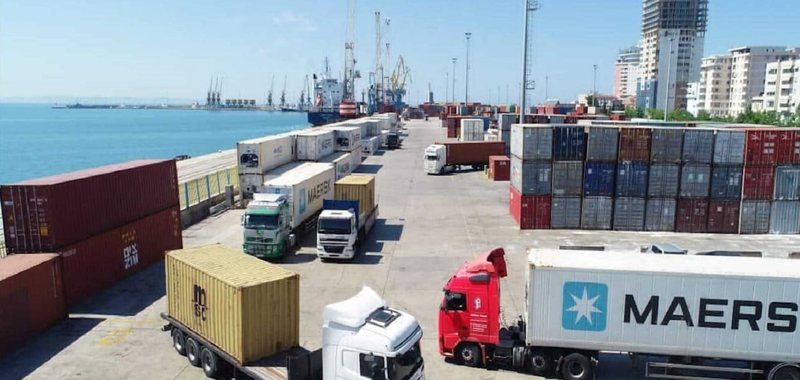
Taxes and customs duties of 417 million euros are forgiven to businesses - Balance/ Cancellation of obligations, benefiting over 165 thousand entities in the country
The Tax and Customs Administration has so far written off nearly 39 billion lek or 417 million euros in business liabilities, including principal, fines and......

Global income map, here is where Albania is / The World Bank ranks us among upper middle-income economies
The World Bank has published its latest ranking of economies by income level, with Albania continuing to be ranked in the upper middle income group. The......

Consumer confidence indicator increases - Cheaper prices expected in the future
The economic sentiment indicator fell by 1 point in July, but the value remains 5.4 points above the long-term average. According to the Bank of Albania......

The week starts negatively for the major currencies – Dollar, Franc and Pound weaken
The US dollar has started the week negatively, recording a decline in value compared to the previous week, being bought this morning for 80 lek and being......

Intelligent system at the Didactic Farm in Korça - ADF opens tender, investment for safer and more efficient production
The Albanian Development Fund has announced the procurement procedure for the implementation of the third phase of the "Apple Knowledge and Agrotourism Farm"......