Europe, on alert before winter - Natural gas storage facilities are emptying

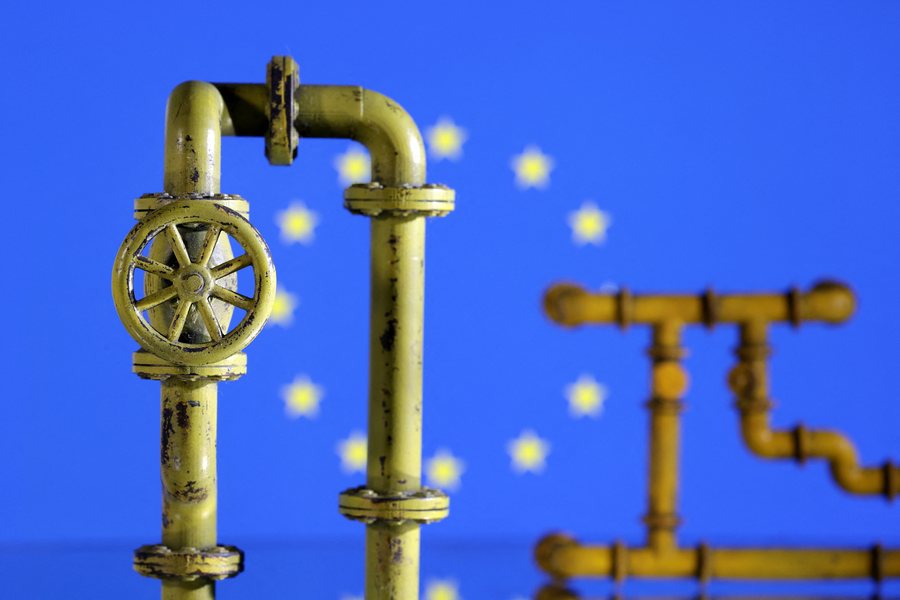
Europe is facing a new energy problem as winter approaches and natural gas reserves remain at particularly low levels. The war in the Middle East and the closure of the Strait of Hormuz have caused turmoil in markets, reviving fears of a new energy crisis.
European Union natural gas reserves are at their lowest level in 13 years, analysts say, causing concern among energy traders ahead of the winter season. In the last week of August, EU storage facilities were about 63% full, compared with an average of about 80% in the same period in previous years.
At current supply rates, Europe is likely to enter the winter season with reserves about 20% lower than the average of the past five years. Low inventories increase the risk of intense price volatility during the winter, especially if cold temperatures prevail and demand increases.
European prices remained relatively stable over the summer, with the market anticipating that the Strait of Hormuz would reopen and allow supplies to replenish. However, these expectations have now softened significantly.
The benchmark price of natural gas in Europe has risen in recent weeks to its highest level in three years, exceeding 68 euros per megawatt-hour, more than double the price at the beginning of the year. The increase is attributed, among other things, to the assessment that Europe will have to compete with Asian markets to secure liquefied natural gas (LNG) cargoes as winter approaches.
According to Goldman Sachs analysts, if natural gas exports from the Middle East do not resume, the European reference price could exceed 100 euros/MWh in order to attract sufficient quantities to meet winter demand.
The concerns are most acute in Western Europe, where stock levels are significantly lower than in countries such as Italy and Poland, which have managed to fill their storage tanks by more than 80%. In Germany, which has the largest natural gas storage capacity in Europe, the facilities are about half full. The problem, according to analysts, is not directly related to Europe's ability to meet its needs, but mainly to the cost at which it will secure the necessary quantities of natural gas, if geopolitical tensions continue.
Still far from the eurozone - ECB report: Not much progress is being made on membership
European Union countries outside the euro have made little or no progress on convergence in recent years and even Hungary, the country most actively......

Iceland says “no” to EU - Referendum rejects reopening of negotiations
Icelanders have voted against reopening talks on the country's membership in the European Union, ending, at least for the time being, the government's......

Public Procurement, 122 complaints in July - PPC reviews them on average for 34 days
122 complaints were registered during the month of July with the Public Procurement Commission. Most of them are related to procurement procedures for goods......

Wheat and corn in a dive, only barley growing - Cereals, near 6-year minimum. We lost an average of 12 thousand tons per year
Grain production in the country has continued to decline in 2025. According to data on the production of field crops, 624 thousand tons of grain were......
Fed: US inflation "worrying" - The possibility of interest rates remaining unchanged remains open
Federal Reserve Chairman Kevin Warsh said the level of inflation in the US is "disturbing," adding that it is "difficult" to characterize monetary policy as......

Historic US-Venezuela Oil Deal - $100 Billion in Private Investment. Will Generate Over $209 Billion in Revenue
US President Donald Trump announced a deal to take control of part of Venezuela's vast oil reserves. "The United States of America has just entered into a......

Cultural heritage increases income - Minister Gonxha: 108% more than in 2025
The National Institute of Cultural Heritage (IKTK) reports an increase in activity during the first 7 months of 2026. The data was made public by the......
Losses in the electricity network did not change - April-June / Increase in the transmission system, decrease in distribution
About 320 GWh of electricity was lost to the grid during the second quarter of this year, an amount almost unchanged compared to the same period last year.......