Global markets lose 13-14 million barrels of oil per day - Barclays study: Cause, prolonged disruption of the Strait of Hormuz

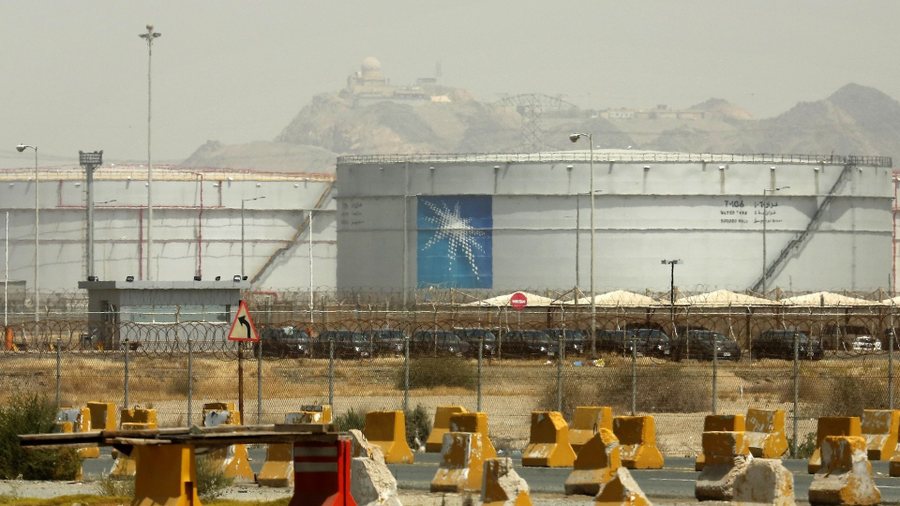
Barclays said a prolonged closure of the Strait of Hormuz could lead to a global supply loss of 13-14 million barrels of oil per day, noting that while the scale of the disruption is extraordinary, so is the uncertainty around its duration.
Exports from Yanbu and Fujairah have increased in recent weeks and assuming there is no threat to shipments from these ports, the bank sees a supply disruption of that magnitude possible in the event of a prolonged closure of the Strait. The International Energy Agency estimates that global oil demand this year will be around 104-105 million barrels per day.
Barclays added that the Iran war has caused the biggest geopolitical shock to energy markets since the Gulf War in 1990, driven by unusually tight fundamentals rather than speculative excess.
US President Donald Trump has said Iran is desperate to reach a deal to end nearly four weeks of fighting, contradicting Iran's foreign minister, who said his country was considering a US proposal but had no intention of holding talks to defuse the conflict.
“Despite the uncertainty surrounding ceasefire negotiations, in our base case, we expect traffic through the Strait to normalize by early April, which would be consistent with an average Brent oil price of $85 per barrel in 2026,” Barclays said in a note.
However, if the disruptions continue until the end of April, Brent oil prices for 2026 could be revised to $100 per barrel, and in a more prolonged scenario extending until the end of May, prices could rise to $110.
Oil prices rose over 2% on Thursday, with Brent futures trading at $104.36 a barrel, while West Texas Intermediate crude futures were at $92.23 a barrel.
Barclays also said that supply elasticity is structurally weaker than in past shocks, with OPEC+ spare capacity being less available and growth from non-OPEC+ countries, led by the US, steadily slowing due to years of underinvestment.

2nd Albania-Japan Business Forum/ Ibrahimaj: Economic cooperation and bilateral investments in focus
The Minister of Economy and Innovation, Delina Ibrahimaj, participated in the second Albania-Japan business forum, a key platform for deepening and expanding......

Vorë-Hani i Hotit train, 8.8 million euros for supervision - EBRD signs contract with French-Spanish consortium
With a value of approximately 8.8 million euros, the European Bank for Reconstruction and Development has signed the contract for the supervision of the......

Inspection reform, portal for citizens' complaints - Sula: All structures should be prepared for the tourist season
This Wednesday, the General Inspectorate, in coordination with the regional inspectorates of the State Labor Inspectorate, held a meeting within the......

Public administration reforms - Focus on efficiency, training and EU standards
Public administration is entering a more concrete phase of transformation, as part of the country's preparation for membership in the European Union. At the......

Where is foreign investors' money going in Albania? - Real estate tops the list of sectors attracting the most capital from abroad
Compared to 2024, Albania has managed to attract more foreign investment over the past year. The latest data from the Bank of Albania shows that the flow of......
Immigrants brought in around 1.1 billion euros/ Year 2025: Balance improves, but exchange rate weakens purchasing power
Remittances from Albanian emigrants reached 1.12 billion euros in 2025, the highest level recorded so far in the balance of payments series. According to......

Tourism brought a record of 5.72 billion euros in 2025/ Foreigners spent about 2 times more than Albanians abroad
According to data from the Bank of Albania, tourism revenues for 2025 reached a new record, registering close to 5.72 billion euros, while Albanians spent......

Foreigners "restrain" entry into Albania/Decline from European markets. Albanians kept growth at the border
INSTAT data show that in February 2026, 1.1 million Albanian and foreign citizens entered Albania, with an increase of 3.9% compared to February 2025. But......