OPEC+ loses influence in the oil market - Inability to be dominant increases


Six months after the start of the Iran war, the world's most powerful oil alliance, OPEC+, finds itself in an unfamiliar position: unable to influence a market it once helped shape.
The war, which has closed a key export route for Middle Eastern oil and damaged energy infrastructure in several OPEC countries, has eroded the group's market share and, with it, its ability to influence prices. Its policy statements and decisions barely move oil markets.
Instead, cuts in Chinese crude oil imports have emerged as one of the dominant themes of 2026, helping to balance oil markets amid what analysts describe as the worst supply disruption ever.
OPEC+, the Organization of the Petroleum Exporting Countries and its allies, including Russia, accounted for about 40% of global oil production in July, according to estimates based on data from the International Energy Agency. That is down from 48% before the US and Israel attacked Iran in late February, although about four to five percentage points of the decline was due to the United Arab Emirates’ withdrawal from OPEC in May.
OPEC was formed in 1960 and the expanded OPEC+ framework was created in 2016 when Russia and other producers joined forces to help the group cope with a decline in its share of global oil production.
OPEC's share of global crude oil production peaked at around 50% during the oil crises of the 1970s before falling to 30% by the mid-1980s, as production from the North Sea, Alaska and Siberia increased.
Since March, the main OPEC+ group has announced six oil production increases. However, due to the blockade of Hormuz, most have remained largely on paper, with the decisions having little effect on oil prices, except in July during a brief US-Iran ceasefire that raised hopes that Hormuz would reopen.
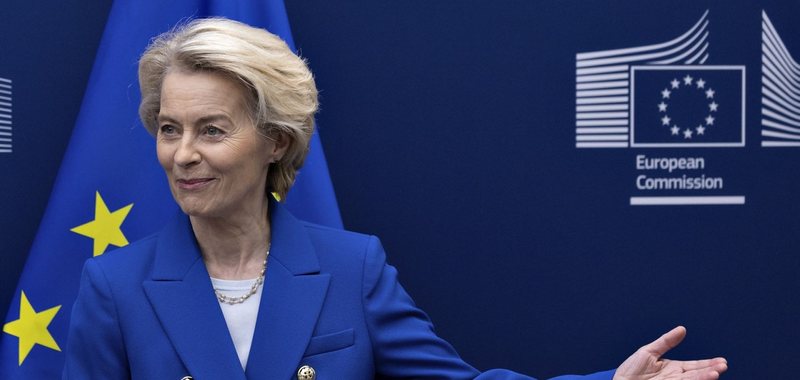
Von der Leyen increases pressure on China: "Talks to reduce record trade deficit are not bringing progress"
European Commission President Ursula von der Leyen said that if talks to reduce the record trade deficit with China fail to bring any progress, the EU should......
Massive cuts to EU budget - 6 countries' request to the Commission: The increase is unsustainable
German Chancellor Friedrich Merz, along with the heads of government of five other EU donor states, has called for drastic cuts in the EU's next budget.......

Who will be the next president of France? - Economy dominates first televised debate between 7 candidates
The seven main candidates running in the French presidential election faced off in their first debate, with the economy, public debt and pension reform......

Record funding for startups/ 600 million lekë for 163 innovative enterprises
Albania significantly increases support for startups. Innovation4Albania's Grant 2026 Financing Program brings this year the largest fund since the program's......

Over 19 thousand companies with foreign capital in Albania - AIDA: Entrepreneurship, high concentration in the capital
The Albanian Investment Development Agency announces that by July 2026, 19,370 companies with foreign or joint capital will operate in the......

Credit for the economy crosses the threshold of 1 trillion lek/ New loans increase by 32%, housing financing increases significantly
Credit to the economy has crossed the 1 trillion lek threshold for the first time, marking a new historical level. According to data from the Bank of......

Minister Salla: Agricultural insurance, a new scheme to protect farmers from natural disasters
The Minister of Agriculture and Rural Development, Andis Salla, announced that work is nearing completion on establishing an agricultural insurance scheme, a......

"There are no technical problems", ARRSH clarifies the ban on heavy vehicles on the Mati Bridge
The Albanian Road Authority has provided clarifications regarding the restriction of road traffic for heavy vehicles on the old Mati Bridge. According to the......