Dibrani and Kuksiani, among the most traditional/ Record the lowest divorce rate. Vlora ranks first


INSTAT data on civil status reveal a map with strong contrasts between the country's regions, where marriage and divorce are not distributed equally throughout Albania. While some regions display a higher profile of consolidated family life, others stand out for a higher proportion of divorces in relation to the population.
According to calculations per 1,000 inhabitants, Vlora is the region with the highest rate of divorced people, with 21.2 divorced people for every 1,000 inhabitants. Immediately behind it is Gjirokastra with 18.7, then Berat with 16.9, Korça with 16.1 and Tirana with 15.7 divorced people per 1,000 inhabitants.
At the other end of the table stands Kukës, with only 5.8 divorcees per 1,000 inhabitants, the lowest level in the country. Dibra also has a relatively low rate, 9.1 per 1,000 inhabitants, while Lezha is third from the bottom, with 11.5 per 1,000 inhabitants.
These figures create a clear division between regions. On the one hand, there are regions like Vlora, Gjirokastra, Berat and Korça, where the weight of divorced people is significantly higher. On the other hand, there are regions like Kukës and Dibra, where divorce, at least according to the civil status registered in the census, appears much more limited in relation to the population.
An equally interesting picture emerges for the married. Fier is the region with the highest proportion of married people, with around 611 married people per 1,000 inhabitants. It is followed by Gjirokastra with 601, Vlora with 581, Korça with 578 and Elbasan with 575 married people per 1,000 inhabitants. This means that in these regions, over half of the population is married.
At the bottom of the ranking for married people is Tirana, with 513 married people per 1,000 inhabitants, followed by Kukës with 516 and Berat with 532. So, the capital has not only a significant share of divorced people, but also the lowest rate of married people in relation to the population. This makes Tirana a special case, where the family model seems less traditional and more different from the regions where marriage has a greater share in the population.
Reading the two indicators side by side gives a deeper picture than a simple ranking. Vlora, for example, comes out on top for both married and divorced people. This suggests a region where marriage has a strong weight, but where its breakdown is also more visible. In other words, we are not dealing with an “anti-family” area, but with a space where married life seems more exposed to separations.
The situation is different in Kukës and Dibër. These two regions have the lowest divorce rates in the country and, especially Kukës, give the impression of a more conservative profile in family behavior. Here it can be said that the traditional family model seems stronger and that the dissolution of marriage appears less frequently, at least in the official civil status figures. However, this does not automatically mean that there is more family harmony there; it only means that divorce has less weight as a statistical phenomenon.
Equally significant is the case of Gjirokastra. It ranks very high for both married and divorced people. This makes it one of the most interesting regions in reading the data, because it suggests a profile where marriage is still widespread, but where the exit from that marriage is not negligible. So, in some regions, the strength of the institution of marriage does not at all exclude the presence of divorce.

Ibrahimaj: The construction sector, the engine of economic growth and the well-being of citizens
The Minister of Economy and Innovation, Delina Ibrahimaj, in a meeting held together with Prime Minister Edi Rama, and business representatives in the......

"High agricultural prices are being driven by imports" - Braçe: Farmers should be supported per liter, or kg. Costs have increased
The high prices of fruits and vegetables on the market are being driven by imports. This was stated by the socialist MP Erion Braçe, during the......
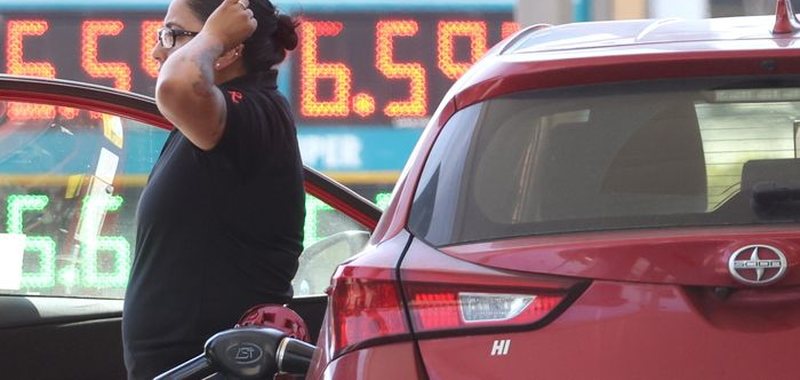
Transparency Board lowers fuel prices, sets new ceiling for diesel and gasoline
The Transparency Board decided today to reduce the ceiling prices for petroleum by-products in the domestic market, as part of monitoring the situation and......

Digital wallet, electronic identification towards unification - Cost over 700 million lek for the new system
The draft law "On electronic identification, trusted services and digital identity portfolio" has been submitted to the Parliament, which establishes for the......
What are the best models for the pension scheme? - State-private sector cooperation to strengthen the third pillar
Many countries have developed successful models for strengthening the third pension scheme, which is based on voluntary savings of citizens and managed by......
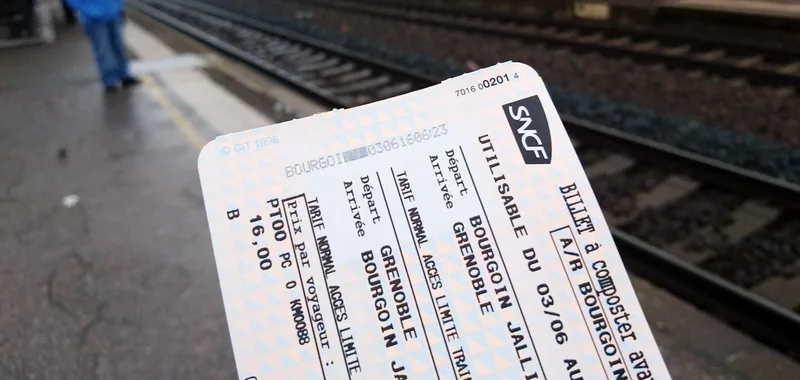
40,000 free train tickets for 18-year-olds/ EU reopens “DiscoverEU” program
One of the European Commission's most emblematic initiatives is back with a bang, offering 40,000 free train tickets to 18-year-olds, with the aim of......
"EU to suspend budget deficit rules"/ Meloni: We must take measures to curb energy prices
European Union authorities should consider a temporary suspension of budget deficit rules if the US-Israeli war against Iran continues, Italian Prime......

Small business sustains the economy, but away from banks/ BoA: The main obstacles are related to the level of informality and lack of collateral
Micro, small and medium-sized businesses continue to hold the main weight of the Albanian economy, but not of bank financing. Based on the data, this segment......