


From price cuts to drought - What marked the energy sector in 2025

The year 2025 was full of developments for the energy sector. The price of energy for a good part of families decreased, investments in solar energy increased, but at the same time the Albanian Power Corporation spent about 160 million euros on imports, to meet consumer needs. The lack of rainfall and high temperatures proved once again how fragile our system remains due to its dependence on water resources, while the debate on energy security, efficiency and the green transition has become stronger than ever.
But let's take a closer look at each of these developments, starting with the electricity production situation, which resulted in a high bill for the public generation company.
This year has not been good from an energy point of view, due to the lack of rainfall, which would enable the production of electricity from the Drini Cascade hydroelectric power plants. As a result, throughout the year KESH has developed a series of procedures for purchasing energy, in order to meet consumer needs. The total bill for energy imports has reached over 160 million euros.
This situation presents a stark contrast to last year, when by the end of the first half of the year no import procedures had been carried out, thanks to the supply from the Drini Cascade HPPs. Meanwhile, despite the increasing figures for solar energy, the Albanian power system remains dependent on weather conditions, which in periods of drought cost public finances millions of euros.
But while KESH is facing high import bills, other policies directly affected citizens' pockets. The reduction in the price of electricity for some household consumers: a scheme that came into effect on February 1st and benefited all families with a monthly bill not exceeding 8 thousand lek.
The Energy Regulatory Authority approved the new tariffs, determining that consumption up to 700 kWh/month will be paid at 8.5 lek/kWh, excluding VAT, or 10.2 lek/kWh, including VAT.
Families paid for energy at 9.5 lekë/kWh, excluding VAT, which means that the reduction amounts to about 11%. Meanwhile, the billing scheme does not change for families consuming over 700 kWh/month, who will continue to pay for all energy consumed at the current price.
"Household consumers who consume 701 kWh per month and above, for the entire amount consumed, starting from the first kilowatt, the price of active energy will be 9.5 lek/kWh," said Romir Pajenga from the Energy Regulatory Authority.
According to the head of the Energy Regulatory Authority, Petrit Ahmeti, about 80% of household subscribers benefit from the reduction in energy prices.
"The share of the category of consumers that go up to 700 kWh/month is almost 80%, which represents a relatively large amount of consumers, therefore covering the majority of family consumers," said Ahmeti.
Currently, there are about 1.1 million family subscribers, which means that the number of beneficiary families is about 880 thousand. Meanwhile, the application of the new tariff scheme may bring an expansion of this number, due to the incentive to save.
"This allows the rest of the consumers to use electricity more efficiently, so that they can be included in this type of consumption that will be treated with a differentiated price," said Ahmeti.
For other categories of subscribers, such as businesses, bakeries, or budgetary and non-budgetary institutions, the price of energy remains unchanged.
But as households grapple with new billing schemes, businesses are one by one leaving the universal supply and entering the free market. The liberalization of the energy market is one of the most important processes that is changing the face of the sector. At the start of 2025, 2,600 connected to the 10 kV voltage entered the free energy market, choosing their own supplier, while this market is expected to expand in 2026, with 2,300 businesses licensed to the 6 kV voltage.
"In the current portfolio, we have about 4,000 clients in the 35, 20 and 10 kV network and we expect 2,300 new clients, who enter the free market from January 1, 2026, to be part of our portfolio. Of course, most of them will be because we guarantee them a stable price throughout their supply year, which makes them take economic, technical and financial measures to be more stable in their businesses," says the administrator of the Free Market Supplier, part of OSHEE Group, Albi Gjenerali.
According to the General, the liberalization of the energy market has brought mutual benefits, both for the Universal Service Provider, part of the OSHEE Group, and for businesses that can provide competitive offers.
"It has also been very positive for the public burden, in the sense of the Universal Service Provider, because now these clients, who, let's say, have all the capacities to provide energy at a price, perhaps even more competitive than the Supplier of Last Resort, are no longer a burden on the state to supply them through universal service, which is a service that is seen as necessary, critical for all citizens and small and medium-sized businesses, let's say," says the General.
The liberalization of the energy market is being carried out gradually, where after customers connected to the 35 kV voltage, customers connected to the 20 kV network fully entered the free market, following by customers connected to the 10 kV network.
Liberalization is not just theory. It changes the way energy is contracted, how offers are published and how consumers are protected in the free market. To orient this new market, the Price Comparison Platform has been set up, a tool that gives businesses the opportunity to compare suppliers' offers in a transparent way, just as they can compare internet packages or telephone tariffs. However, the offers on this platform still remain limited.
All electricity suppliers are obliged to publish their offers on the Price Comparison Platform, set up by the Energy Regulatory Authority. However, despite this, currently only 6 of them have become part of the platform, although in total the ERE has licensed 38 companies for this service. In total, there are 15 published offers, as the companies have divided them according to the voltage level to which the businesses that can contract suppliers are connected.
The ERE platform was established in the framework of the liberalization of the electricity market, to enable customers to obtain information regarding the prices of electricity offered by different suppliers. Its main purpose is precisely to help customers choose their electricity supplier in a transparent manner, enabling them to compare possible offers from retail electricity suppliers.
The market transition goes hand in hand with the energy transition. On one side we have expensive imports, on the other new projects for resource diversification. One example is that of Vau i Dejës, where the historic HPP will be accompanied by a floating solar plant.
The project to build a floating solar power plant for electricity production in Vau e Dejës is moving towards implementation. 4 years after the creation of the SENA company.
SENA is owned by KESH, and its main focus is precisely the development and operation of the floating photovoltaic plant in Vau e Dejës. In this context, in October last year, a contract worth 13.86 million euros was signed for the design, construction and operation of the plant with the merger of 2 foreign companies: Gamma Solution from Spain and the Chinese Sungrow.
The capacity of the floating plant will be 12.97 MWp. According to calculations, the expected production in the first year will reach 18,808 mWh, with an average production of 17,822 mWh/year throughout its life. Meanwhile, according to KESH, although floating photovoltaic plants are still considered a new technology, the plant's anchoring system will ensure normal operation even with fluctuations of up to 15 meters of water level and maximum wind resistance for the next 50 years.
The construction of the floating solar plant is one of KESH's projects, within the framework of diversifying energy production sources. Meanwhile, another project that advanced in this direction during 2025 is the solar plant in Belsh, with a capacity of 50 mWp. The Parliament approved the draft law on the guarantee agreement with the European Bank for Reconstruction and Development, which paves the way for its financing.
"This project aims not only to increase production, but also to diversify the geography of energy generation from renewable photovoltaic sources, considering that we have them concentrated in the Fier area because the radiance and sun there offer the best opportunity for production," said Besjan Kadiu, from the Ministry of Infrastructure and Energy.
Referring to the project, the 50 MWp photovoltaic plant and the associated substation will be built on the territory of the Municipality of Belsh in an area of about 60 ha, while a new line of about 9 km, 110 kV will connect it to the network at the existing substation in Kajan, which will be expanded as part of the project.
"The selected area, positioned approximately 8 km from the nearest substation, which is the Kajan substation, identified as the junction point or connection point to the transmission network," said Kadiu.
The project has a total cost of 40 million euros. 30 million euros will be financed through the EBRD loan, as in April this year the bank announced that the Board approved the sovereign guarantee loan. Meanwhile, the project is also expected to be financed through a grant of 8 million euros from the Western Balkans Investment Framework (“WBIF”) and the remaining 2 million euros, through a capital injection from KESH. The generation of the plant at BELSH is expected to constitute about 1% of the annual national electricity production.
Private power plant projects are progressing in parallel with public ones. The advancement of the Spitalla photovoltaic park is one of them.
The Energy Regulatory Authority has initiated the licensing procedure for the company "Spitalla Solar", in the activity of producing electricity from a 100 MW photovoltaic plant, in Spitalla, Durrës.
Spitalla Solar is a subsidiary of the company “Voltalia Management International BV” and was announced the winner in March 2021, after an auction held in which 5 companies participated. The price offered for the purchase of energy was 29.89 euros/MW, considered at the time to be extremely favorable. This is the price at which the Albanian state guarantees the purchase of electricity for a period of 15 years for 70 MW, while another 30 MW will be able to be traded by the company on the free market.
The Voltalia company has also built the photovoltaic park in Karavasta, with an installed capacity of 140 MW, which has already entered production.
Meanwhile, the Hospital Park will be the second largest in the country, having advanced with licensing procedures.
The entry into production of this energy project will be an important step towards diversifying energy production sources, due to our country's dependence on water.
In addition to solar energy, another horizon has opened up to investors: the Tropoja mountains, where a large wind energy production park is planned, at a time when this energy source is untapped in our country.
The company "ERALB INVEST", which aims to build a large wind farm in the country, has officially submitted its application to the Ministry of Infrastructure and Energy, for a plant with an installed capacity of 603.9 MW.
According to the expressed interest, the project is positioned in the Municipality of Tropoja, while in case of finalization of the procedures it will not benefit from the support measures, as it is not subject to concession. This includes facilitation in providing documentation, guaranteed purchase of the energy produced, etc.
However, the company aims to obtain Strategic Investor status, after the Strategic Investment Committee approved the project as potentially such in December 2023. The company has applied to the KIS for a combined wind and photovoltaic park in Tropoja, with a total installed capacity of 826 MW, but the latest application made to the ministry concerns only the part of the plant that aims to produce energy from wind.
The investment value of the project with strategic potential, including the solar plant, is expected to be 1.2 billion euros, and it aims to be implemented on an area of 384.6 ha spread over the villages of Viçidol, Berishë, Luzhë and Paç, in the Municipality of Tropoja.
Studies to date show that our country has favorable conditions for the development of wind energy, but so far there is not yet a power plant that has entered production.
In parallel with large projects, renewable energy is increasingly coming closer to consumers, through self-production. According to official data from the Electricity Distribution Operator, 1682 self-producers were added in 2025, bringing the total number to 4097, with a total installed capacity of 398 mWp.
OSHEE data shows that 30% of self-producers are household customers, while the rest are installed by businesses, which also make up the majority of self-consumers of electricity. However, this structure also includes state institutions such as municipalities, ministries or educational institutions that have installed solar panels for energy generation, as well as non-budgetary consumers, including water utilities, polyclinics or health centers.
Meanwhile, setting the price of electricity produced by self-producers remains a challenge. In the recent resolution on the ERE, Parliament emphasizes that after the approval of the relevant methodology by the Council of Ministers, the necessary measures should be taken for the timely approval of the price of energy generated by self-producers, considering this an important step for the development of the green energy market.
But even though the number of self-producers is growing and solar panels are appearing more and more often on the roofs of buildings, the potential of renewable energy must go beyond individual investments, according to experts, who call for the establishment of energy communities, a model that currently does not exist in our country.
Further exploiting the potential of renewable energy sources for Albania is a necessity, while accelerating the process of creating renewable energy communities is one of them. "During the Political Roundtable on Renewable Energy Communities in Albania, emphasis was placed on the advantages of creating these groups.
"Price is a very important element and at the moment that energy is self-produced, of course price is another element in the market and in the way it is developed, but at the same time the social side and the element of energy poverty is a kind of solution because these types of local communities, groups of people in a way also address the problems related to energy poverty. Very important is also the element of saving, of the profit that will be created and the way of distributing it with the community, supporting local needs and this is the strong social component. So, in a way it is a group that aims to help each other and everyone benefits together", - said Valbona Mazreku, executive director of Milieukontakt.
Currently, these citizens' energy associations do not exist in our country.
"Renewable energy communities are not that there are in Albania, much less registered ones. There are attempts, but not yet registered. While, what we have noticed, we are approximating all legislation with the European Union Directives, which deal with the renewable energy sector, but the bylaws still remain incomplete, making this difficult. The procedures are also unclear and slow, difficult to follow, thus limiting the participation of community consumers, that is, people, the unification of communities. It seems that there are also other structural obstacles that make this type of effective implementation difficult", - said Mazreku.
An energy community is a group of people who come together to plan, invest in, and manage clean energy projects, from technical planning to business model design, technology deployment, and maintenance. It allows members to take control of production and consumption, while also providing a level of decentralization of the energy system.
Meanwhile, experts raise the alarm that in addition to encouraging investment, we must also think today about the control, certification, and recovery costs that come from the growth of solar plants in the country.
The rapid development of photovoltaic energy in our country must be accompanied by control mechanisms, so that these investments are long-term, as well as to ensure financing for the recycling of panels in the future. " Renewable energy expert and one of the earliest market players, Elton Çekrezi says that the introduction of uncertified products should not be allowed in Albania.
"Let's be attentive and focused to have some controls and have some rigor, starting from customs. If customs do not reach the increased controls, that the products that enter Albania must be at least products of the certified European market and this will enable us, will facilitate us and will ensure that the investments are long-term and safe for the future of our children", - says Çekrezi.
Also, according to him, it is necessary to impose a tax on each photovoltaic panel, in order to recycle these products.
"European countries, Italy or other countries, that collect an "X" tax at customs for every product, for every photovoltaic panel, which they take to a basket, where tomorrow they will subsidize or support those companies that will recycle these products after their life and this is something we should do not only for photovoltaics, but also for batteries and cars. I say it in disfavor as an entrepreneur, but I say it in favor of our citizens and children," he says.
Referring to examples from European countries, Çekrezi says that the taxation measure is extremely low, in relation to the value of the investment.
"If we talk about it in terms of percentage of investment, we are talking about below 1%, below 0.5%, which is not that important, but the state should collect this, put it in its coffers, with the aim of using it to recycle these products at the end of their useful life," the expert said.
These measures, according to Çekrezi, will ensure that in the future, solar power plants will not be a large mass of waste piles and environmental destruction. Currently, the weight of solar energy in the system has increased with dozens of plants introduced into generation, making 6% of total production come from this energy source.
Solar panels are also part of energy efficiency measures, but buildings require a much bigger revolution. This year, Albania entered a new phase of reforms on how buildings should be constructed and renovated, placing energy efficiency at the center of sector policies.
The Long-Term Strategy for the Renovation of the Building Stock was adopted in March, the public consultation on the National Renovation Plan was closed a few weeks ago, while the new draft law “On Energy Efficiency” is in the consultation process. Also, in June, the Parliament adopted the law “On the Energy Performance of Buildings”, which sets stricter standards for all existing and new buildings.
These documents align Albanian legislation with EU standards and impose very strong obligations for the renovation of public and residential buildings, technical standards for new construction and cost-optimal analysis, to move to buildings with minimal consumption or zero-emissions by 2050.
However, this reform cycle does not start from scratch. Albania first adopted basic laws on the energy efficiency and performance of buildings in 2016, creating the initial framework for audits, energy certification and savings measures. But after almost a decade, this framework was deemed insufficient for the new European objectives: the old laws did not include the concepts of nearly zero-energy buildings, zero-emission buildings or mandatory long-term planning mechanisms. Practical implementation was limited and renovations in the public sector did not keep up with the required pace, leaving many obligations only on paper.
The building sector is the largest energy consumer in our country. The average annual energy consumption in residential buildings reaches 102.55 kWh/m²/year, significantly higher than the average of EU countries, which fluctuates from 50 to 80 kWh/m²/year, according to data from the draft National Renovation Plan. This difference clearly shows the great potential that the country has for savings, cost reductions and emission reductions.
Meanwhile, the new obligations reiterate the approach that every building that is renovated should aim for optimal energy performance, based on the principle of optimal cost and a clear analysis of long-term savings.
However, the documents provide a full picture of the challenge ahead in terms of the number of buildings that need to be renovated.
According to the National Strategy for the Public Sector, by 2050, around 8,200 public buildings, representing around 6 million m² of surface area, need to be renovated. In 2023, the stock of public buildings was dominated by municipal education buildings, with 3,142 buildings occupying 36% of the total surface area. They are followed by central health and social buildings, with 2,438 buildings, but only 9% of the surface area, while administrative buildings for ministries and agencies occupy third place, with 2,273 buildings and a surface area of 33.4% of the total.
Meanwhile, for the period 2023–2030, as in the current legislation, the mandatory renovation rates are reconfirmed: 3% per year for central buildings and 2% per year for municipal buildings. These objectives are included in both the Strategy and the National Plan.
On the other hand, the residential sector represents the largest volume of stock in the country, with 56 million m², according to estimates for 2023.
The deep renovations envisaged in the documents show that the energy saving potential is estimated at up to 40–55% for a typical deep renovation, while zero-emission buildings (ZEB) can achieve up to 70–95% reduction in energy demand. These figures place energy efficiency at the heart of the new green transition policies.
Although documents are often seen as technical, they essentially directly affect citizens.
According to accompanying reports: the renovation of public buildings aims to reduce the operating costs of institutions, while for families, the savings on bills can be significant once the interventions are carried out according to standards.
Furthermore, improving air quality, thermal comfort, natural lighting and ventilation are elements that directly affect the health and productivity of building users, data that are highlighted in the strategy and accompanying reports.
However, challenges remain. Most existing buildings were built before modern energy efficiency standards were established. Some are dilapidated, uninsulated, with outdated heating and cooling systems. Financing, especially for low-income households and public buildings with limited budgets, is the main challenge mentioned in all the documents.
For the objectives set until 2050, the investment needs are very large. According to the Long-Term Strategy for the Renovation of the Building Stock, the decarbonization of the construction sector requires a total investment of 24 billion euros by 2050. It is also specified that of the total investment needs, about 69% is required for the residential sector, 25% for the commercial/private services sector and about 6% for public sector buildings.
However, the logic is clear: investments are returned through savings. Energy savings, reduced bills for institutions and households, longer lifespans of renovated buildings, increased energy security, reduced imports and wider use of renewable sources seem to justify the high costs.
Beyond this extremely important legal package, during 2025 changes were also proposed in the basic law of the electricity sector, a completely new document.
The Ministry of Infrastructure and Energy has issued for consultation amendments to the law "On the Electricity Sector", with the aim of aligning it with the European Union's Clean Energy Package. The draft envisages profound reforms in the energy market, reflecting a new model where the consumer is placed at the center of the system.
This initiative comes as part of Albania's commitments as a contracting party to the Energy Community and fulfills the requirements of the Stabilization and Association Agreement for the approximation of national legislation with the EU acquis.
According to the report accompanying the draft law, the existing legal framework no longer meets the requirements of the modern energy market. The lack of incentives for investment in decentralized generation, obstacles to cross-border trade and a weak consumer protection framework are some of the gaps that are intended to be addressed.
"The changes aim to ensure affordable, transparent energy prices and costs for consumers, a high degree of security of supply and a smooth transition towards a sustainable, low-carbon energy system," the report states, among other things.
The draft law provides support for new business models, such as direct energy sharing among citizens or the inclusion of aggregators, while guaranteeing the maintenance of regulated prices for customers in need.
Another innovation is the promotion of new market participants, such as energy communities and storage operators, as well as the implementation of smart metering systems.
With this reform, Albania aims to create an interconnected, transparent and competitive internal electricity market, with affordable prices and stable supply, while paving the way for the transition towards a low-carbon economy.

How did this year end for the major currencies?
The US dollar, after a continuous decline this week, has closed this year positively, marking an increase as it was bought today at 81.3 lek and sold at 82.8......

Owners receive financial compensation - Minister of Justice: For over 13 thousand families, the money is transferred to bank accounts
Over 13,000 families will receive financial compensation for their properties from the Property Treatment Agency. In a video message, the Minister of......
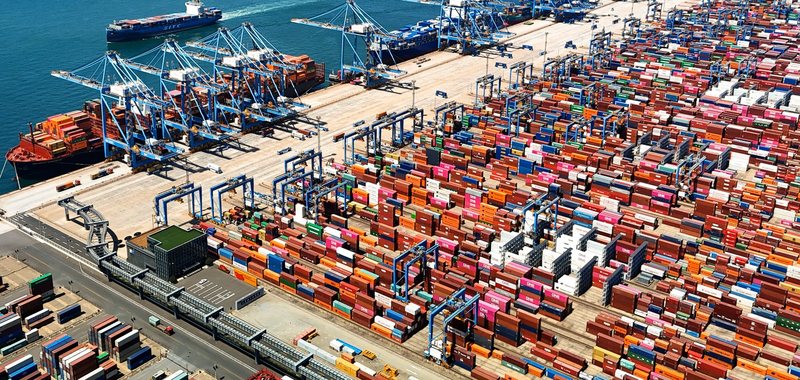
Mexico to raise tariffs on China - President Sheinbaum: We aim to increase domestic production
Mexico's sweeping new tariffs on imports from mainly Asian countries will take effect on Thursday, in a move that will bring Mexico closer to the United......
The FED will lower interest rates in 2026 - It is expected to see the performance of the American economy
The US Federal Reserve is signaling that there will be further interest rate cuts, but it will first suspend successive cuts to give officials more time to......

Trump is expected to choose the new Fed chief - Powell threatens again, expected to fire him in January
US President Donald Trump said he would nominate a new Federal Reserve chairman in January, adding that he was considering filing a lawsuit against current......

How the monthly pension supplement scheme will work - Details of the decision and beneficiary categories revealed
From January 1, 2026, thousands of pensioners in the country will benefit from additional ALL on top of their pension. According to the decision approved by......
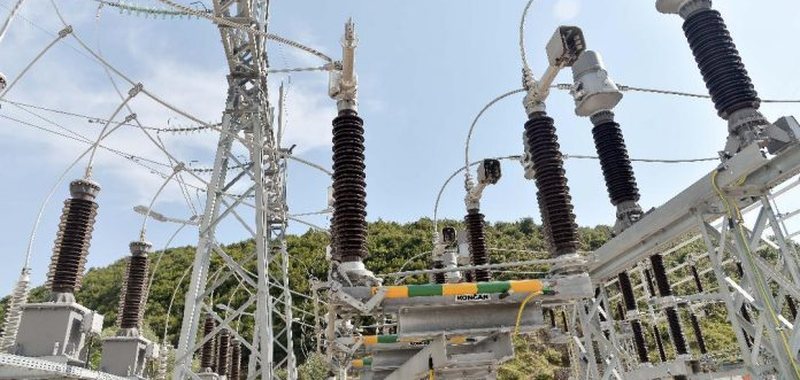
New electrical substation in Tirana - OST opens the competition, aiming to increase energy efficiency
The Transmission System Operator has announced the opening of the competition for the construction of the new 220/110 kV Traktora substation, with a limit......
"Europe must protect peace and prosperity" - Chancellor Merz: Challenge, protectionism in the global economy
Europe must defend its interests more strongly to ensure peace and prosperity in 2026, amid challenges from Russian aggression, global protectionism and......