


"Defense 2025", among challenges and objectives - Investments in human resources, armaments and logistics

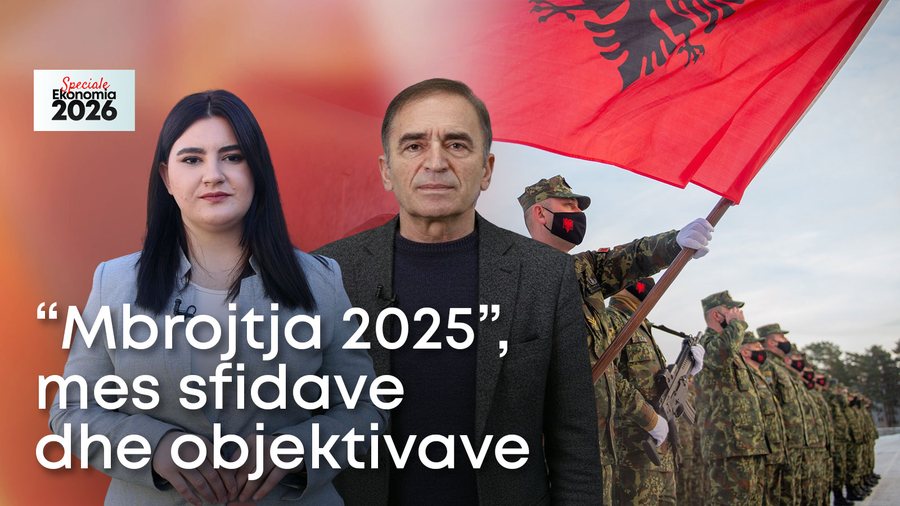
“2025 was a busy year for defense: a higher budget than the previous year, new projects, a resurgence of the military industry and initiatives for drones, patrol ships and investments in civil defense.
From the air to the sea and to former ammunition factories, defense is entering a new phase of modernization and convergence with NATO standards.”
The first point to understand defense in 2025 is the budget. For this year, the Ministry of Defense had at its disposal about 52.7 billion lek, one of the highest levels in recent decades, which brings Albania above the 2% of GDP threshold required by NATO.
This year also coincided with the 113th anniversary of the establishment of the Armed Forces, a symbolic moment that was accompanied by commemorative activities, but also with an emphasis on modernization and their role within NATO.
The budget increase was over 4% compared to the previous year and the focus was divided into several directions: modernization of military equipment and infrastructure; increasing salaries and improving conditions for personnel; increasing the reserve force and investments in civil protection and emergencies.
Financial reports to date show that traditionally 100% of the approved fund is not spent, and even in the first 8 months of 2025, the implementation has been somewhere around half of the annual plan, a technical debate that remains open in investment management, but which does not change the fact that 2025 is the year with the largest budgetary weight for defense.
"Of course, defense has a priority and a special importance due to geopolitical changes. We have a large armament in general, even among NATO members themselves. There has been pressure to increase the budget from 3% to 5% of GDP, in order to strengthen defense and technology capacities.
Albania, as a NATO member, has been included in this initiative, even though it is a fragile economy. For 2025, it had one of the largest budgets, 52.7 billion lek, and for 2026, another increase of over 12% is foreseen."
In this budget, a main pillar is human capital.
The Ministry of Defense has announced salary increases for military personnel and support personnel, as well as improvements to treatment schemes, in order to retain current personnel in the system, increase the interest of young people in a military career, and cope with the numerical growth of the corps.
A new element is the Reserve Force. At the end of 2024, the government approved the law on the creation of the Albanian reserve force. According to this strategy, the reserve is intended to reach around 2,100 personnel by 2030. The Reserve Force will constitute around 25% of the active force, as a readiness to support operations and emergencies. The 2025 budget provided for funds dedicated to the activation of the first reserve company, with costs calculated for salaries, housing, food, uniforms and training.
The reservist model is familiar in many NATO countries, a smaller active force, supported by trained citizens who are periodically mobilized.
"The professional army requires more money, because you no longer have conscripts with forced service, but people who have a profession for their work. They need dignified salaries, housing, training, uniforms, insurance.
Then comes the reserve force: people you have in civilian clothes, but you call them up for training or missions. They will be paid, fed, housed, and equipped.
The main question is: can our economy sustain this model in the long term, or after a few years will these ambitions run up against the wall of financial reality?"
In addition to salaries and numbers, another investment comes to the fore, a new campus of the Armed Forces Academy.
The Ministry of Defense presents the Academy as a project with NATO standards: about 10 hectares of campus, auditoriums, laboratories, training grounds and simulation facilities, with the aim of training new officers according to the practices of allied countries.
This Academy does not aim to be simply a primary school, but also a center for retraining existing staff and, in the future, for training personnel from other partner countries.
From the new Academy campus, the focus shifts to former factories that are trying to revive.
Poliçani, Gramshi, Mjekësi - names once associated with ammunition and light weapons factories - are now back in the spotlight.
Through the state-owned company KAYO and foreign partners, the government aims to build a "Made in Albania" defense industry to supply the Albanian army and, if possible, to enter international markets.
“The war industry is today one of the largest industries in the world. In this sense, the idea that Albania enters the game through KAYO makes sense: to secure part of the supply itself and, if it has the capacity, to sell abroad.
But it is not enough to say 'open a state-owned company'. Arms markets are highly regulated, they have standards, certifications, political controls.
We have seen very sensational initiatives before – national airlines, industrial projects that were sold with great advertising – and after a few years they were quietly closed. The risk exists that, if there is no clear strategy and a secure market, KAYO will remain more on paper than in future balance sheets.”
During 2025, the air and ground infrastructure was also tested through the multinational exercise “Defender Europe 25”, which began in Albania in late May and lasted until June 9, with thousands of troops from the US, NATO and partner countries, who trained in collective defense scenarios under Article 5 of the North Atlantic Treaty. Albanian units participated in land maneuvers in Bizë and Zall-Herr, in the protection of critical infrastructure and in joint operations in the Adriatic Sea, where the Naval Force trained alongside the US fleet, as part of a scenario simulating the Alliance’s rapid response to a crisis in the region.
In the air, the greatest symbol of transformation is the Kuçova air base, opened in 2024.
"For a small country like Albania, the fact that you have a NATO tactical base in Kuçova is a great political and military guarantee.
But this does not mean that we can sit back and say 'NATO protects us'. We need to see how many pilots we have, how many helicopters, how many functional aircraft. How much we are able to maintain this operational base with people and not just with flags."
On the maritime side, 2025 brings two major developments: the project for the naval base in Porto Romano, which the government has presented as part of the transformation of the entire area into a port, energy, and defense complex of regional importance. In official documents, the base appears as a support point for the Albanian Naval Force and for NATO fleets in the Adriatic.
Historic agreement with Italy in November 2025: during the Italy-Albania intergovernmental summit in Rome, on November 13, the governments signed a package of 16 agreements.
At this summit, the Defense Cooperation Agreement was signed between Defense Ministers Vengu and Crosetto, where it was agreed to deliver two 400-class patrol vessels to the Albanian Coast Guard and, most importantly for the industry, Fincantieri and KAYO signed a Memorandum of Understanding for the creation of a naval joint venture in Albania, which will build and maintain ships in a new shipyard in the country.
Thus, the defense triangle for the future seems clear, Kuçova in the air, Porto Romano in the sea, KAYO in the industry.
"The agreement with Italy takes cooperation to a whole new level. Donating ships, bringing Fincantieri into play to build ships here, providing opportunities for operational drones and underwater drones, this is an opportunity that a small country could not have on its own.
But we always return to the practical question, how many sailors do we have, how many technicians do we have, how much money will we have for maintenance? To what extent is the small Albanian state able to guarantee that these ships will not be simply for parades, but for real control of the Adriatic and Ionian Sea?"
A significant portion of the defense budget for 2025 is related to civil defense and emergencies. According to the Ministry of Defense, civil defense funds are increasing, including the establishment of regional civil defense centers, the purchase of firefighting aircraft to deal with summer fires, and investments in equipment, logistics, and training for flood and earthquake situations.
This shows the Armed Forces not only as a military instrument, but as a reaction force in any crisis, from the military front to the fire and flood front.
"We are rightly proud to be in NATO. But in the event of a crisis, whether it is a conflict or a natural disaster, the first reaction is always national.
Do we have shelters for the population? Do we have reserves of food, oil, medicine? Do we have the structures that function on the worst day, not just on parade day?
These are not just military issues. They are economic issues, state management. And this is where the real strengthening of defense is measured."
Defense in 2026 enters a consolidation phase of the course started in 2025. The budget reaches about 58.9 billion lekë, with an increase of about 12% compared to 2025 and brings Albania to about 2.12% of GDP, keeping it above the threshold required by NATO. The government presents this as a continuation of the commitment to strengthen defense capacities and bring the Armed Forces closer to the standards of the alliance.
13 billion lek is spent on salaries, better working conditions, training and career development for personnel. This is related to both the strengthening of the active force and the functionalization of the Reserve Force. In parallel, about 16.3 billion lek is planned for operational readiness - uniforms, ammunition, maintenance of land, sea and air vehicles, logistics, training and missions abroad.
The largest share belongs to capital investments. Around 29 billion lek are going to the technological modernization of the Armed Forces, the digitalization of units and the development of the “Made in Albania” defense industry. This includes projects for new communication and reconnaissance equipment, drones and counter-drones, continued investments in the Kuçova air base, as well as maritime projects in cooperation with partners, especially Italy. In this context, the state-owned company KAYO and the Italian Fincantieri aim to return part of these funds to industry, jobs and production capacities within the country.
A special axis of the 2026 budget is civil protection, which remains a challenge every year, being a country affected by natural disasters, such as fires or floods. with about 4.3 billion lek foreseen for the establishment of regional emergency centers, the purchase of firefighting aircraft and the strengthening of capacities against fires, floods and other natural disasters. This extends the role of the Armed Forces beyond the classic military concept, turning them into a central part of the crisis management system in the country. In the accompanying budget documents, defense is listed among the main priorities of public financing, directly linked to NATO obligations and the European integration process.
"With a budget of almost 59 billion lek, over 2% of GDP, 2026 finds Albanian defense in a new chapter: better wages and conditions for employees, major investments in technology, drones and the 'Made in Albania' weapons industry, as well as an increasingly strong role in civil protection, from fires to floods.
But beyond the numbers, the challenge remains the same: how much of these investments will be able to turn into real, sustainable capacities?"

How did this year end for the major currencies?
The US dollar, after a continuous decline this week, has closed this year positively, marking an increase as it was bought today at 81.3 lek and sold at 82.8......

Owners receive financial compensation - Minister of Justice: For over 13 thousand families, the money is transferred to bank accounts
Over 13,000 families will receive financial compensation for their properties from the Property Treatment Agency. In a video message, the Minister of......
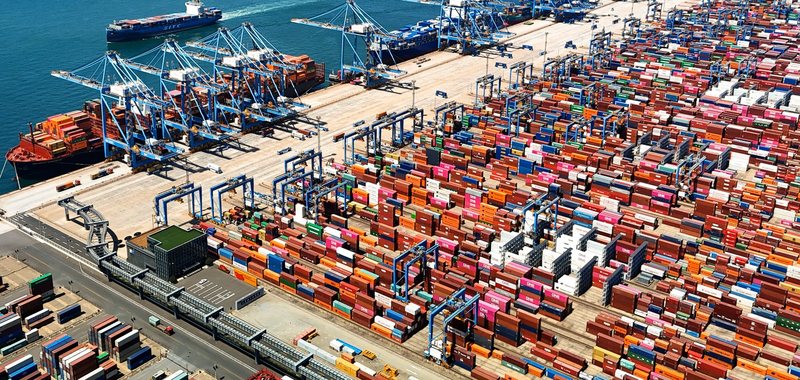
Mexico to raise tariffs on China - President Sheinbaum: We aim to increase domestic production
Mexico's sweeping new tariffs on imports from mainly Asian countries will take effect on Thursday, in a move that will bring Mexico closer to the United......

The FED will lower interest rates in 2026 - It is expected to see the performance of the American economy
The US Federal Reserve is signaling that there will be further interest rate cuts, but it will first suspend successive cuts to give officials more time to......

Trump is expected to choose the new Fed chief - Powell threatens again, expected to fire him in January
US President Donald Trump said he would nominate a new Federal Reserve chairman in January, adding that he was considering filing a lawsuit against current......

How the monthly pension supplement scheme will work - Details of the decision and beneficiary categories revealed
From January 1, 2026, thousands of pensioners in the country will benefit from additional ALL on top of their pension. According to the decision approved by......
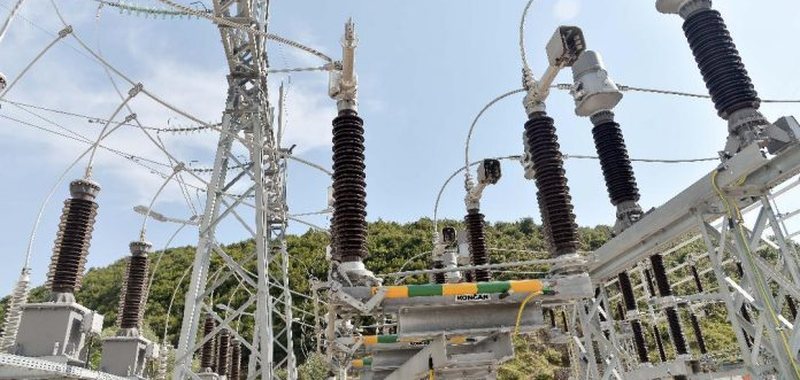
New electrical substation in Tirana - OST opens the competition, aiming to increase energy efficiency
The Transmission System Operator has announced the opening of the competition for the construction of the new 220/110 kV Traktora substation, with a limit......
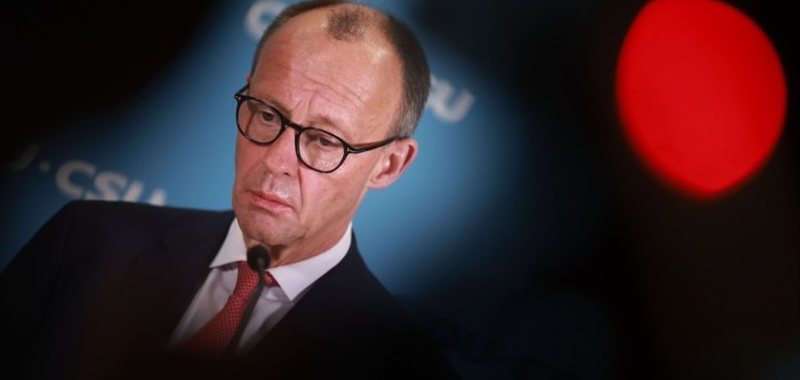
"Europe must protect peace and prosperity" - Chancellor Merz: Challenge, protectionism in the global economy
Europe must defend its interests more strongly to ensure peace and prosperity in 2026, amid challenges from Russian aggression, global protectionism and......