"Inflation is expected to increase in the second half of the year" - Themeli: BoA, in focus is the analysis of shocks from geopolitical developments

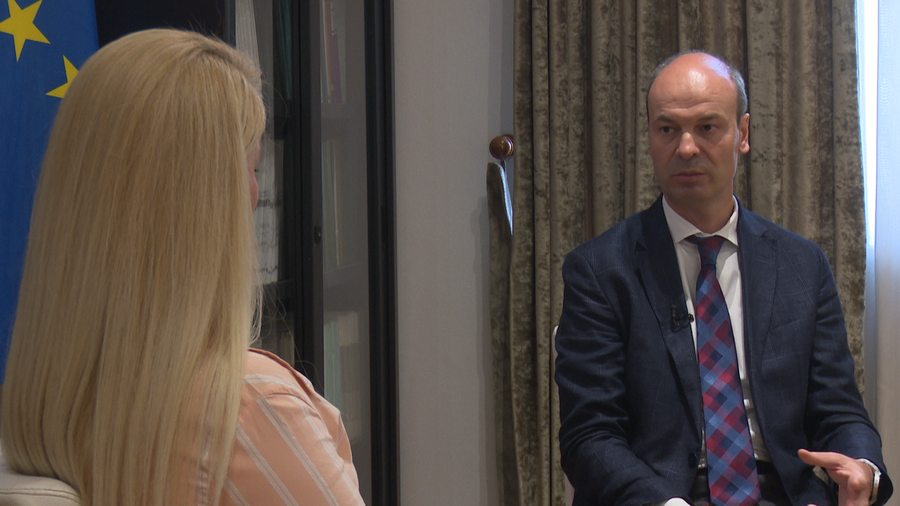
During the second quarter of 2026, Albania faced a supply shock, which came as a result of the increase in oil prices. It was reflected both in the price of fuel in the country and in some other products and services.
The Director of the Monetary Policy Department at the Bank of Albania, Erald Themeli, told SCAN TV that the focus of monetary policy has been the analysis of the impact this shock is expected to have on inflation and economic activity.
"The base interest rate level has remained at 2.5% since July 2025, while we have managed liquidity in the banking sector through the continuous supply of banks with the liquidity they require, and we have continued to have an increased presence in the foreign exchange market to attract part of the excess supply of the euro, which has exerted and continues to exert pressure on the strengthening of the rapid appreciation of the lek. For the future, the BoA's monetary policy will remain engaged and conditioned by geopolitical developments," said Themeli.
Also, Themeli said that in the second half of this year, there is expected to be an increase in inflation, but this blow will have a minimal impact on the economy.
“Central banks are careful to balance on the one hand their legal objective of maintaining price stability, and on the other hand, they are careful to have a minimal impact on the economic level. Regarding price dynamics, our forecasts are that in the second half of the year there will be higher inflation, but not worrying. We expect a rate close to 3% and not to exceed 4%. Again based on the dynamics in international markets, this shock will only have the form of a minimal impact on the economic level, the level of consumption and economic growth. Regarding the future, and the impact of monetary policy, I emphasize that supply shocks are somewhat more difficult for central banks to handle in relation to supply shocks. Precisely due to the fact that supply shocks resulting from rising commodity prices tend to have an opposite effect on inflation in the direction of growth, and on economic activity in the direction of slowing down. the pace of economic activity growth. Precisely for this reason, central banks are careful to balance on the one hand their legal objective of maintaining price stability, and on the other hand they are careful to have as little impact on the economic level as possible. So far the ECB has applied a tightening or stance of monetary policy” – adds the director of the Monetary Policy Department at the BoA.
Regarding the appreciation of the lek, Themeli explained that the Bank of Albania's interventions in the foreign exchange market have only aimed to smooth out fluctuations, without changing the flexible exchange rate regime.
Regarding SEPA, he announced that during the first six months of operation, over 360 thousand cross-border transactions were carried out, worth around 4 billion euros, while the Albanian economy is expected to save around 70 million euros per year from the reduction in transfer costs.

The State Labor Inspectorate is restructured - A new institution with five regional directorates is created
The government has approved the creation of the Central Labor Inspectorate, which will replace the State Inspectorate of Labor and Social Services. The new......

Deadline for fines and late payment interest ends - Taxes: Other relief measures continue until December 2026
June 30 was the deadline for taxpayers seeking to benefit from the most favorable measures provided for in the law on the forgiveness of unpaid tax......

Albania benefits from 6 million euros, strengthening competitiveness - CBAM, opportunities towards the EU market for Albanian industry
Albania is expected to benefit from around 6 million euros, funds that can support the industrial adaptation process, investments in green technologies and the......

Fewer deaths were recorded in 2025 than the year before/ Over half of them are caused by heart and blood vessel diseases
Diseases of the circulatory system continue to be the leading cause of death in Albania. During 2025, they accounted for 52.9% of all deaths registered in......

Who works the most in Albania? Eurostat: We work almost 6.7 hours more than Europeans. Production and construction “record”
The Albanian labor market is showing signs of easing the weekly workload, but we still remain among the nations that spend more time in offices, factories......

Pensioners' bonuses will be credited to their accounts in July, here are the beneficiary categories
Based on the government's decision on the pensioner bonus, there are 11 beneficiary categories. The decision released this evening states that the......
From the bonus for pensioners to the 2027-29 draft budget, here are the decisions approved at the government meeting
The Media and Information Agency has announced the Decisions and Draft Laws approved at today's government meeting, dated June 30, 2026. According to AMI,......

Pensions increase, government grants 5 thousand lek as summer bonus, 777 thousand beneficiaries
About 777 thousand pensioners will receive a bonus of 5 thousand lek. The decision was approved by the government this Tuesday and the cost in the budget is......