Loans for the Durrës-Rrogozhina railway, Malaj: Strategic investment for international connections

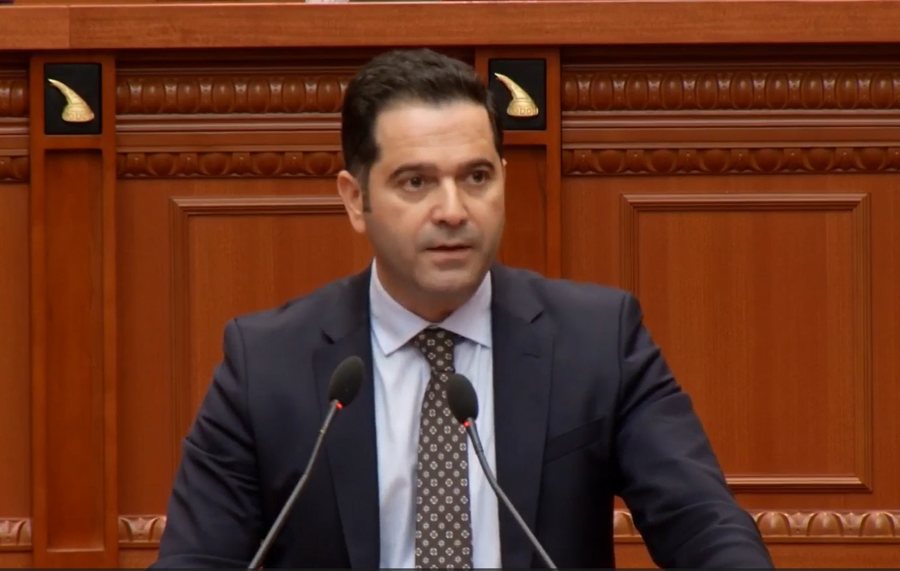
The Parliament is expected to approve today two loan agreements and a grant agreement for the financing of one of the most important railway projects, namely the rehabilitation and modernization of the Durrës – Rrogozhina line. The agreements were presented to the Parliament by the Minister of Finance Petrit Malaj, who in his speech stated that:
"This project marks the first phase of the operation of Railway Corridor VIII, one of the most important in terms of movement and economic development in the East-West direction of Europe. The project is not simply a technical intervention on a railway line, but a strategic investment in guaranteeing national and international connectivity."
It is a concrete step towards an Albania integrated into the Trans-European Transport Network (TEN-T), and a key instrument for meeting our objectives for sustainable economic development and green transition.
The total cost of the project is estimated at around 120.5 million euros and will be financed through close cooperation with international financial institutions and the European Union, specifically including:
A loan worth 30 million euros from the European Bank for Reconstruction and Development (EBRD);
Another loan of 30 million euros from the European Investment Bank (EIB) through the financial contract for the project “Corridor VIII Railway Infrastructure, Phase I – Albania”;
A grant in the amount of 60.5 million euros awarded by the European Union through the Western Balkans Investment Fund (WBIF).
Therefore, the draft laws we bring for ratification constitute an important aspect of the strategic plan.
Railway Corridor VIII constitutes one of the most important axes of European mobility.
It connects the Adriatic Coast with the Black Sea, through Albania, North Macedonia and Bulgaria, creating an efficient alternative route for the international transport of goods and passengers, with a direct impact on increasing the competitiveness of our economies.
This project represents the commitment of the Albanian state, not only to accelerate the modernization of the transport network, but also to increase economic connectivity with the region, as well as to contribute to environmental and social sustainability.
The Durrës - Rrogozhinë segment, with a length of 34 kilometers, will be transformed into a modern railway line, which will be built in full compliance with European technical standards, bringing higher-speed traffic and interconnection with regional and wider networks.
Through the rehabilitation of this line, it will be possible to:
Strengthening the connection between the Port of Durres and the country's industrial and logistics centers;
Connection with the Durrës - Tirana line, currently under construction, and further with Tirana International Airport, enabling integrated movement of goods and passengers;
Connection to the Vorë – Hani i Hotit segment, part of the Flagship 3 project of the European Commission's Investment Plan for the Western Balkans;
Supporting the economic development of the urban areas of Rrogozhina, Kavaja, Golem and Lekaj, by strengthening their integration into the national and regional transport network;
Encouraging the shift from road to rail transport, promoting the reduction of carbon emissions, as well as meeting the objectives of the EU Green Agenda.
Therefore, we can say that this line will serve as a key axis for the expansion of Corridor VIII to the east of the country, towards Elbasan, Pogradec and North Macedonia, consolidating Albania's role as a strategic node in the Balkan transport network and beyond.
The project, on the other hand, provides a direct impact on the economy of the areas through which it will pass,
as it provides:
Traffic for about 170 thousand passengers and over 480 thousand tons of goods per year;
Creation of new jobs;
Further reduction of transportation costs;
Tourism development in related areas.
In this way, the rehabilitation of the Durrës – Rrogozhina line represents a new model of our approach to public investments in infrastructure: an approach that is technical in standards, strategic in purpose and European in vision. It represents our conviction that rail transport is an inseparable part of the country's economic sustainability.
Regarding the financial terms of the loan agreements, let me clarify that:
The EBRD loan, worth 30 million euros, has a maturity of 17 years, with a 5-year grace period and an interest rate that will be determined on a market basis at the time of disbursement, adding to the 6-month Euribor reference rate plus a margin of 1%.
The EIB loan, also worth 30 million euros, has a maturity of 25 years, with a 5-year grace period for the principal. This agreement includes the option of choosing between fixed or variable interest during disbursement. The Ministry of Finance, based on the assessment, will also approve the interest rate for each tranche that is disbursed.
If we add the grant of 60.5 million euros to these loans, then we can say that the effective interest rate will be negative, around -3.4%.
This means that the grant itself fully covers the interest costs of the loans and exceeds them.
Therefore, for all of the above, we invite you to approve these draft laws, as a necessary step to fulfill public interests, for the benefit of European integration processes.

KESH's solar photovoltaic park in Belsh, the guarantee agreement passes to the Parliament
Minister of Finance Petrit Malaj has asked the deputies in the Assembly to approve the guarantee agreement with the EBRD for the construction of a solar......
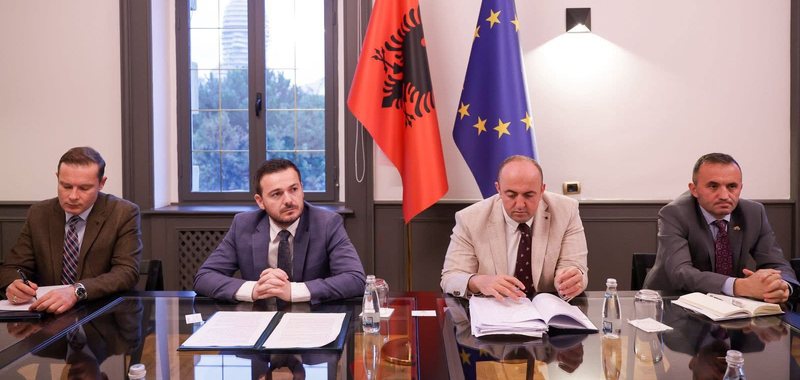
Minister Salla meets with World Bank representatives on the progress of the CRAD project
The Minister of Agriculture and Rural Development, Mr. Andis Salla, held a working meeting today with Mr. Sameh Naguib Wahba, Regional Director of the Planet......

Teenagers, facing technology - Is blocking social networks a solution?
The use of social networks by teenagers has become a global problem. Many countries are trying to ban them for minors, by setting age limits. The latest is......
What are the four priorities of regional trade? - Albania takes the lead of CEFTA in 2026
Albania is expected to take over the CEFTA Presidency in 2026. But what is CEFTA? The Central European Free Trade Agreement (CEFTA) is a regional mechanism......

Is it worth keeping your money in digital banks? - Higher interest rates on deposits than physical ones. Small players remain in the market
Digitalization is transforming the provision of banking services, bringing about the emergence of new business models of digital banks, which do business......
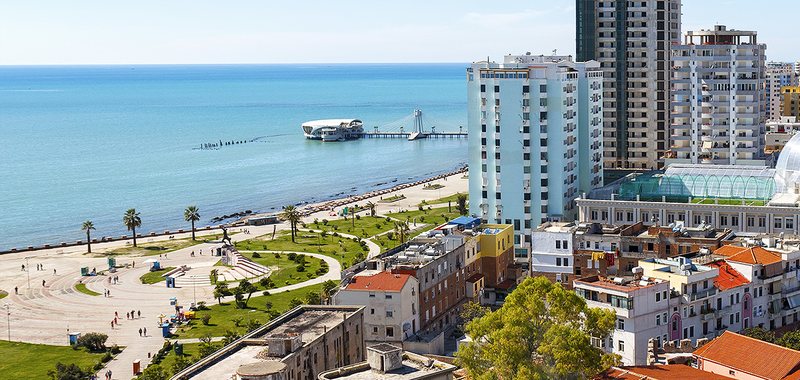
Durrës, towards a contemporary tourist destination - ADF, investment of over 540 million lek for the transformation of the coastline
The Albanian Development Fund has announced the opening of the third phase of the competition for investments in the infrastructure of markets,......

Innovation and digitalization, the path of businesses to the EU - Ibrahimaj: A program dedicated to enterprises to transform
Albania is at a crucial moment in its journey towards European integration. With all negotiation chapters with the European Union now open, sustainability,......
For the first time, a digital bank enters Albania - Tafa: 100% online, without physical branches. Cybersecurity and citizen education, a challenge
After Ziraat, the Bank of Albania has paved the way for another bank to enter the market. The Central Bank has given preliminary approval for the licensing......