"The conflict in the Middle East, temporary effects on the economy", Sejko: Beware of the uncertainties of the future

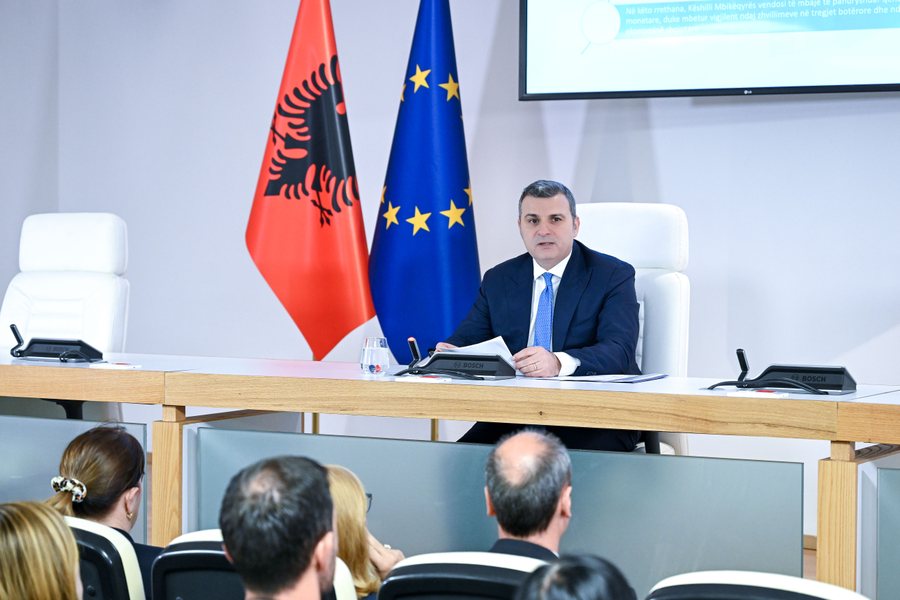
The Bank of Albania has decided to keep the key interest rate unchanged, confirming a cautious monetary policy stance in the context of an economy that continues to grow, but remains exposed to external risks. At the press conference on monetary policy decision-making, Governor Gent Sejko emphasized that the Albanian economy has shown positive performance in early 2026, supported by increased economic activity, employment and wages, as well as by the expansion of lending to the private sector. However, he warned that international developments, especially geopolitical tensions, remain a risk factor for the global and Albanian economy, requiring a cautious approach in future decision-making.
"Based on the available information, the baseline scenario forecasts suggest that the increase in oil and energy prices in world markets will cause a slight and temporary increase in inflation above the target during 2026, as well as a marginal slowdown in the pace of economic growth in the country. This forecast factors in the positive development trends of the Albanian economy, improved indicators of economic and financial stability, expectations for a relatively quick end to the conflict in the Middle East, as well as the increased response space of our macroeconomic policies. Based on these premises, the effects of the shock are expected to be temporary and not leave long-term traces on the country's development trends. However, uncertainty about the future remains high and the balance of risks to inflation is shifted to the upside," said Sejko.
The Governor underlined that monetary policy has contributed to maintaining financial stability and creating favorable conditions for lending and investment, while financial markets appear stable.
Speech by the Governor of the Bank of Albania, Gent Sejko
Dear media representatives,
Today, on May 6, 2026, the Supervisory Council of the Bank of Albania reviewed and approved the Quarterly Monetary Policy Report.
The focus of this Report was to assess the impact that the Albanian economy is expected to have from the price shock in international markets, as well as to identify the appropriate monetary policy stance.
Based on the available information, the baseline scenario forecasts suggest that the increase in oil and energy prices in world markets will cause a slight and temporary increase in inflation above the target during 2026, as well as a marginal slowdown in the pace of economic growth in the country. This forecast factors in the positive development trends of the Albanian economy, improved indicators of economic and financial stability, expectations for a relatively quick end to the conflict in the Middle East, as well as the increased space for the response of our macroeconomic policies.
Based on these premises, the effects of the shock are expected to be temporary and not leave long-term traces on the country's development trends. However, uncertainty about the future remains high and the balance of risks to inflation is shifted to the upside.
In these circumstances, the Supervisory Council decided to keep the monetary policy stance unchanged, remaining vigilant to developments in global markets and their impact on the Albanian economy.
[ Allow me to provide you, below, with a more detailed overview of our opinion on economic and financial developments, as well as detail the monetary policy decision and the reasons that motivated it. ]
***
Consumer price inflation averaged 2.5% in the first quarter of 2026, registering a slight increase compared to the previous quarter. This performance was dictated by the increase in rent and oil prices, as well as the stabilization of the annual price of electricity for households. On the other hand, the prices of food and other items in the basket had a more stabilized performance.
The direction of inflation in the first quarter was in line with our expectations and this indicator still remains below target. However, the rapid increase in oil prices in world markets in March immediately had its impact on this month's inflation, illustrating the beginning of its transmission to the Albanian economy.
In macroeconomic terms, inflation performance over recent quarters has been driven by rising domestic pressures and low levels of imported inflation. However, excluding high rent inflation, which is expected to be temporary, domestic pressures remain in line with our price stability objective. On the other hand, low levels of imported inflation have been driven, to a significant extent, by the appreciation of the exchange rate. However, the increase in oil prices and its transmission to other items is expected to be accompanied by an increase in imported inflation over the coming quarters.
The Albanian economy is facing a supply shock stemming from the increase in oil prices in international markets from a relatively consolidated economic position.
According to INSTAT data, the volume of economic activity in the country increased by 3.8% during the fourth quarter of 2025. Its expansion was supported by the increase in household consumption, private sector investments, and exports of services. On the other hand, fiscal policy maintained a consolidating nature while exports of goods declined. In terms of sector, economic growth was reflected in the expansion of activity in the services and construction sectors, while the agricultural and industrial sectors continued to contract. The available information suggests similar growth rates and structure during the first quarter of this year.
The increase in demand for goods and services has been reflected in an increase in employment and wages in the non-agricultural private sector, and in an unemployment rate of 8.3%, which is also the historical minimum level of this indicator in the post-transition period. However, the relatively rapid increase in wages has not been transmitted to an increase in consumer prices, as a result of its partial absorption by productivity growth and the decline in the profit margin of businesses per unit. Also, medium-term inflation expectations continue to remain anchored near the target.
In parallel with these developments, public and foreign debt have been declining, the financial balance sheets of businesses and households are sound and liquid, the banking sector appears solid and resistant to shocks, while financial markets appear calm.
This picture reflects, among other things, the positive contribution of our prudent monetary policy. The timely and consistent response to inflation developments has made it possible to maintain price stability, control inflation expectations, the smooth functioning of financial markets, curb the speed of exchange rate appreciation, and improve financing conditions.
As a result, financial markets continue to be characterized by abundant liquidity, low interest rates, and a positive approach to lending.
Favorable financial conditions have been reflected in the rapid and broad-based expansion of credit to the private sector. The loan portfolio recorded an annual growth of 13.7% during the first three months of the year, continuing to display good quality indicators, a gradual increase in the share of loans in Lek, and an orientation towards financing business investment projects and household housing purchases. In this way, the growth of bank credit has continued to support the expansion of private sector consumption and investment, thus making a positive contribution to economic growth.
The update of the baseline scenario forecasts is based on the assumption of a relatively rapid resolution of the conflict. The sound initial position of the Albanian economy suggests that the price shock will bring a temporary increase in inflation above the target over the coming quarters. However, this increase is expected to be mild and transitory; with the end of the direct effect of the shock and the control of its indirect effects, inflation is expected to gradually decline towards the target in the medium term. The Albanian economy is also expected to maintain positive growth rates over the coming years, close to our estimates of the potential for expansion of economic activity. For the time being, the increase in uncertainty and the increase in the price of oil import bills are expected to have a negative, but only marginal and transitory, impact on the economic growth indicator in 2026.
However, the military conflict and geopolitical tensions in the Middle East remain a source of risk and uncertainty for the global and Albanian economies. Its impact on the economy and inflation will depend significantly on the duration and intensity of the conflict, shifting the balance of risks to the upside for inflation and to the downside for economic growth in the medium term.
***
Based on the above, the Supervisory Council of the Bank of Albania decided:
- to keep the base interest rate unchanged, at 2.5%;
- to keep the overnight deposit interest rate unchanged, at 1.5%;
- to keep the overnight loan interest rate unchanged at 3.5%.
The Supervisory Council judged that the current monetary policy stance remains appropriate for the time being. This stance enables the fulfillment of the baseline scenario projections, providing the Albanian economy with appropriate monetary conditions for the return of inflation to target. It also addresses uncertainty about the future performance of the economy and inflation, allowing more time to monitor the performance of oil prices in international markets and providing the necessary flexibility for a timely response to adverse developments.
The Supervisory Council notes that the monetary policy response will continue to be oriented, in any case, towards respecting the price stability objective, taking care that the supply shock does not turn into sustained and long-term inflationary pressures.
The Supervisory Council will monitor the situation carefully and continuously. Based on new data, it remains ready to react in a timely, appropriate and forceful manner to any material risks to price stability.

Vocational schools, cooperation with business - Xibraku: Profiles are designed based on market demands, high interest
The dynamics of the labor market in recent years have been changing rapidly, which has also changed the orientation of young people and their approach to......
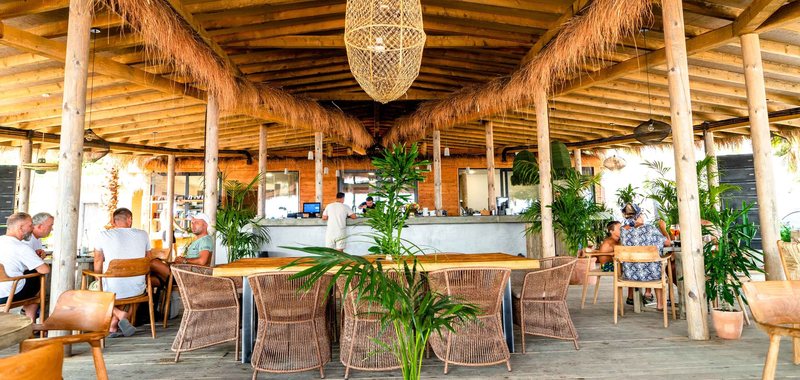
Are tourist structures ready for tax controls? - Sinojmeri: They must be in sync with the laws of the Albanian state
Tourist structures in the country are facing a new phase of controls by the tax administration. The Tax Directorate has presented a sectoral plan for......
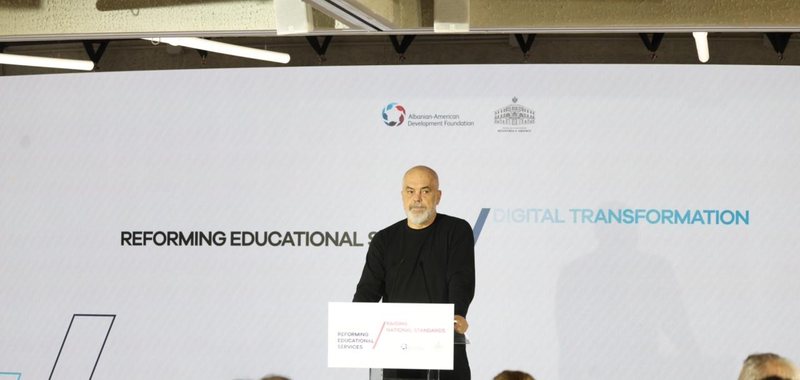
Government, agreement with AADF for education - Rama: Standard of excellence from Cambridge
The Ministry of Education has signed an agreement with the Albanian-American Development Foundation to modernize evaluation systems in the new National......
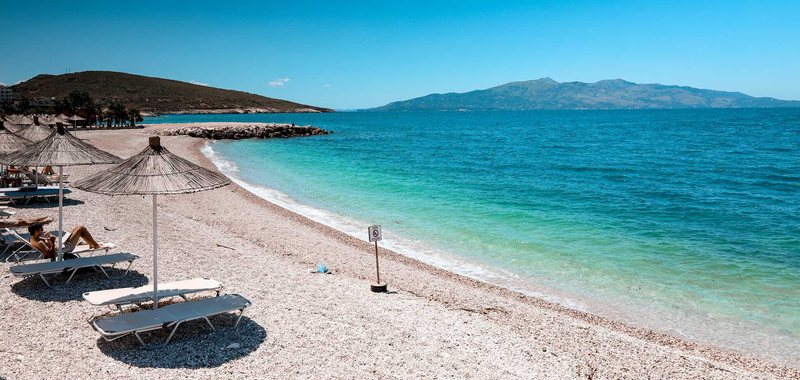
How much does it cost to discover the Albanian Riviera? Prices are rising slightly, but the country remains among the most economical destinations in the region
Exploring Albanian nature and beauty is increasingly becoming one of the main reasons why domestic and foreign tourists choose Albania as a destination. The......

Activity increases on the Albanian energy exchange - Trading volumes on ALPEX doubled in January-March 2026
The Albanian Electricity Exchange, ALPEX, has recorded a significant increase in trading volume during the first quarter of 2026, reflecting changes in the......

Taxes collect 408 million euros in April - Exceeding the plan by 12 million euros. Impact, anti-informality
The tax administration has significantly increased revenues during the month of April 2026. Referring to preliminary data published by this institution,......

Additional measures to prevent road accidents - State Police: Monitoring on national axes and urban centers
In order to prevent road accidents, the Department of Public Order and Security, through the Traffic Police Directorate, has taken a series of additional......

Artificial intelligence for scanning invoices in tourism - How the process will work and when businesses are considered in violation
At the start of the tourist season, accommodation structures, bars and restaurants will be targeted by the tax administration for monitoring the issuance of......