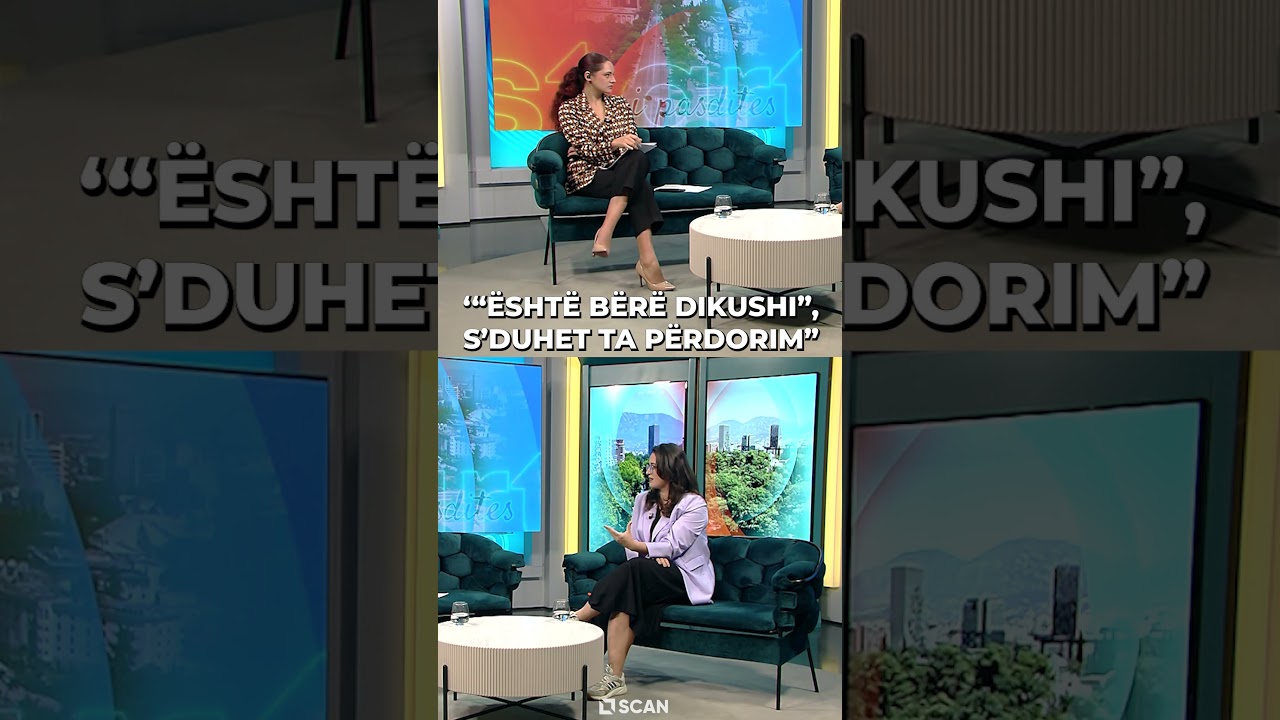
Will the beauty sector be formalized with indicative salaries? - Hasalla: Taxes must be followed rigorously to give the right effect


The personal care sector, one of the most exposed to informality, has been put in the spotlight of the Tax Administration. By setting indicative salaries for professions such as hairdressers, beauticians or personal trainers, the aim is to identify cases where real income is not declared according to the level of work.
Gertjana Hasalla Employment Expert:
"Really, this new indicative salary measure, which is basically a reference salary set for various professions, including the beauty or personal care sector in this case, is a well-thought-out measure and a necessary measure. What we also need to think about is whether the tax sector and the entire department will actually be able to follow this measure step by step in its implementation."
According to the expert, the indicative salary is not a legal obligation, but an instrument used by taxes to assess the risk level of businesses, based on the salaries they declare for their employees.
"The minimum wage is a legal obligation. Meanwhile, the indicative wage is a wage that is used by taxes to see if a business is really categorized as high risk, medium risk or low risk. So, if taxes see that you have specialist people employed, who only receive the minimum wage, they categorize you as a high-risk business and come and really see if these people belong to this category that you have decided or if they belong to another category.
And this is always decided based on the employee's experience, based on the employee's education, based on the job category. Seeing this, taxes can take administrative measures, first by imposing fines, secondly, definitely warnings, but also other administrative and criminal measures related to it. So we must always be more careful now as businesses, even in the personal care or beauty, aesthetics sector, to hire employees for that job category and pay them according to the category correctly, not by giving them informal cash or extra money that is not declared."
According to Hasalla, the failure to declare so far has caused the Albanian economy to be informal in these sectors, and does not bring the possibility of increasing pensions either.

Railways, projects over 1.7 billion euros - Priorities 2027-2029, cost for Durrës-Pristina 750 million euros
The government has identified a number of priority projects in the rail transport sector for the period 2027–2029, some of which are classified as "mature"......

How much 'savings' do Albanian businesses have in the bank? At the end of 2025, 354.6 billion lek of insurable deposits
Albanian businesses had 354.6 billion lek of insurable deposits in banks at the end of 2025, but most of this amount remains above the coverage limit of the......

OPEC+ mund të rrisë prodhimin e naftës - Sipas analistëve, do të ketë pak ndikim të menjëhershëm në furnizim
OPEC+ mund të rrisë më tej prodhimin e naftës kur tetë anëtarë të takohen të dielën, një veprim që do t'i poziciononte prodhuesit kryesorë për të shtuar më......
Less energy losses in the network - ERE: In 2025 the level of distribution losses reached 16.96%
The level of losses in the distribution network for 2025 was recorded at 16.96%, or almost 1% less than the same period last year, where losses were......

Investment risk map, how does Albania rank? The country is positioned among the most stable economies in the region
Visual Capitalist has published a study on the countries that pose the greatest risk to investment. According to the data, the gap between economies is......

Accounting law amended - Finance: More control for large companies, transparency is aimed
The Ministry of Finance has proposed several amendments to the law "On Accounting and Financial Statements", with the aim of improving the quality of......

Italy extends fuel excise tax reduction - Government decision, until May 1, 1 liter will cost 24.4 cents less
Italy's fuel excise tax cut, approved on March 18 to control prices, ends on April 7. Meanwhile, the government on Friday extended the 24.4 cent/liter cut......

62 complaints about public procurement in January - KPP Bulletin: Most of them are related to the evaluation of bids
The first month's bulletin of the Public Procurement Commission highlights a significant number of complaints about tendering procedures, highlighting......