Serbia prefers Chinese loans - They are obtained faster and with fewer political conditions, but transparency is lacking


About 11 percent of Serbia's external debt consists of liabilities to the Chinese Export-Import Bank (EXIM), according to the latest October report by the Directorate for Public Debt, which operates under the Serbian Ministry of Finance. The country is currently repaying more than 10 Chinese loans, mainly for infrastructure projects, with a total value of about 2.8 billion euros.
However, the real debt to China is even greater, as Serbia has also received loans from the Bank of China, particularly for municipal infrastructure and sewage projects.
According to official data, Serbia is more exposed to EXIM Bank loans than to some European financial institutions, including the European Investment Bank. Chinese loans are obtained faster and with fewer political conditions, but lack transparency and public tendering procedures.
The involvement of Chinese companies in infrastructure projects in Serbia has often been accompanied by accusations of circumvention of public tenders. Serbian authorities rely on a 2009 agreement with China on economic and technical cooperation, which allows for direct contracting.
The issue of transparency became even more sensitive after the tragedy at the Novi Sad Railway Station, where 16 people lost their lives in November 2024. The project was implemented by a Chinese consortium, without a public tender, and is currently under investigation by the Organized Crime Prosecutor's Office. Serbia will repay the loan for this project by 2039, while the current debt amounts to 763 million euros.
Serbian authorities prefer Chinese loans because they are not associated with political conditions, unlike European loans that require standards for elections, human rights, and media freedom.
Although Chinese loans are on average 0.5 to 1.2 percent more expensive, they are seen as a quick way to get infrastructure projects underway before elections. China sees Serbia as part of its strategic "Belt and Road" initiative, which aims to connect the port of Piraeus in Greece to Central Europe via railways and highways.
In addition to loans, China is also present in Serbia through large investments in mining, metallurgy, and energy, often accompanied by criticism of environmental pollution and lack of accountability.
Experts warn that Serbia-China cooperation contains many "dark areas", especially due to secret contracts, lack of tenders and suspicions of corruption.

Trump cancels second attack on Venezuela - "We are cooperating well. Oil companies will invest 100 billion USD"
US President Donald Trump said on Friday he had called off a second series of planned strikes on Venezuela after the South American country cooperated. Trump......

Wine producers, declarations by January 15 - New regulation/ Obligation for cultivated areas and quantity of products
The high level of informality in the wine sector has led the government to take measures to create a complete database with detailed data. The government......

Free Roaming in the region, what are Albanian businesses gaining? RCC: 44% of them see ease in communication, 31% report cost reduction
“Roaming Free” in the Western Balkans has brought tangible changes to the way businesses operate in the region, but its impact has not been the same in all......
KESH conducts first energy sale - Rainfall increases production, securing around 1.1 million euros in revenue
As flows in the Drini Cascade have reached high levels as a result of recent rainfall, the Albanian Power Corporation has sold a small amount of energy,......
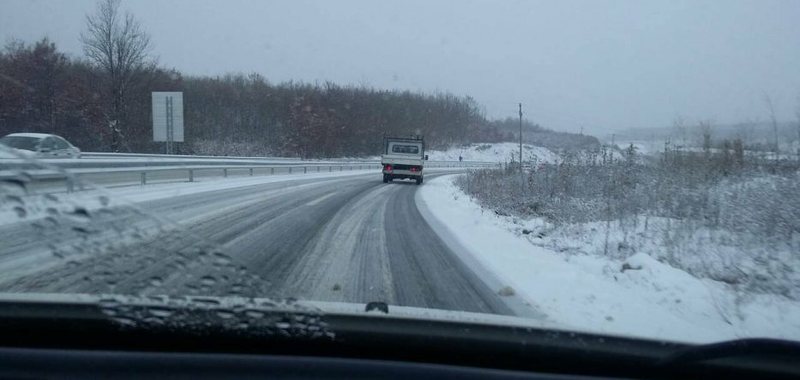
In Steblevë, Librazhd, the snow reaches 40 cm - Mayor Disha: The roads are open, all units are safe!
The Mayor of Librazhd, Mariglen Disha, is on the ground together with the Political Director of the District, Arbjan Mazniku, to closely monitor and manage......
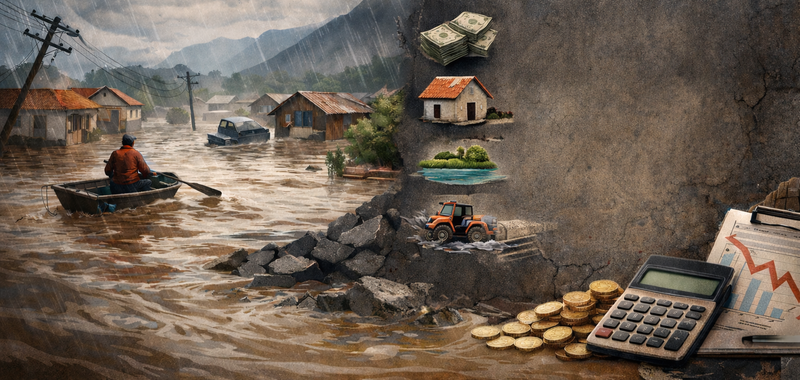
From natural emergency to national economic shock/ Floods in the country, affected regions account for about 40% of GDP
The floods of recent days are not just an extreme weather episode, but also a direct blow to the country's economy. The most affected areas represent a......

"Those affected by the floods will be compensated" - Prime Minister Rama: For housing, as well as for living things
All citizens affected by the floods will be compensated. Prime Minister Edi Rama announced this during the meeting of the Inter-Ministerial Committee for......

Albanians say no to SMS! - AKEP: They want more internet. Is the market offering fair prices for packages?
An average Albanian consumed about 10.41 GB of Internet, 129 outgoing minutes and 11 SMS during the third quarter of 2025. According to the latest data from......