Mandatory reserves to avoid crisis - Serbian government decision, after the closure of the NIS oil refinery


Serbia is finalizing an action plan outlining steps to introduce mandatory reserves of oil derivatives on the market after its sole refiner, the Russian-controlled and US-sanctioned NIS, began shutting down refineries due to a lack of crude oil for processing, the government in Belgrade said.
The mandatory reserve mechanism is designed to overcome temporary supply disruptions by covering fuel volumes missing from reserves, the government said in a media release. No crude oil has arrived in Serbia for about two months, but citizens and the economy have not felt it.
On Tuesday, President Aleksandar Vučić said that Serbia that day had 53,900 tons of oil in cargo reserves and 150,590 tons in mandatory reserves, which is enough to supply the market until the end of January. Serbia also had 14,533 tons of gasoline in mandatory reserves and 4,000 tons in cargo reserves, Vučić said, noting that oil accounts for 82% of total fuel consumption.
Vučić also stressed that the 327 NIS gas stations in Serbia account for 48% of the total turnover of petroleum products in the country.
On Wednesday, NIS's largest single shareholder, Gazprom Neft, said in a statement that the Serbian company had made the necessary adjustments to its operations, that the Serbian market is currently supplied with oil derivatives in the necessary quantities, and that NIS continues its production, which allows it to create certain reserves of raw materials.
NIS is owned by Gazprom Neft with 44.85%. The Serbian government has 29.87% ownership, and St. Petersburg-based Intelligence, a company indirectly controlled by Gazprom, has 11.3%. The rest belongs to a number of minority shareholders.
The US Treasury first announced sanctions on the Serbian refinery in January due to its Russian ownership and is seeking a full exit of the Russian shareholders.
In addition to Serbia, NIS is also active in Bosnia and Herzegovina, Bulgaria and Romania and employs around 14,000 people.

"There are jobs, but there are no professionals" - The same refrain in North Macedonia
The paradox of the labor market in North Macedonia is becoming more and more apparent every year, with high unemployment on the one hand and thousands of job......

Meta, under the EU's "magnifier" - The company will be investigated for the use of AI in Whatsapp
Brussels has launched a new investigation into Meta Platforms over how the company deployed artificial intelligence functions on WhatsApp, the European......

Pensioner bonus, Rama: In the first 3 days, 96,292 citizens withdrew the benefit
In the first 3 days, 96,292 pensioners have withdrawn the end-of-year benefit, also known as the pensioner bonus. The figure was published on his social......
"Cashless Albania 2030", initiative aims to increase the use of digital payments by citizens and businesses
Albania is taking steps towards an increasingly digital economy, through a national program that aims to facilitate payments for citizens and businesses and......
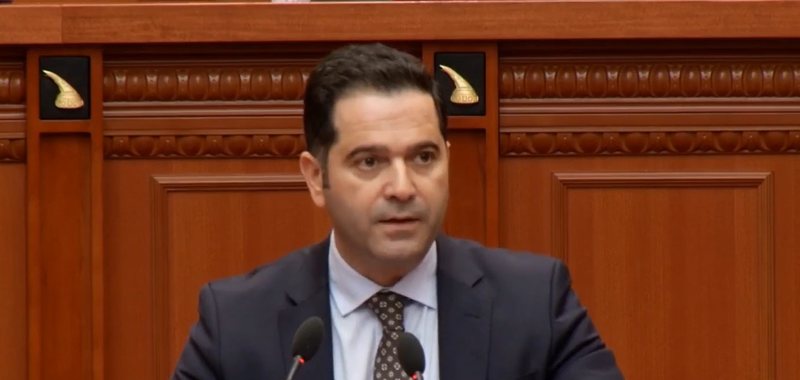
Loans for the Durrës-Rrogozhina railway, Malaj: Strategic investment for international connections
The Parliament is expected to approve today two loan agreements and a grant agreement for the financing of one of the most important railway projects, namely......

KESH's solar photovoltaic park in Belsh, the guarantee agreement passes to the Parliament
Minister of Finance Petrit Malaj has asked the deputies in the Assembly to approve the guarantee agreement with the EBRD for the construction of a solar......
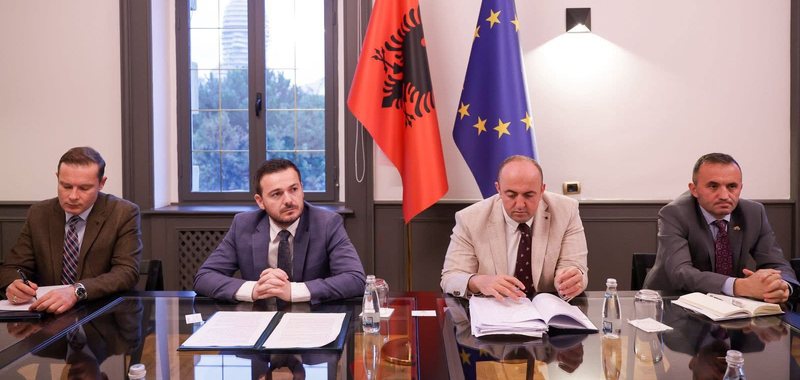
Minister Salla meets with World Bank representatives on the progress of the CRAD project
The Minister of Agriculture and Rural Development, Mr. Andis Salla, held a working meeting today with Mr. Sameh Naguib Wahba, Regional Director of the Planet......

Teenagers, facing technology - Is blocking social networks a solution?
The use of social networks by teenagers has become a global problem. Many countries are trying to ban them for minors, by setting age limits. The latest is......