"Western Balkans economy slows" - WB: Job creation essential to support growth


In its Regular Economic Report for the Western Balkans, the World Bank notes that growth slowed this year as inflation dampened consumption growth and rising uncertainty dampened trade and investment, despite strong wage and credit growth. Fiscal policy, although somewhat eased, remained disciplined, with the deficit below 3% and public debt continuing its downward trajectory.
The report forecasts that the combined economic growth of Albania, Bosnia and Herzegovina, Kosovo, Montenegro, North Macedonia and Serbia will reach 3.0% in 2025, which is 0.2 percentage points lower than previous forecasts. Growth is expected to accelerate to 3.1% in 2026 and 3.6% in 2027.
"Economic growth in the Western Balkans is projected to accelerate at a moderate pace in 2026 and recover more strongly in 2027, supported mainly by increased exports and investment, as uncertainties in the global economy ease," the World Bank underlines.
But, to support progress towards approximation with the European Union, the international financial institution suggests that the region should focus on creating better quality jobs.
The Western Balkans faces a labor market paradox: labor shortages continue to be present in some sectors, in parallel with high unemployment rates, above 10%, and low labor force participation, which remains below 55%, especially for women, youth, and the elderly.
Demographic trends are further exacerbating these challenges. The working-age population has declined significantly and is projected to shrink by almost 20 percent by 2050. If current population, economic growth, and labor market trends continue, the region could face a shortage of more than 190,000 workers over the next five years.
To pave the way for economic growth, the World Bank says the Western Balkans must invest in basic infrastructure, which is essential for job creation. This includes strengthening education and health systems and increasing labor force participation - especially for women. Investment in transport, environmental and energy infrastructure would help connect businesses to workers faster and more efficiently, thereby improving productivity.
Second, strengthening governance and supporting policies for business creation, along with a predictable regulatory environment, are essential for the functioning and growth of the private sector. Promoting competition in key sectors such as energy and transport, reforming state-owned enterprises, simplifying regulations, and supporting innovative new businesses (start-ups) will enable businesses to expand and improve the quality of services.
Finally, private capital mobilization should support businesses with financing, investments, guarantees and insurance, while also encouraging the use of the latest digital and green technologies.
“Foreign demand boosted the Albanian economy” - WB report: Faster implementation of reforms will increase per capita income
"Despite a slowdown in tourism growth, the services and construction sectors were the main drivers of economic growth on the supply side, offsetting declines......
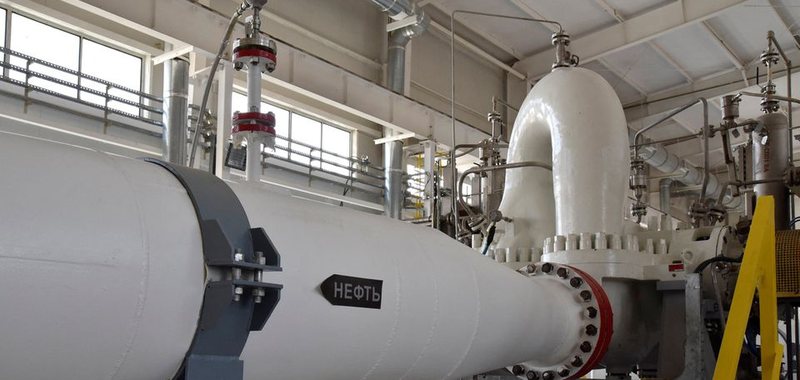
Security of energy supply in the country/ MEI: Draft law on strategic oil reserves. Special management authority!
The Ministry of Infrastructure and Energy has issued for public consultation the draft law on the creation, maintenance and management of minimum security......
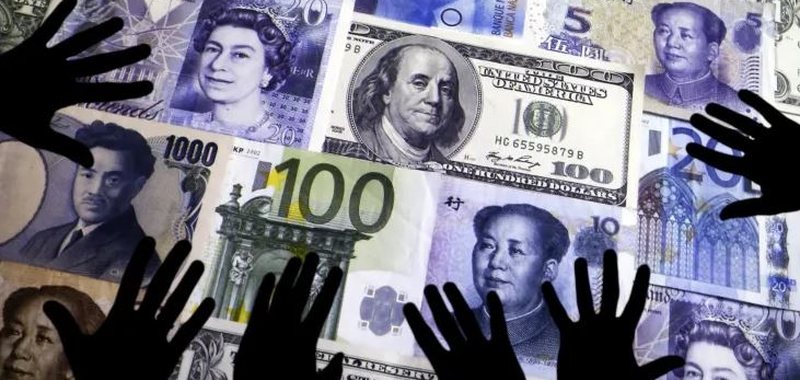
Growth in the foreign exchange market – Dollar, Franc and Pound Strengthen!
The US dollar has increased in value this Tuesday, strengthening from the day before as it was bought today for 82.3 lek and sold for 83.3 lek according to......
Trump and G7 increase pressure on Turkey - Can Ankara give up Russian energy and gas?
During a meeting with Turkish President Recep Tayyip Erdogan, Donald Trump demanded that Turkey stop buying oil and gas from Russia. G7 countries have also......

Cash or card payment? - Countries that use physical money the most in Europe
According to a survey by the European Central Bank, the share of cash payments continues to decline, while the use of digital methods is expanding. However,......
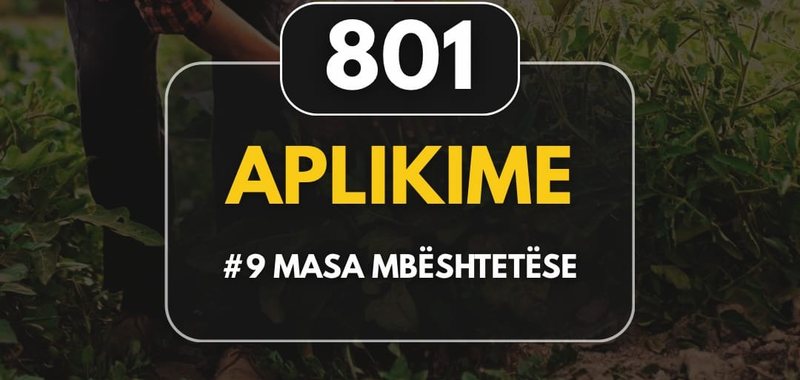
The application phase for the National Investment Scheme is concluded: 801 requests from farmers across the country!
The National Investment Scheme 2025 has successfully concluded the application phase on September 30, marking high interest from farmers across the......
Historical, Albania launches SEPA payments - Maximum 3 euro commission for remittances. Millions of euros in savings for Albanians
From October 7, every Albanian immigrant can send money to their family in Albania using SEPA. Albanians within the country can also initiate transactions in......
"Albania 2030"/ Spiropali: Economic diplomacy, a key part of the vision
The Minister for Europe and Foreign Affairs, Elisa Spiropali, has emphasized that economic diplomacy remains one of Albania’s main priorities within the......