Household incomes fall in Greece and Austria - despite overall OECD growth


New OECD data shows a widening gap between economic growth and household prosperity, with Greece and Austria experiencing the sharpest declines in real income. Real household income per capita in OECD countries grew by 0.2% in the first quarter of 2026, slowing from the 0.6% growth recorded in the fourth quarter of 2025. Over the same period, real GDP per capita grew by 0.3%, up from 0.2% in the last quarter of 2025.
While GDP growth captures changes in overall economic activity, household income growth reflects changes in the income that households receive, that is, the income available for consumption or saving.
Of the 21 countries for which data are available, 13 recorded an increase in real household income per capita, while the other 8 saw a decrease. Among the G7 economies, real household income per capita increased by 0.2% in the first quarter of 2026, although developments varied from country to country.
In Italy, real household income per capita recovered after a decline of 0.9% in the fourth quarter of 2025 and increased by 0.8% in the first quarter of 2026. The recovery was mainly driven by higher compensation of employees, associated with a slight decline in the unemployment rate (from 5.7% to 5.4% in the first quarter of 2026), which offset a decline in social benefits.
Conversely, the sharpest declines in the first quarter of 2026 were recorded in Greece and Austria, where real household income per capita contracted due to falling net property income and social benefits, falling by 3.6% and 2.8% respectively.
Real disposable income per capita of households in Greece fell by 3.6% compared to the previous quarter, the largest decline among OECD countries. The decline is mainly due to two factors: a decrease in net property income, such as interest, dividends and investment income, and a decrease in net social benefits to households.

Lending activity expands in Kosovo - Loan stock reached 6.67 billion euros last year
The lending activity of the banking sector in Kosovo continued to expand during 2025, but at a slower pace compared to the previous year. The loan stock......

Record high temperatures - Western Europe records hottest June and July on record
Western Europe experienced its hottest June and July on record, according to data released on Monday by the EU's Copernicus Climate Change Service. The......
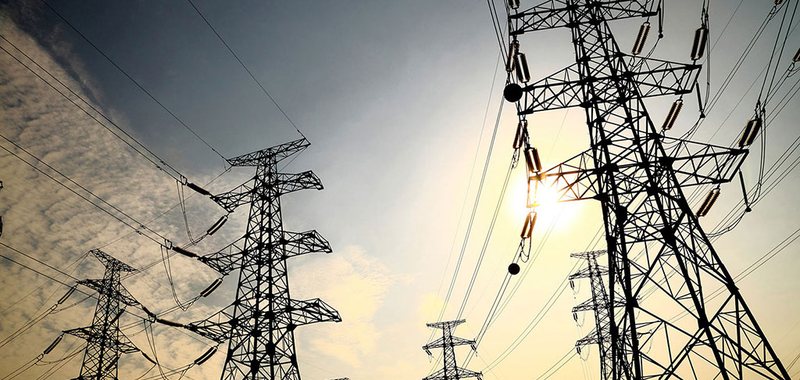
Better quality energy supply, intervention in Kashar - OSSH opens the competition, aiming to modernize the electrical network
The Regional Directorate of OSSH Tirana has announced the opening of the competition for the construction of cable collectors and the replacement of medium......

Non-performing loans fall to 3.7% in June/ Lowest level since February 2008. Liquidity marks slight decline
Non-performing loans in the Albanian banking system have decreased again, reaching 3.70% of total loans at the end of June 2026. This is the lowest level......

Fire in Kruja/Rama: It ended with only one warehouse burned down and no residents injured
Prime Minister Edi Rama informed today that "an extraordinary battle with the fire on Kruja Mountain has ended with only one warehouse burned down and no......

Improving the quality of credit risk assessment - The draft law provides for the establishment of Credit Bureaus as private entities
The Ministry of Economy and Innovation has issued for public consultation the draft law "On Credit Bureaus". Its purpose is to ensure the availability of......
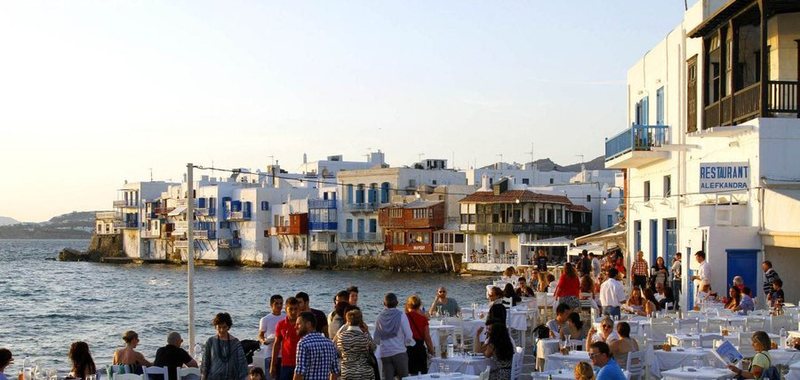
Greece, the "magnet" of European tourists - Survey, 29% of respondents plan to travel by May 2027
The dynamics of Greek tourism are confirmed by the first findings of the National Tourism Organization's market research and at the same time highlight the......

Transporters warn of border blockades - Western Balkan associations demand suspension of Schengen 90/180 rule
International transporters from North Macedonia, Serbia, Bosnia and Herzegovina and Montenegro have warned of fierce protests and blockades of border......