Entry-Exit System "confuses" travelers - Confusion with ETIAS paves the way for "online" fraud

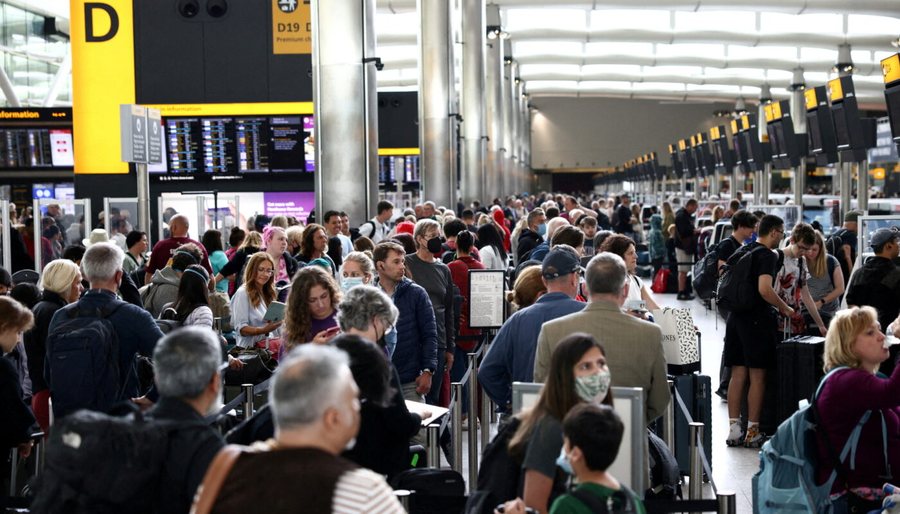
The European Union began implementing its new Entry-Exit System (EES) on October 12, after several years of delays. Under the system, the 29 countries that make up the Schengen Area will record biometric data, such as facial images and fingerprints, of all non-EU travelers whenever they enter or leave the border. The aim of the measure is to improve security, identify violators of stay limits and simplify border control procedures.
The reform affects both visa-free travelers and those with short-term visas. During the first entry, border guards will collect and store data for three years, while for subsequent crossings the procedure will be faster. Those with biometric passports will be able to use special automatic devices, which will confirm the data and calculate the remaining days of stay. For those without biometric passports, the data will be collected manually.
For security reasons, only the authorities responsible for borders, visas, immigration, police and Europol will have access to personal data. However, under strict conditions, data may be transferred to other countries (within or outside the EU) or to international organisations (such as the UN, the International Organisation for Migration or the International Red Cross), for return or investigation purposes.
However, the introduction of this system has created confusion with another scheme, ETIAS (European Travel Information and Authorization System), which has not yet been implemented. ETIAS will function as a travel authorization for visitors from countries that do not require a visa, such as the US, and will cost 20 euros. Although its launch is scheduled for the end of 2026, dozens of fake websites are already offering this service, taking advantage of travelers' ignorance.
The British travel association, ABTA, has warned that citizens trying to “apply” for ETIAS are currently at risk of fraud, both financially and in terms of personal data. Some deceived users have reported paying significant sums to fictitious “companies” that promised to speed up procedures. EU authorities have clarified that no one needs to apply for the time being and that, when ETIAS comes into force, there will only be an official European Commission website for applications.
Although the Entry-Exit System has been launched, not all border and entry points have been activated. The mechanism is expected to be fully operational by April 10, 2026. Until then, traditional passport stamping will continue as usual.

"Global debt, over 100% of GDP by 2029" - IMF: Expected to reach the highest level since 1948
The International Monetary Fund (IMF) stated that global public debt is expected to exceed 100% of world gross domestic product (GDP) by 2029, reaching the......

India, the third largest air force in the world - Surpasses China and strengthens geopolitical position in Asia
India has overtaken China to become the world's third-largest air force, behind the United States and Russia, according to the latest report by the World......

Rilindja e Pallatit të Sportit “Asllan Rusi”/ 6 skuadrat finaliste prezantuan projekt-idetë arkitekturore
“Vendi i parë është MVRDV”. Kjo është projekt-ide arkitekturore e cila u shpall fituese në konkursin ndërkombëtar për Rilindjen e Pallatit të Sportit......

Poles do not "separate" from Albania / August brought about 40% more foreign visitors to our country
The month of August, which concludes the summer season, has marked a significant increase in the number of visitors to Albania, according to the latest......
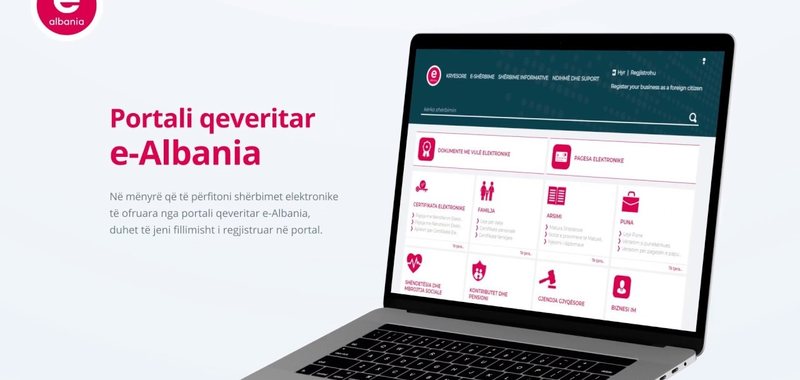
AKSHI: Services in "e-Albania" for citizens and businesses are free
The National Agency for the Information Society announced today that following publications in several media outlets, the news that "businesses will pay for......

Currency in circulation reaches record in August - BoA: Around 4.7 billion euros are outside banks, an increase of 11.8%
The money circulating in Albania reached a record figure of 930.9 billion lek in August, while in a span of 3 years it has increased by about......

The number of taxpayers in Albania increases - Withholding tax, 7,491 more registered in August alone
The number of registered taxpayers in the country has experienced a significant increase during August 2025, compared to the same period last year. According......

Fast payment system, from 2026 in Albania - Cooperation agreement re-signed. Now, North Macedonia is also part of it
The cooperation agreement for the establishment of a fast payment system in the Western Balkans, now including North Macedonia, has been re-signed. The First......