Climate Change and the European Economy - Economists: This is just the beginning. Costs will rise faster than temperatures


Record heat and droughts this summer - which scientists say have been worsened by global warming - have wreaked havoc on energy production, shipping and public health systems, while this fire season is on track to become the biggest ever in Europe.
Together, the hit to the region's economy could already be measured in hundreds of billions of euros, economists and academics estimate. But they warn that this is just the beginning, as costs will rise faster than temperatures.
The climate is changing faster in Europe than on any other continent, and the damage is already straining public finances, causing huge swings in inflation, redrawing the map of tourism and forcing the bloc to rethink the way energy is produced and goods are transported.
Traffic on the Rhine and Danube rivers, major freight arteries, is severely restricted due to low water levels, more than half a dozen nuclear generators have shut down or reduced output due to cooling difficulties. Agricultural yield estimates have been down, with late-harvested crops such as corn and sunflowers suffering a 6-7% loss since July.
It is estimated that stopping traffic on the Rhine River alone will reduce the GDP of Germany, the world's third-largest economy, by 0.3 percentage points this year, while Hungary's MBH Bank sees a drop of 0.1 percentage point in GDP for every week that the country's largest nuclear generator is out of operation.
Allianz, the German insurer, estimates that the two-week heatwave in June alone will reduce Europe’s GDP by 0.3 percentage points, and climate change will reduce growth by 5-7% by 2030 for the most exposed economies such as Spain, France and Italy. Given that the eurozone is expected to grow by just 1% this year, the hit is significant.
Southern Europe could take the biggest hit, as temperature increases are greatest there, reducing tourism revenues, worsening agricultural production and driving out-migration. The south may attract more tourists year-round, but summer peaks will decline as holidaymakers move north.

The largest apartment building in the world - China, 20,000 people live there and never leave
An episode of Black Mirror could start like this: inside a massive 260,000-square-foot building with 20,000 residents who are never allowed to leave.......

Household incomes fall in Greece and Austria - despite overall OECD growth
New OECD data shows a widening gap between economic growth and household prosperity, with Greece and Austria experiencing the sharpest declines in real......

Lending activity expands in Kosovo - Loan stock reached 6.67 billion euros last year
The lending activity of the banking sector in Kosovo continued to expand during 2025, but at a slower pace compared to the previous year. The loan stock......

Record high temperatures - Western Europe records hottest June and July on record
Western Europe experienced its hottest June and July on record, according to data released on Monday by the EU's Copernicus Climate Change Service. The......
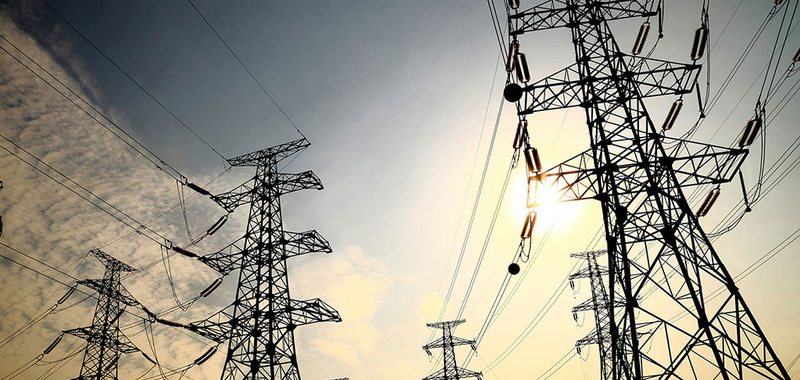
Better quality energy supply, intervention in Kashar - OSSH opens the competition, aiming to modernize the electrical network
The Regional Directorate of OSSH Tirana has announced the opening of the competition for the construction of cable collectors and the replacement of medium......

Non-performing loans fall to 3.7% in June/ Lowest level since February 2008. Liquidity marks slight decline
Non-performing loans in the Albanian banking system have decreased again, reaching 3.70% of total loans at the end of June 2026. This is the lowest level......

Fire in Kruja/Rama: It ended with only one warehouse burned down and no residents injured
Prime Minister Edi Rama informed today that "an extraordinary battle with the fire on Kruja Mountain has ended with only one warehouse burned down and no......

Improving the quality of credit risk assessment - The draft law provides for the establishment of Credit Bureaus as private entities
The Ministry of Economy and Innovation has issued for public consultation the draft law "On Credit Bureaus". Its purpose is to ensure the availability of......