Europe-Asia flights risk being disrupted/ What is happening in the two remaining air corridors?

Air links between Europe and Asia have reached their highest level of risk of blockage. Airlines are alarmed and are now considering halting West-East flights if the last available corridor, the one over Afghanistan and Pakistan, is closed.
The first "highway" of the sky, the southern one, passes through Egypt, Saudi Arabia, the Gulf countries and then leads to the Indian Ocean. But until at least March 2, the European Aviation Safety Agency advised against using it due to the risk that a military clash between the US/Israel and Iran could lead to the downing of a civilian aircraft. This is without taking into account the role of Yemen's Houthi rebels, who have repeatedly fired missiles into the area.
The second, central "highway" runs through Turkey, over Iraq and into the Persian Gulf (or Arabian Gulf). It is usually busy - especially with carriers in the area, including Emirates and Qatar Airways - but today it is closed because it runs right between Iran and the Arabian Peninsula, a "perfect" place for a firefight.
The third "highway" for European airlines is the northern one, stretching along the entire Anatolian Peninsula, then continuing towards Armenia, Azerbaijan, the Caspian Sea, Turkmenistan, Afghanistan, Pakistan, India and beyond. It is a corridor that mitigates the consequences of the closure of Russian airspace more than any other corridor, but in return, it requires flying over a country like Afghanistan, under Taliban control.
And it is precisely this corridor that is in danger of being closed. For several days, Pakistan and Afghanistan have been exchanging cross-border attacks, especially from the air. Air traffic control authorities and airlines will have to decide whether to avoid the area or continue to fly over it.
A flight from Europe to Asia could be made by passing west over Greenland, Canada, and Alaska, and then descending towards the Pacific. But this is not a viable solution for all carriers (or all aircraft models), would significantly extend the travel time - and therefore increase operating costs - and could require a refueling stop in North America.
According to data provided by the specialized platform Cirium, an average of 350 flights per day are scheduled between the European Union and Asia, in both directions, during the week of March 2-8, 2026. All connections pass through the two remaining open corridors. These figures exclude Chinese airlines, which continue to fly through Russian airspace to reach Europe.

Analysis/ Economic differences, where does 1979 differ from today's war? Why is the weight of Iranian oil smaller today, but the uncertainty greater?
In 1979, a political revolution in Iran turned into a global economic shock. After months of mass protests, Shah Mohammad Reza Pahlavi was overthrown and......

52.5% of public authorities, with high transparency - Report/ 32 institutions in the country "do not pass the class"
More than half of public institutions in the country are assessed as having high transparency towards citizens. The Office of the Commissioner for the......

The Prime Minister presents the changes in the government to the President/ The constitutional procedure provides for a 7-day deadline for the decreeing of ministers
Prime Minister Edi Rama has submitted to the President of the Republic, Bajram Begaj, proposals for changes in the government Cabinet. The constitutional......
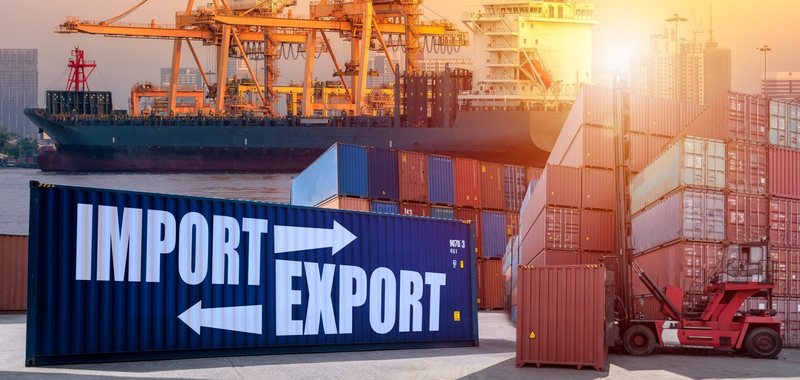
How does the Middle East affect the Albanian economy? Goods that dominate trade exchanges/From machinery, to fuels and minerals
The conflict in the Middle East began on Saturday with an attack initiated by Israel and the United States of America against Iran, to later escalate with a......

Natural disasters "test" public finances/ Association of Insurers: The state bears the main burden. The reason is the lack of insurance culture
The increase in natural disasters and the increasing exposure of the Albanian economy to them is bringing to the fore the need for a new model of financial......
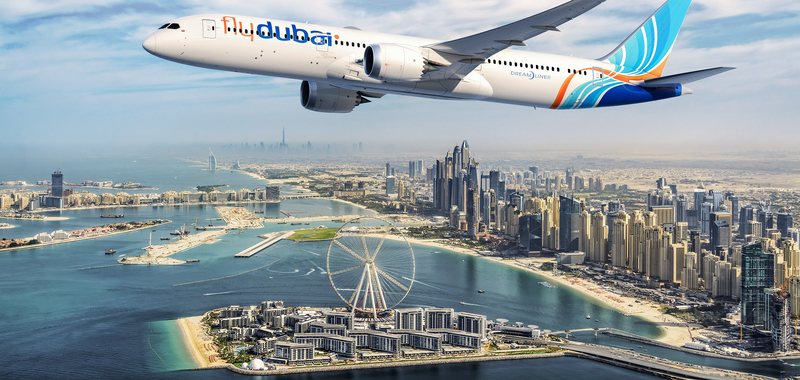
91 thousand passengers from Albania, to Dubai and Abu Dhabi/ Attacks in Iran block airspace. Other flights from Tirana, without problems
While the closure of airspace in the Middle East has caused global chaos in air transport, official data from Mother Teresa International Airport shows that......

Albanian military industry, looking for engineers/ The recruitment phase has begun. Technical experts will be selected from vocational schools
The revitalization of the military industry is expected to create 326 new jobs in Albania this year, half of which require engineers. According to the......
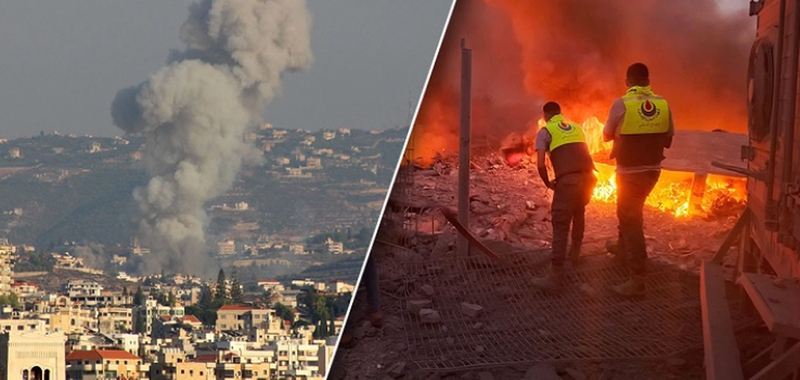
Israel attacks Lebanon, widening conflict/ Strikes capital Beirut after Hezbollah rocket attack
Israel launched new airstrikes on Iran-backed Hezbollah militants in Lebanon, as US President Donald Trump signaled that the US-Israeli military assault on......