


The World in 2026 – EU-Britain draw closer, Trump and Xi strengthen positions

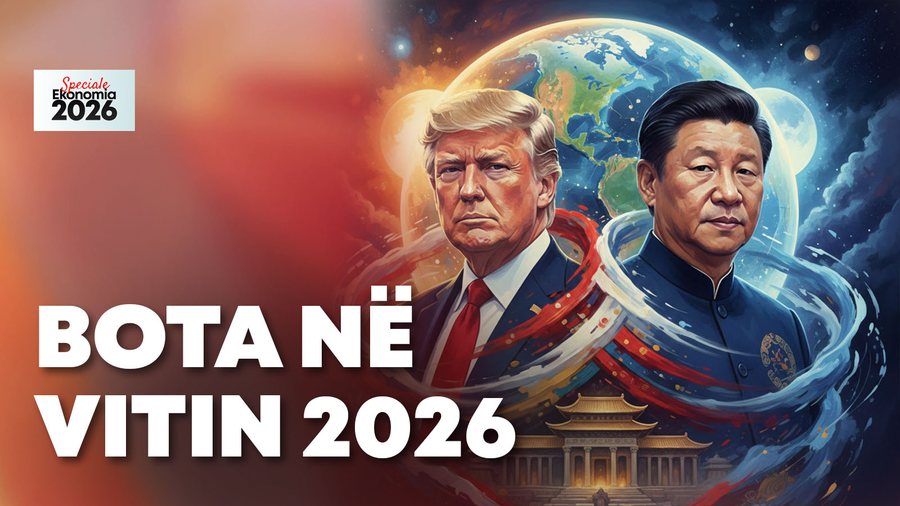
This is Donald Trump’s world, and we’re all just living in it. The master disruptor was the biggest factor shaping global affairs in 2025, and will be for as long as Trump is in the White House. His value-busting approach has caused upheaval in some areas (like trade), but it has also delivered diplomatic results (like in Gaza) and forced much-needed change (like with European defense spending). As the Trump storm continues into 2026, The Economist presents nine key trends and issues to watch next year.
1. The 250th Birthday of the USA
We will hear different narratives about America’s past, present, and future, as Republicans and Democrats describe the same country in starkly different terms to mark the 250th anniversary of its founding. Voters will then cast their verdict on America’s future in the midterm elections in November. But even if Democrats take the House, Trump’s reign of bullying, tariffs, and executive orders will continue.
2. Geopolitical shift
Foreign policy analysts are divided: is the world in a new Cold War, between blocs led by America and China, or will a Trumpian deal divide the planet into three “spheres of influence”; American, Russian and Chinese, in which each can do whatever it wants? Count on neither. Trump prefers a transactional approach based on instincts, not on grand geopolitical paradigms. The old rules-based global order will shift and degrade further. But “coalitions of the willing” will forge new agreements in areas such as defense, trade and climate.
3. War or Peace? Both
With a little luck, the fragile peace in Gaza will be preserved. But conflicts will continue in Ukraine, Sudan, and Myanmar. Russia and China will test America’s commitment to its allies with “gray zone” provocations in Northern Europe and the South China Sea. As the dividing line between war and peace becomes increasingly blurred, tensions will rise in the Arctic, in orbit, on the seabed, and in cyberspace.
4. Problems for Europe
All of this poses a particular test for Europe, which must increase defense spending, keep America on its side, boost economic growth, and confront large deficits, even as austerity risks fueling support for far-right parties. Europe also wants to remain a leading advocate for free trade and clean energy. It can’t do all of this at once. Excessive defense spending can boost economic growth, but only temporarily.
5. China's Opportunity
China has its own problems, with deflation, slowing economic growth and industrial oversupply, but Trump’s “America First” policy opens up new opportunities for China to increase its global influence. Beijing will be seen as a more reliable partner, especially in the global south, where it is reaching a series of trade deals. China is happy to make tactical deals with Donald Trump on soybeans or potatoes. The trick will be to keep relations with America transactional, not confrontational.
6. Economic concerns
So far, the U.S. economy is proving more resilient than expected in the face of Trump’s tariffs, but they will dampen global growth. And with rich countries living beyond their means, the risk of a bond market crisis is growing. Much will depend on Jerome Powell’s replacement as Federal Reserve chairman in May; the politicization of the Federal Reserve could trigger a stock market crash.
7. Concerns about Artificial Intelligence
Excessive spending on infrastructure for artificial intelligence could also be hiding economic weaknesses in the U.S. Will the bubble burst? As with railroads, electricity, and the internet, a downturn doesn’t mean the technology has no real value. But it could have broad economic implications. However, concerns about the impact of artificial intelligence on jobs, especially for college graduates, will deepen.
8. A mixed picture for the climate
Limiting global warming to 1.5°C is out of the question now, and Donald Trump hates renewable energy. But global emissions may have peaked, clean technology is booming across the global south, and companies will meet or exceed their climate targets but will keep quiet to avoid Mr. Trump's wrath. Geothermal energy is worth considering.
9. Sports Values
Sports can always be used as a break from politics. Well, maybe not in 2026. The World Cup is being co-hosted by America, Canada and Mexico, whose relations are strained over tariffs and other issues. Fans may stay away. But the competition, called the “Advanced Games,” taking place in Las Vegas, could be even more controversial: athletes will be allowed to use performance-enhancing substances. Does that mean athletes can cheat, or will it just be a different kind of competition?
A new world is taking shape
The geopolitics of the 21st century will become clearer in 2026
In global politics, 2025 was the year an old order came to an end. President Donald Trump dismantled decades of norms and institutions with as much drama as he remodeled the White House. His tariffs hit the multilateral trading system hard. The mechanisms of international diplomacy, from the UN to foreign aid, were hit by funding cuts. Early security alliances were transformed into more transactional relationships that monetized America’s military and economic clout. Domestically, Trump unleashed the largest sweep of executive power in nearly a century. Soldiers were sent into Democratic-run cities; universities were brought under control through threats and funding cuts; the independence of the Federal Reserve was attacked; and the state apparatus was used against the president’s opponents.
The dizzying pace and scale of these actions made it hard to think about what was at stake. Was this a necessary shake-up of a deadlocked system, or an attack on the basic pillars of American democracy? Was the transactional approach of the deals an innovative way of doing things, or a triumph of mob tactics over long-term strategic wisdom? There were concerns about the threats posed by protectionism, corruption, the politicization of independent institutions, and, as the year went on, a growing unease that the Trump team did not feel bound by the law.
The president’s “alla Soprano” style of leadership also brought some tangible successes. The most notable was the ceasefire in Gaza. It created the potential for a new beginning and gave legitimacy to the New York real estate-style approach to diplomacy. Adopting a tougher stance toward NATO allies led to increases in defense budgets that few would have thought possible a year ago. And in conflicts between smaller states, a president who was desperate for a Nobel Peace Prize, willing to threaten tariffs and apply pressure, helped resolve or at least temporarily cover up disagreements.
But there were also clear failures. Strategically, imposing punitive tariffs on India, as punishment for buying oil from Russia, and on Brazil, following the decision to put former President Jair Bolsonaro on trial, made little sense. Trump also made little progress with Vladimir Putin on the war in Ukraine. And he was outdone by Xi Jinping, as China was the clear winner of the 2025 trade show.
With the old order crumbling, the contours of the new world will become clearer in 2026, in three key areas. First, the future of Western liberal democracies. The midterm elections in November in the United States will determine whether America is seriously at risk of authoritarianism. If Democrats win control of the House of Representatives, there will be a real check on the Trump administration. If history is any guide, they should win. But these are not normal times. Democrats are even less popular than Trump himself. And there is a credible risk that the administration could try to interfere in America’s electoral machinery. The clearest signals about the direction of American foreign policy will come from Asia and Latin America.
On the other side of the Atlantic, 2026 will show whether nationalist populists are close to taking power in Europe’s biggest economies. In Britain, where Nigel Farage’s Reform UK party is leading in the polls, local elections will show whether that lead translates into votes. In France, recent history suggests that another government collapse is very likely in 2026. That would force a general election and would likely see Jordan Bardella as France’s first far-right prime minister. In Germany, it will be interesting to see whether the “wall of defence” against the far-right Alternative for Germany will hold.
The second area of clarification will be geopolitics. Trump’s desire to win a Nobel Peace Prize will keep him engaged in the Middle East. He will prevent Israel from returning to full-scale war in Gaza and will support a pardon for Benjamin Netanyahu, and perhaps a dignified exit from politics. Trump can play the role of peacemaker elsewhere, especially where deals can be secured on rare earths. But in the face of Putin’s stubbornness, America will leave the future of Ukraine to Europe, which, given the rise of the populist right, may fail to fulfill this responsibility.
The clearest signals about the direction of US foreign policy will come from Asia and Latin America. In Asia, Trump's desire to do business with China will lead to a dangerous erosion of support for Taiwan.
The third area, for better or worse, will be the economy. Whether or not there is a sharp decline in markets, rising stock prices will not be able to sustain public confidence as they did in 2025. Nor will the transformative impact of artificial intelligence on productivity emerge as quickly as enthusiasts hope. The damage from tariffs will become more visible, the pressure on consumers more severe, and America’s budget deficit more pronounced. Trump’s choice as the next chairman of the Federal Reserve will show whether the central bank’s independence is over. Given the economic chaos in other rich countries, an abandonment of the dollar is unlikely. But by the end of 2026, America’s economy may no longer look so extraordinary.
Paradoxically, this could be a good thing. A weaker economy would boost Democrats’ chances of retaking the House of Representatives and restoring some balance to American democracy. Worried financial markets could deter the White House revolutionaries from their risky constitutional maneuvers. And a weaker economy could encourage even more pragmatism from Trump himself. Perhaps it’s time for a brave businessman or two to come out and say that for America’s long-term health, a few short-term bumps in the road wouldn’t hurt.
Global forces are bringing Britain closer to the EU - OK
The meaning of Brexit is evolving, the parties are finding other forms of unity
Next year will mark the tenth anniversary of former British Prime Minister David Cameron’s Brexit referendum in 2016, the most shocking British political event in decades. 2026 will also mark the five-year review of Boris Johnson’s Trade and Cooperation Agreement in December 2020, under which Britain officially left the European Union in a “hard Brexit,” taking it out of the single market, customs union, and free movement of people. So 2026 is expected to be a year of much discussion about the consequences of this departure and the future of Britain’s relationship with Europe.
Yet today the issue of Brexit is surprisingly low on the political agenda. This is all the more surprising given that public opinion has clearly shifted since 2016. Growing discontent with Brexit contributed to the downfall of three successive Conservative prime ministers, before Sir Keir Starmer’s Labour landslide victory in July 2024. By raising new non-tariff barriers, Brexit has hurt exports of goods and, to a lesser extent, exports of services. The Budget Office’s initial forecast that it would reduce GDP by around 4% still looks roughly accurate.
However, not many voters have really changed their minds since 2016. On the contrary, two other developments have tipped the balance of opinion against Brexit. Many older voters who voted to leave have passed away, replaced by younger ones who support “remain”. And those who were undecided in 2016 are now leaning strongly towards remaining in the EU. As a result, opinion polls show that up to 56% of respondents believe that Brexit was a mistake.
However, Brexit would not be easy to undo, for three reasons. First, it is impossible to return to the pre-2016 “status quo”. Britain would have to reapply for EU membership and negotiate the terms, a major challenge, as the Reform UK party and the Conservative Party would strongly oppose the plan. Britain would not regain its special budget deduction and might have to accept joining the euro.
Second, the EU has changed significantly since 2016. It is much more active in foreign and security policy, uses more majority decision-making, and has a larger budget, which now includes significant debt.
Third, there is little desire to reopen such a painful debate. In such a situation, Keir Starmer’s government is pursuing pragmatic ways to get closer to the EU, often in secret. The process began under Rishi Sunak, with the revised Northern Ireland protocol, which aimed to reduce non-tariff barriers between the UK after Brexit and the province that remains in the EU’s single market for goods. Prime Minister Starmer is trying to lower trade barriers even further by aligning with EU food and phytosanitary standards, as well as joining common rules on energy and the environment.
The geopolitical situation strengthens the case for closer cooperation with the EU. Russia’s war against Ukraine, Donald Trump’s unpredictable second term, and tensions in the Middle East all make a stronger and more united European response more urgent. The need to rely less on the US security guarantee and more on European defense spending goes in the same direction. Britain after Brexit may want to strengthen ties with the US and Canada, as well as with the Indo-Pacific region. However, it remains a key player in European defense and security.
How far can this relationship go? It helps that the EU is more liberal than it once was. Early fears that Brexit might prompt other countries to leave have faded.
The EU continues to seek to protect the integrity of its single market, but is more open to allowing non-member countries to opt into some parts of integration. New forms of partial membership, Swiss-style, may seem more acceptable as the EU considers further eastward enlargement. Even preserving the free movement of people has become less “sensitive,” as some EU countries have quietly reintroduced border controls.
Further ahead lies the possibility of entirely different forms of relationship. Non-member countries such as Norway and Iceland are reopening long-dormant debates about the possibility of EU membership. The Western Balkans, Moldova and Ukraine all want closer ties with the bloc, which could remain for a long time below the level of full membership. Different models of relationship may emerge that might suit Britain better than a hard Brexit.
In the long run, the 2016 referendum may be seen as a moment that did not permanently define Britain’s place in the European project. The relationship will continue to evolve, sometimes in unpredictable ways. And for a few years, the sides are likely to grow closer rather than further apart.
China may switch from defense to offense
But Xi Jinping must resist the temptation to dominate the world.
After a successful year in 2025, Xi Jinping and the Chinese leadership will face a tempting year in 2026. So far, China has played its cards well in the Trump era, insulating the Chinese economy from the trade war, responding with finesse and standing aside as the dismantling of the American-led world order continues apace under the White House. But arrogance haunts the Communist Party, and in 2026 Xi Jinping will be tempted to assert China’s interests more aggressively. This creates the risk of a dangerous overreach in three areas: trade, Taiwan and the new global rules.
No one expected the first year of the Trump administration to be easy, but it went pretty well for China. The economy grew by about 5%, despite tariffs and a painful restructuring of the real estate sector. While consumers were cautious, the appetite for risk in the private sector soared. By November 2025, the MSCI China stock index had outperformed the S&P 500, and China had raised more capital in initial public offerings than Wall Street.
The trade war has vindicated Xi Jinping’s 10-year campaign to eliminate foreign dependence and increase domestic self-sufficiency. Domestic chipmakers and artificial intelligence companies flourished in 2025, and the share of Chinese trade billed in yuan (not dollars) rose to 30%. China’s oil reserves reached a record 1.2 billion barrels. At his first meeting with Donald Trump in six years, in October 2025, Xi offered Washington attractive deals on fentanyl and soybeans, while making no compromises on his vision of state-led industrial dominance. China’s new five-year plan, due in March 2026, will deepen this goal.
It’s easy to be seduced by China’s clever diplomacy. But Xi’s era has been punctuated by episodes of arrogance. His “common good” campaign against crony capitalism has hit entrepreneurs hard. The “zero Covid” policy has lasted too long. It’s not clear why this is the case, but the suspicion is that in an autocratic system, fearful officials don’t challenge the president, even when his ideas are weak or unclear. Instead, they implement them with vigor.
This domestic trend could explode in several ways in 2026. As China diverts trade away from America, exports to the rest of the world rose 11% in the first nine months of 2025. By the end of 2025, Germany’s annual trade deficit with China was approaching $100 billion. BYD, the Chinese electric car champion, plans to have 2,000 stores in Europe by the end of 2026. If China “drowns” the world with more exports, it will cause panic about de-industrialization in the West.
The second area where arrogance could flare is Taiwan. US intelligence believes that Xi has told the People’s Liberation Army to be capable of invading Taiwan by 2027. That’s when the Communist Party Congress is held, and the question of his successor will be at the center of discussions. Some of the president’s advisers may argue that in 2026 the conditions for an aggressive “gray” campaign against Taiwan, for example a customs inspection regime that avoids a full-scale embargo, will be the most favorable in decades. Trump is ambivalent about defending Taiwan, the threat of tariffs has lost its power, Taiwanese voters are polarized, and China has the support of about 70 countries for reunification “by any means necessary.” Inflaming tensions, always dangerous, could have even more unpredictable effects in the Trump era, fueling an arms race among America’s allies who fear he will abandon them.
Third, President Xi may be tempted to propose new global rules under Chinese leadership to replace the decaying Western ones. By the end of 2025, there were signs of this arrogance. China launched a “global governance initiative” to create new rules on finance, artificial intelligence, climate, and space, and proposed a mandatory global licensing system for rare earth minerals. It is true that this approach reflects the American style of imposition abroad, but it will still be unpopular in 2026, especially in democracies that fear dependence on an autocratic China.
If Xi is smart, he will resist these temptations. He will curb excess industrial capacity at home to slow the export surge and boost domestic demand. He will wait to see if Taiwan’s position weakens and show the world that China can provide global infrastructure like payments, clean technology, AI, and the cloud, but without forcing customers to do so.
The reason is not that China believes in caution, but because Trump is much more likely to dismantle the Western-led trade and security system. If China is patient, it could emerge from 2026 having strengthened its lead.

How did this year end for the major currencies?
The US dollar, after a continuous decline this week, has closed this year positively, marking an increase as it was bought today at 81.3 lek and sold at 82.8......

Owners receive financial compensation - Minister of Justice: For over 13 thousand families, the money is transferred to bank accounts
Over 13,000 families will receive financial compensation for their properties from the Property Treatment Agency. In a video message, the Minister of......
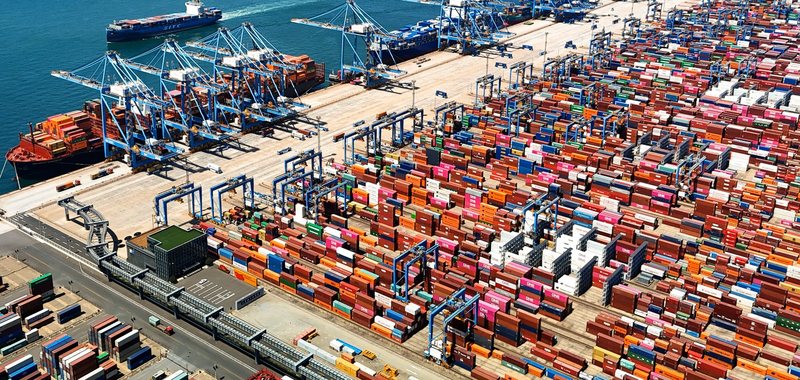
Mexico to raise tariffs on China - President Sheinbaum: We aim to increase domestic production
Mexico's sweeping new tariffs on imports from mainly Asian countries will take effect on Thursday, in a move that will bring Mexico closer to the United......
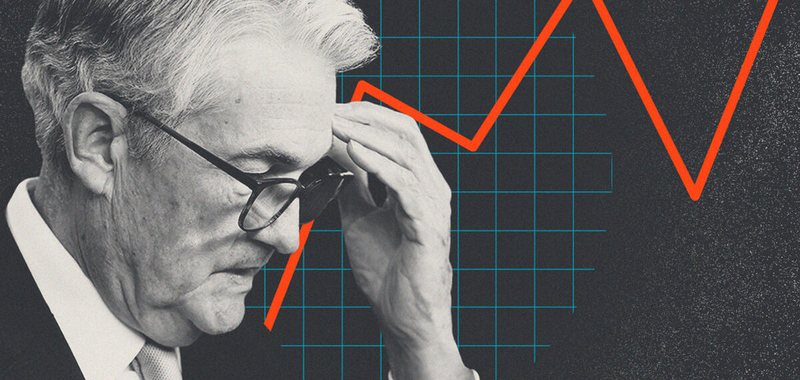
The FED will lower interest rates in 2026 - It is expected to see the performance of the American economy
The US Federal Reserve is signaling that there will be further interest rate cuts, but it will first suspend successive cuts to give officials more time to......

Trump is expected to choose the new Fed chief - Powell threatens again, expected to fire him in January
US President Donald Trump said he would nominate a new Federal Reserve chairman in January, adding that he was considering filing a lawsuit against current......
How the monthly pension supplement scheme will work - Details of the decision and beneficiary categories revealed
From January 1, 2026, thousands of pensioners in the country will benefit from additional ALL on top of their pension. According to the decision approved by......
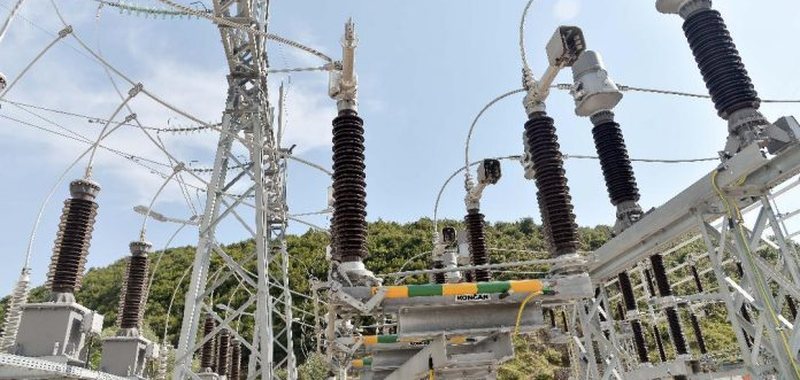
New electrical substation in Tirana - OST opens the competition, aiming to increase energy efficiency
The Transmission System Operator has announced the opening of the competition for the construction of the new 220/110 kV Traktora substation, with a limit......

"Europe must protect peace and prosperity" - Chancellor Merz: Challenge, protectionism in the global economy
Europe must defend its interests more strongly to ensure peace and prosperity in 2026, amid challenges from Russian aggression, global protectionism and......