IMF Spring Meetings in Washington: Albanian economy performing positively in the face of global challenges

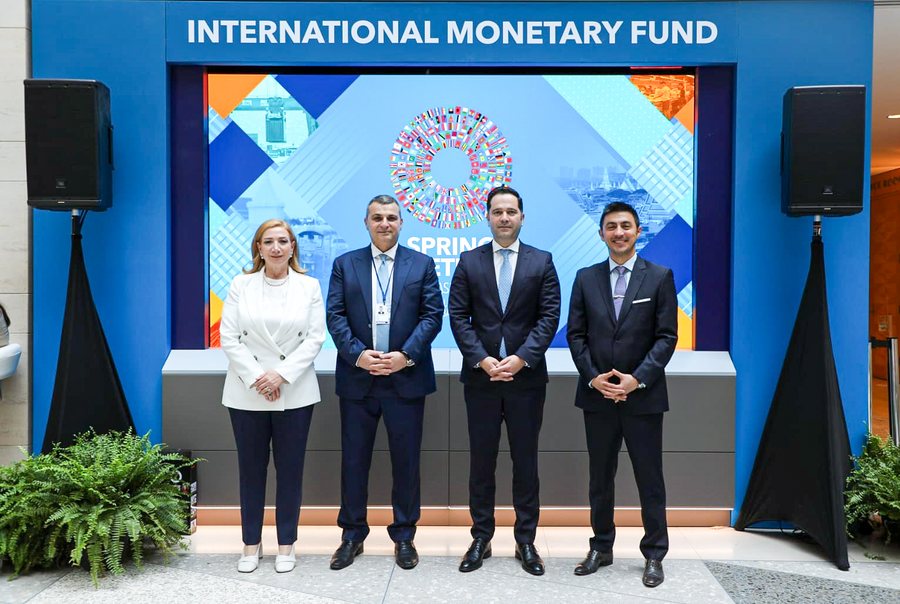
On April 16–18, 2026, the Governor of the Bank of Albania, Mr. Gent Sejko, participated in the Spring Meetings of the International Monetary Fund (IMF) and the World Bank Group (WB), held in Washington, DC, USA.
Albania was represented at these meetings by a joint delegation composed of the Bank of Albania - represented by the Governor of the Bank of Albania, Mr. Gent Sejko, the First Deputy Governor, Ms. Holta Zaçaj, as well as other senior officials - and by the Ministry of Finance - represented by the Minister, Mr. Petrit Malaj, the Deputy Minister, Mr. Endrit Yzeiraj, and other officials of this ministry.
During his participation in these meetings, Governor Sejko held several important meetings with well-known personalities in the international financial field, among whom we highlight: the Executive Director for Albania at the IMF, Mr. Riccardo Ercoli; the Director of the European Department at the IMF, Mr. Alfred Kammer; the Assistant Director of the Capital and Monetary Markets Department, Ms. Mary Goodman; the Head of the IMF Mission, Mr. Diego Cerdeiro; the Vice President for the Europe and Central Asia Region at the WB, Ms. Antonella Bassani; the Executive Director for Albania at the WB, Mr. Matteo Bugamelli; and the Regional Director for the Western Balkans at the WB, Ms. Xiaoqing Yu.
During these meetings, the latest macroeconomic and financial developments in Albania, macroeconomic policies, as well as developments in the financial and banking sectors were discussed.
The Albanian economy continues to show positive performance, supported by increased economic activity, employment expansion and wage growth. Inflation remains at low levels, while recent developments suggest a gradual return to the target during 2026.
The Governor highlighted the significant improvement in the financial health of the banking sector, which continues to be characterized by stability and high liquidity, with low interest rates and a steady increase in lending to the private sector. These conditions have supported consumption and investment, making a positive contribution to economic growth.
Regarding future prospects, the Governor stated that uncertainties in the external environment related to geopolitical developments and fluctuations in energy prices remain significant risks to economic performance and require increased attention going forward. However, he assured that Albanian authorities remain committed to addressing the situation.
During meetings with representatives of various IMF Departments, technical assistance for the new draft law of the Bank of Albania and its alignment with the European Union acquis was discussed. IMF representatives appreciated the close cooperation with the Bank of Albania and the progress made in strengthening the legal and institutional framework of the central bank.
Governor Sejko also held meetings with representatives of the World Bank and IFC, where developments in the financial sector and projects in support of it were discussed. The World Bank representatives assessed the stability of the Albanian banking sector and the positive progress of reforms, emphasizing the importance of continuing cooperation on strategic projects, especially for the modernization of the payment system and approximation with European standards.
The IMF and WB representatives assessed the progress made by Albania in maintaining macroeconomic stability and underlined the importance of pursuing prudent policies to address external risks. They also highlighted Moody's recent assessment of the Albanian economy at "Ba3", with a stable outlook, reflecting its resilience in the face of external challenges, as well as the progress made towards macroeconomic stability and fiscal consolidation.
As part of the regional discussions, the Governor participated in the roundtable on progress in the implementation of SEPA and the TIPS Clone project. Participants appreciated the commitment of the countries of the region to advance towards the integration of payment markets and emphasized the importance of regional cooperation to increase the efficiency and interoperability of payment systems, with a direct impact on the end consumer.
Governor Sejko also participated in the closed-door meeting with the finance ministers and central bank governors of Central, Eastern and Southeastern European countries, as the keynote speaker of the panel, where he shared assessments of the current challenges in an environment of high geopolitical uncertainty. During his speech, the Governor emphasized three main messages: First, Albania is in a stronger position thanks to the improvement of macroeconomic sustainability, financial stability and structural reforms undertaken over the last decade. Second, despite these achievements, vigilance and careful and timely response to new developments are needed to maintain price stability. Third, the importance of international coordination was emphasized, appreciating the cooperation between institutions and the need to strengthen dialogue and policy coordination in an increasingly interconnected economy.
Participants in this panel expressed the need for closer coordination of economic policies and strengthening inter-institutional cooperation to address common challenges.
In all meetings, Governor Sejko underlined the importance of pursuing prudent macroeconomic policies to maintain price stability and strengthen financial sustainability, and reaffirmed the Bank of Albania's commitment to close cooperation with international partners in the service of sustainable economic development and the country's European integration.
During his stay in Washington, Governor Sejko also participated in high-level activities and roundtable discussions, with the aim of developing cooperative relations with various financial institutions and promoting Albania.
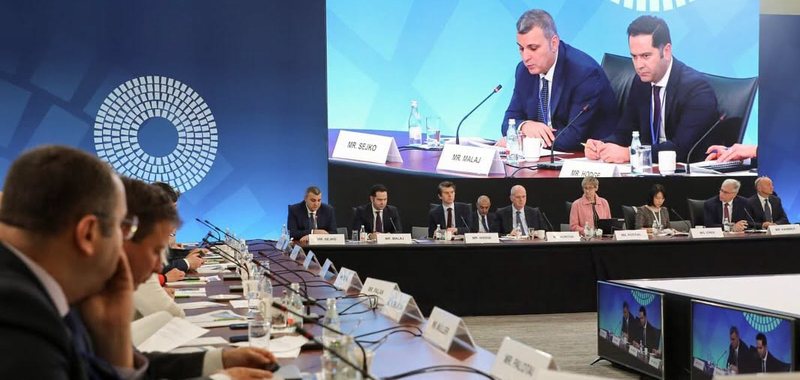
Sejko and Malaj in Washington, part of the closed-door meeting of the IMF's European Department
Governor Gent Sejko, together with the Minister of Finance, Petrit Malaj, participated in a closed-door meeting with finance ministers and central bank......
Sharp decline in exports to Spain/Weakening trade ties with some EU countries
Albanian exports to European Union countries declined in March, while significant increases were recorded towards several regional markets and partners......
Oil below 200 lek per liter, Transparency Board significantly reduces fuel prices
The retail price for a liter of diesel will be no more than 197 lek/liter and for gasoline no more than 172 lek/liter. The decision comes into effect this......
Prime Minister Rama in Barcelona, meeting at the Chamber of Commerce of Catalonia
During his visit to Barcelona, Prime Minister Edi Rama was also welcomed at the Chamber of Commerce of Catalonia. In a post on social networks, Rama writes......
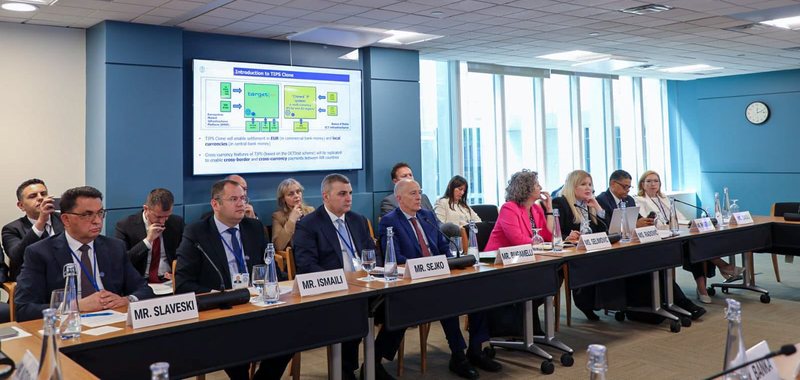
Governor Sejko part of the regional roundtable on SEPA and TIPS Clone
Governor Sejko participated in a regional roundtable with the central banks of the Western Balkans and the Bank of Italy, where progress in the......
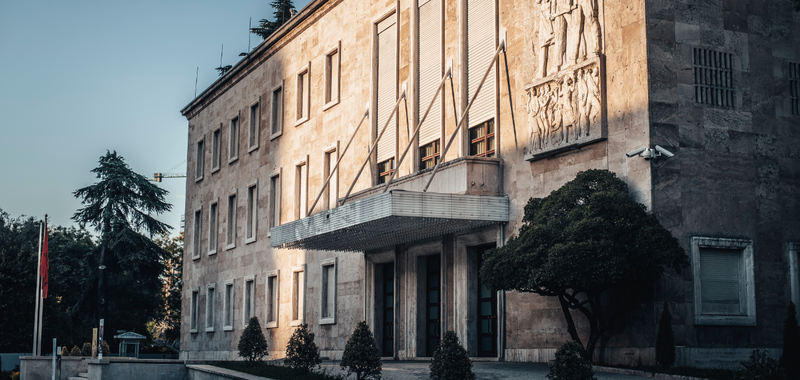
Government decisions, the establishment and operation of the National Search and Rescue Center is approved
At this Friday's meeting, the Council of Ministers approved a decision on the organization and functioning of the National Search and Rescue Center, defining......
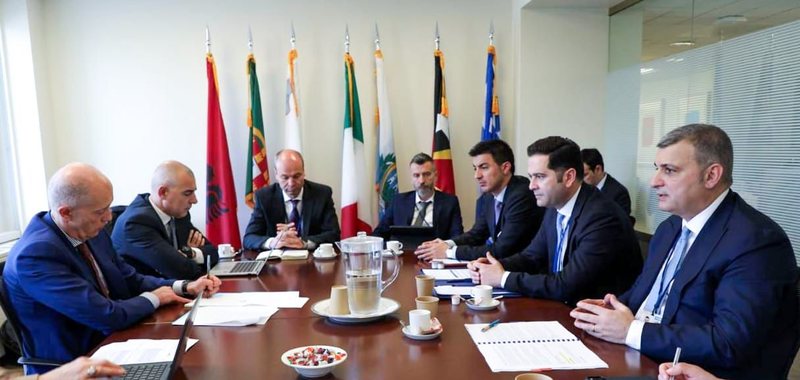
Governor Sejko meets the Executive Director for Albania at the World Bank, Bugamelli
Governor Sejko held a meeting with Mr. Matteo Bugamelli, Executive Director for Albania at the WB, in the context of participating in the 2026 Spring......

Oil is fixed at 210 lek/liter, the Transparency Board publishes the new prices
The Transparency Board set new fuel prices at a meeting held on April 17, 2026, setting ceilings for retail and wholesale sales in the country. According to......