Ibrahimaj: CEFTA Chairmanship 2026, an important step towards the single European market and increased exports

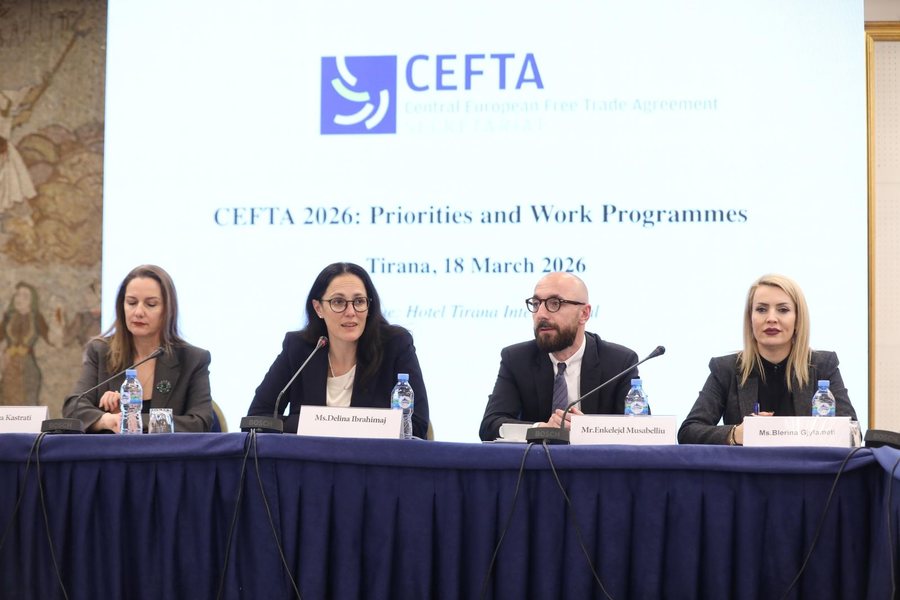
The Minister of Economy and Innovation, Delina Ibrahimaj, opened the activity organized in Tirana, within the framework of Albania's chairmanship of CEFTA for 2026, describing this as a key moment for advancing regional economic integration and concrete rapprochement with the European Union's single market.
In her speech, the minister emphasized that the year 2026, which coincides with the 20th anniversary of CEFTA, brings a clear responsibility to move from the progress made so far towards concrete results, accelerating the economic integration of the region and making regional cooperation tangible for businesses and citizens.
She underlined that CEFTA is a key instrument for building a functional regional market and for implementing initiatives such as the Regional Common Market and the European Union Growth Plan, which create real opportunities for economic growth and preparation for integration into the single European market.
Minister Ibrahimaj emphasized that during Albania's presidency, the focus will be clear and oriented towards the implementation of concrete measures that bring direct impact on the economy. In this context, the priority will be to facilitate trade through the reduction of time and costs at the border, the further development of green corridors and the strengthening of inter-institutional cooperation, with the aim of creating a faster and more predictable market for businesses.
Another key pillar remains the digitalization of trade procedures, through the application of paperless systems and trusted digital services, reducing bureaucracy and increasing transparency. In parallel, work will continue on the mutual recognition of standards and certifications, as a necessary step to eliminate practical barriers and facilitate the circulation of goods in the region.
Referring to trade data, the minister announced that during 2025, Albania's trade exchanges with CEFTA countries reached around 123 billion lek, while the country continues to maintain a positive trade balance. She emphasized that Kosovo remains the main destination for Albanian exports, while Serbia is the main partner for imports. Albanian exports to the region are mainly based on the energy, construction materials, agro-food products and processing industry sectors.
However, the Minister stressed that recent developments, including the decline in the value of exports, highlight the need to deepen economic integration, reduce trade barriers and increase the efficiency of procedures. She underlined that the success of CEFTA should be measured by the concrete impact on the real economy and the benefits it brings to businesses.
In this regard, the Minister highlighted that Albania's priorities will focus on further advancing trade facilitation, accelerating digitalization and strengthening mutual recognition, as well as increasing institutional coordination and regional cooperation for the effective implementation of decisions. Particular importance will be given to the active involvement of the private sector, with the aim of addressing real barriers and supporting business development.
Ibrahimaj emphasized Albania's commitment to playing a leading role in advancing regional economic integration, considering it a direct step towards membership in the European Union and a concrete opportunity to increase exports, investments and the competitiveness of the Albanian economy.
The event was also attended by representatives from the Delegation of the European Union, the Director of CEFTA, Pranvera Kastrati, and the President of the Chambers of Commerce and Industry, Ines Muçostepa.
In her speech, CEFTA Director Pranvera Kastrati emphasized that CEFTA is not simply a free trade agreement, but a practical platform that facilitates the circulation of goods and serves as a bridge towards the standards of the European single market.
It highlighted concrete results for the private sector, including electronic data exchange that covered 1.4 million trucks in 2025, saving approximately 12 years of waiting at border crossings, and reducing costs for certificates by an average of 9 euros per certificate.
Kastrati also highlighted that digitalization and recognition of test results avoids duplicate testing and reduces time and costs for businesses, bringing real benefits to regional trade and cooperation with EU member states.
Kastrati emphasized that the objective remains to expand the functioning of the CEFTA digital system towards European Union member countries, as well as to strengthen inter-institutional coordination at border points, to reduce obstacles and costs for businesses and to make the benefits of regional trade more tangible for the real economy.
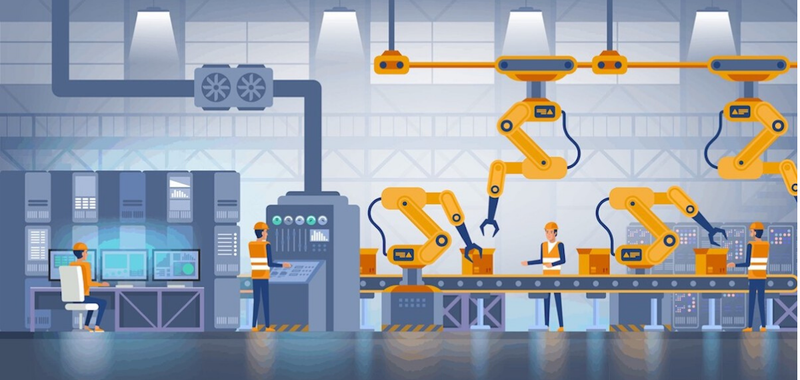
Production in difficulty, only construction growing/ The biggest contraction in economic activity affected industry
While the services sector continued to grow in the fourth quarter of 2025, goods producers performed weaker, reflecting an uneven pace of economic......

Private pensions, salary contribution exempt from tax - Every employee can "save" up to 500 euros per month
Every individual who contributes to private pension schemes is relieved of the tax they pay on employment income. Referring to the new instruction of the......

Slight increase in self-employment in 2025/ Ages over 65 dominate. Women continue to be less represented
According to data published by INSTAT on the percentage of employed, it results that during 2025 the percentage of self-employed in total employment has......

New capital market rules - Companies will have to report more information to investors and the public
Companies that have shares or bonds listed on financial markets will have to publish more information about their activity and financial condition. A new......

Real estate drives economic expansion/ Services close 2025 with growth, but employment falls in some sectors
The services sector continues its positive performance in the fourth quarter of 2025, marking an overall increase in net sales, employment and wages,......

The use of OBP catalogs by municipalities for procurement procedures is increasing
The catalogs compiled by the Centralized Purchasing Operator (CPO) are increasingly being used by local government units, reflecting a unified approach to......

New rules for doctors, artists and other professions - Guidance/ Income from contracts with an entity is taxed at 13-23%
Self-employed individuals who have fewer than three clients or who generate over 80% of their income from a single client must complete the “Self-Employed......

Kosovo and Italy abolish double taxation - More favorable environment for investment and economic development
The Tax Administration of Kosovo announced that the implementation of the agreement with Italy for the elimination of double taxation and the prevention of......