"25% of mineral royalties to municipalities" - Draft law/ Income from oil and gas is also included

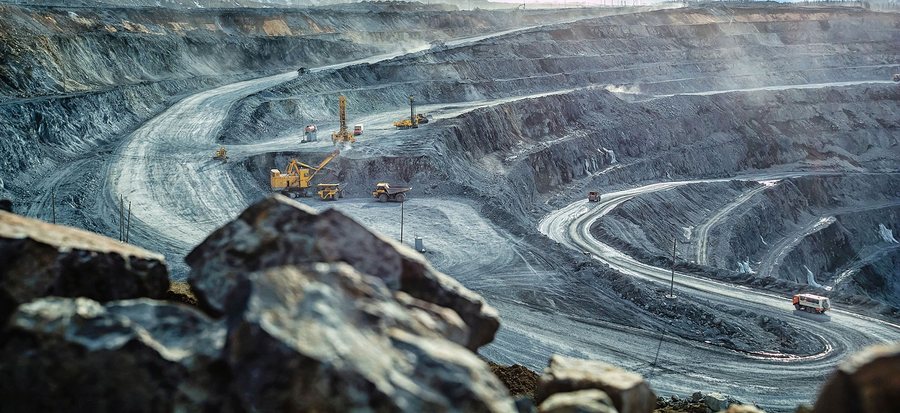
A new legal proposal aims to change the way mineral royalties are distributed in the country.
The proposal, submitted by MP Bujar Leskaj, for discussion in parliamentary committees, provides for amendments to the 2008 law "On National Taxes", with the aim of increasing local government benefits from mining and hydrocarbon activities.
According to the draft, 25% of revenues from mineral royalties, including those from oil and gas, will be transferred to local government units where the activity takes place. These funds will be used exclusively for public investments in local communities.
This draft law aims to regulate the necessary ratios for the distribution of mineral royalties in a fair and expeditious manner, which plays a role in empowering local self-government units (LGUs) as it affects their financial autonomy.
According to the report, the problems that have arisen as a result of the practical implementation of the law have shown that the current level of 5% of the amount of rent transferred to Local Government Units by the mining industry is small and does not establish a fair relationship with the residents of these areas, who pay the direct and indirect costs of the extractive industries.
The draft argues that, based on international experience, rent should finance investments in municipalities where these companies do not operate directly, but cause collateral damage. For example, this could include damage to infrastructure such as roads, irrigation, drainage, etc., or to agriculture, such as the deterioration of soil quality and consequently the quality of agricultural products.
The draft argues that international experiences mainly take into account the number of the population of the unit and the size of the area. In general, this division varies from 65–70 percent according to the number of the population, and 30–35 percent according to the territorial surface of the administrative unit. This report underlines the essence of using income from rent, mainly to reduce and mitigate the direct and indirect costs faced by the population living in administrative units affected by the activity of private enterprises. However, in the Albanian context, with the aim of also maintaining budgetary balances, it is assessed that a more equal division but still more in favor of the central government brings a more qualitative contribution from both types of powers to the citizen.
According to the proposal, changing the ratio of the distribution of rent revenues from 5 to 25% per rent-paying category would reduce the amount of revenue going to the state budget, but would have a minimal impact on the sustainability of public finances. On the other hand, the increase in direct revenues has a significant impact on the financial autonomy of municipalities and these revenues will increase financial resources for the direct and indirect consequences of the activities of extractive enterprises.

How much does it cost to communicate via mobile phone? On average, $192 per year. The Balkans and Albania, with average costs
One of the expenses we face every month is the money that goes for communication and internet use in mobile offers. But how much does a mobile offer really......

Slovenian businesses ready to invest in Albania - Musabelliu: Within 5 years our economy will be different
The Albania-Slovenia Business and Economic Forum, a platform aimed at strengthening economic cooperation between the two countries, was held in Tirana. The......
Greenland breaks temperature record - Shifts economy from fishing to minerals
Greenland, the Arctic island coveted by US President Donald Trump, experienced its warmest January ever recorded this year. Trump has said the US should own......

Digital transformation is critical for Germany - The country is "embracing" artificial intelligence at full speed
Digital change is "critical" and artificial intelligence (AI) will be key to Germany's future, said Minister for Digital Transformation and Government......
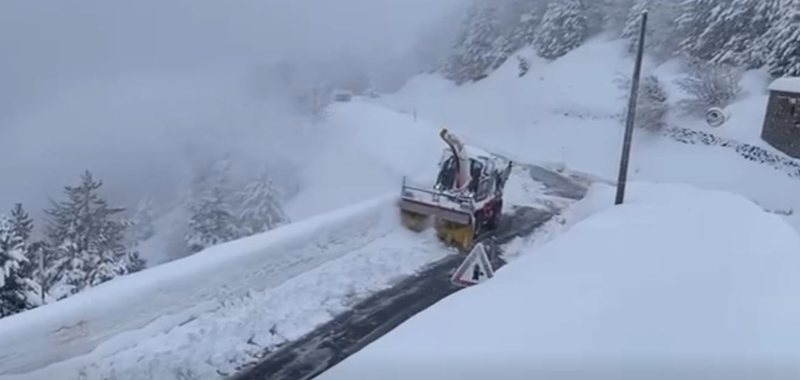
ARRSH: Snow completely blocks the Qafë Thore-Theth axis
The Albanian Road Authority announces that as a result of avalanches in the area near the panoramic tunnels of the Qafë Thore-Theth axis, the road has been......
Updating business contracts/ FSHU: Private entities to cooperate for fair pricing
The Universal Service Provider, FSHU, part of OSHEE Group, continues the process of updating electricity contracts for all customer categories in order to......

Albanians saved more last year/ Total deposits reached 1.48 trillion lek, with strong growth in the second half of the year
Albanians closed 2025 with a record level of savings, holding around 1.48 trillion lek in bank deposits. Throughout the year, total deposits in the Albanian......

New loans, record during 2025/ Reached almost 4.5 billion euros, 17% of GDP. 664 million euros were given for housing purchases
New loans during December of the year just left behind have reached the level of 62.3 billion lek, which is also the highest monthly value recorded......