US and Kosovo discuss expanding opportunities in energy and mining

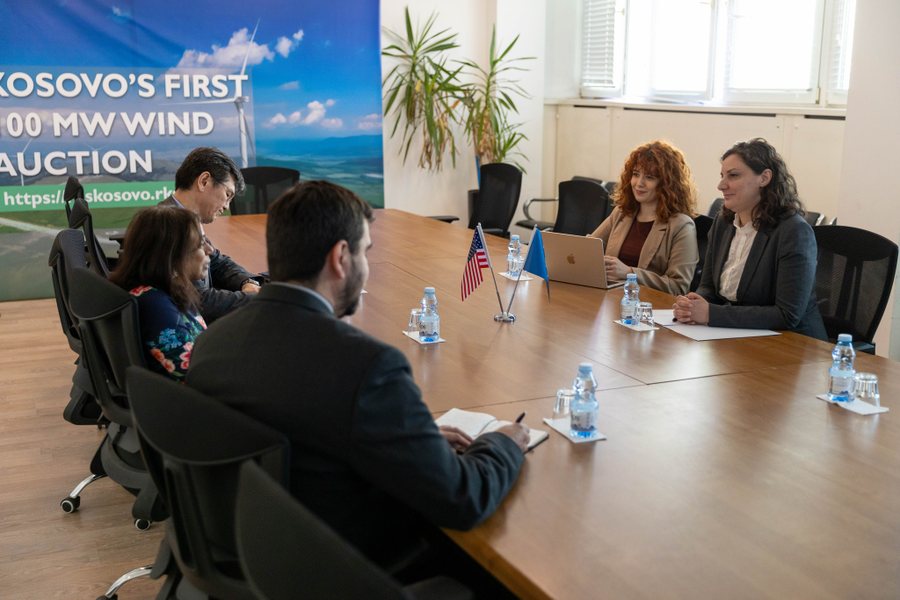
Chargé d'Affaires at the US Embassy in Pristina, Anu Prattipati, spoke with Kosovo's Minister of Economy, Artane Rizvanolli, about expanding opportunities between the two countries in the fields of energy and mining.
"She reiterated the Embassy's commitment to creating opportunities for American businesses, particularly those operating in the liquefied natural gas and mining sectors. We look forward to continuing our cooperation in areas that promote mutual prosperity," the Embassy wrote in a post on social media.
Currently, Kosovo does not have a pipeline network for the distribution of natural gas nor a built-in institutional system for the management of this sector.
For electricity supply, the country remains dependent on coal, as about 90 percent of electricity is produced by the old Kosovo A and B power plants.
Recently, Minister Rizvanolli expressed readiness for gas supplies from the US during the Trans-Atlantic Gas Security Summit, held in Washington on February 24.
During the summit, Rizvanolli said that for Kosovo, energy affordability remains a key priority and the state follows a dual approach: "rehabilitating existing capacities and exploring new technologies, including coal gasification, expressing readiness for cooperation with the US Government and companies."
Meanwhile, the Kosovo Energy Strategy for the period 2022-2031 foresees the possibility for the country to connect to regional gas networks in the future.
However, because the country is landlocked, it is more difficult to build gas infrastructure without cooperation with neighboring countries.
One of the options is to connect to planned infrastructure in Albania or Greece, particularly through the TAP gas pipeline, or through the liquefied gas terminal in Vlora.
The US, meanwhile, aims to increase its presence in the European gas market through the so-called Vertical Corridor, by using or expanding existing energy infrastructure in the region.
Although there is no gas pipeline network, natural gas is used in Kosovo in other forms.
It is mainly imported in cylinders or tankers and is used in the gastronomy sector, for heating some homes and to a lesser extent as fuel for vehicles.
These forms of gas are usually liquefied petroleum gas, which is not connected to large energy supply networks.
According to data provided to Radio Free Europe/Radio Liberty by Kosovo Customs earlier this month, the total value of imported gas reached 19 million euros last year. About 2.5 million euros of gas was imported from the United States, over two million euros from Saudi Arabia, and the rest from countries such as Kuwait, Algeria and several European countries.
The topic of gas in Kosovo dates back several years. In 2021, the Government of Kosovo decided not to move forward with the project to build gas infrastructure in Kosovo, funded by the US Government's Millennium Challenge Corporation (MCC).
Rizvanolli had also mentioned the cost of the project as a reason for not moving forward with the project. REL
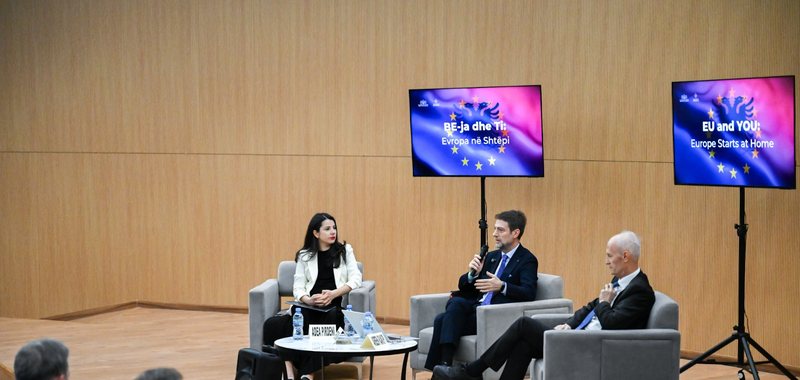
"Europe begins here", Ministers Hoxha and Pirdeni hold dialogue with students on the European integration process
Minister for Europe and Foreign Affairs, Ferit Hoxha, together with the Minister of State for Public Administration and Anti-Corruption, Adea Prideni,......
"Albania, energy sovereignty until 2030" - Karakaçi: We are working with internationals to create an energy financing and efficiency fund
By 2030, Albania aims to no longer depend on energy imports and thus create energy sovereignty. This was stated by the Minister of Infrastructure and Energy,......
"Albania, a very good tourist offer" - Gonxha: The war in the Middle East is increasing visitors
The war in the Middle East could boost tourism in Albania, said Minister of Tourism, Culture and Sports Blendi Gonxhja at a press conference. In his speech,......

Interest in government bonds fades - Citizens' investments in the primary market dropped to 23.8 billion lek during 2025
Fewer and fewer citizens are showing interest in investing in treasury bills and bonds. According to the Financial Supervisory Authority (AMF), in 2025, a......
Board decision, how much is oil being sold on the market? - Ceiling 203 lek per liter, measures for operators who do not respect it
The retail oil and gasoline market in the country is operating within the price ceiling limits set by the Transparency Board. From an observation made on......

"Tender winners, highest bids" - KPP overturns decisions, saving over 672 million lek from the budget
During 2025, public institutions continued to award tenders to economic operators with higher bids, risking increased costs for the state budget. However,......

The number of foreign companies in Albania is increasing / They are led by those from EU countries, with a focus on services and trade
According to data published by INSTAT, the number of foreign enterprises operating in Albania has marked a slight increase, reflecting the continued presence......

"Increase in the non-taxable salary limit" - Exporters: Take measures, the euro and the war are sinking the sector
The effects of the exchange rate and the situation in the Middle East have plunged the clothing and footwear sector into a severe crisis, which is leading to......