How do digital services taxes vary in Europe? - On average they are 3-5%. Hungary has the highest rate of 7.5%


The digital economy poses growing challenges for tax systems, as online services expose the limitations of current frameworks. Virtual enterprises, such as Meta or Alphabet, have significant customer bases in countries where they do not have a physical presence, generating revenue from advertising or subscription services.
Since tax rules still assume a physical presence, profits from digital activities often bypass taxes where consumers are located. Instead, multinational companies typically pay corporate taxes where production takes place.
"It is important that all sectors of our economies pay their fair share of taxes and contribute to the functioning of our societies," says the European Commission.
Several European countries have expressed interest in implementing a digital services tax (DST), especially as an OECD-wide agreement is making slow progress. France, Spain, Italy, Austria, Denmark, Hungary, Poland and Portugal have introduced a DST within the EU. The United Kingdom, Switzerland and Turkey have also implemented such taxes.
Belgium, the Czech Republic, Latvia, Slovakia, Slovenia and Norway have announced plans or signalled intentions to introduce a DST.
DST rates average around 3% to 5%, and Hungary currently has the highest rate at 7.5%. Turkey, which previously shared first place with Hungary, saw its DST rate drop to 5% in 2026, and this will drop to 2.5% in 2027.
The rate is 2% in the United Kingdom and Denmark, while Poland has a 1.5% tax on broadcasting and audiovisual services. It is 3% in Belgium, France, Italy, Latvia and Spain. Portugal and Switzerland apply a rate of 4%. Austria and the Czech Republic have introduced a 5% DST.
A 2025 report by the Centre for European Policy Studies (CEPS) estimates that a 5% tax on digital services would have raised around €11.9 billion across the EU in 2020. This is equivalent to 5.3% of corporate income tax revenues and 7.1% of the EU budget that year.

1 billion euros in energy investments - Economic reform package 2026-2028, increase in foreign investments
The new package of economic development reforms is expected to bring a significant increase in Gross Domestic Product (GDP), improving annual growth by......

"Take Florin, not the Jews", Edi Rama's words that brought the Israeli Parliament to its feet
In a special session, Prime Minister Rama addressed the Israeli parliament with a speech, after being received with a state ceremony by Prime Minister......

Rama in Israel, received by counterpart Netanyahu - In the afternoon, the speech in the country's parliament, the Knesset
Prime Minister Edi Rama is conducting an official visit to Israel where he met with his counterpart Benjamin Netanyahu and will deliver a speech in the......
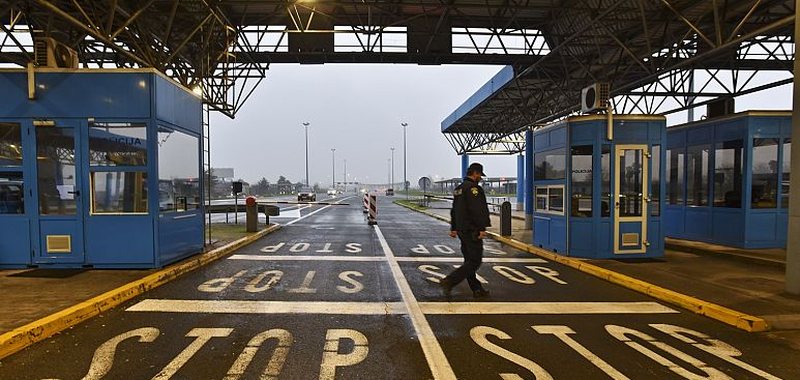
Facilities at road border points - Transport Community, request for Qafë Thanë, Hani i Hotit and Kakavija
The latest report of the Transport Community highlights progress, but also challenges that remain open regarding measures to improve efficiency at our......
Minister Vengu: This year the defense budget reaches 2.12% of GDP
During a press conference, Defense Minister Pirro Vengu stated that "the 2026 budget is not a routine budget, it is a mechanism to strengthen the army. This......

The European Commission will launch an investigation into "Grok" - For manipulation of photos published online
The European Commission will launch a formal investigation into Grok, X's chatbot, after its image editing feature was widely used to virtually undress......

"Free trade for 2 billion people" - Commissioner Maroš Šefčovič: India's market opens to EU companies
The European Union's trade chief, Maroš Šefčovič, said a trade deal with India is "very close" as the bloc aims to cut high tariffs for European companies in......

Services and construction will "lead" until 2029/ As the main pillars of the economy are projected, public debt reaches 50.2%
The Albanian government predicts that all major sectors of the economy will continue to grow more or less at the same trend as their historical average for......