We sell fish expensively, but consume it cheaply/ Trade balance, negative. While consumption is about 8-9 kg per person per year

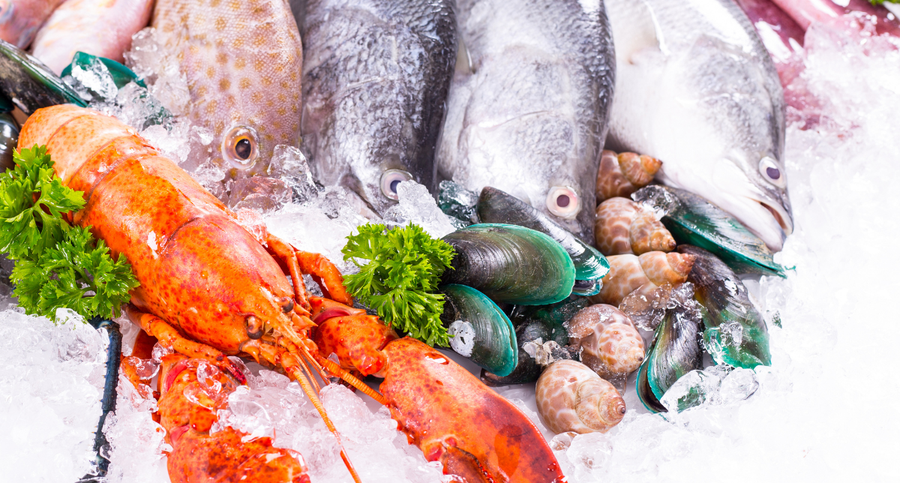
Albania is increasingly exporting fish products, but at the same time remains dependent on imports to supply the domestic market. The latest data highlights a clear paradox: while the industry increases its presence in foreign markets, the Albanian consumer continues to rely mainly on imported products.
According to foreign trade statistics, in 2025 Albania imported about 27 million kilograms of fish and seafood, while exports reached about 9.6 million kilograms. In quantitative terms, the country imports almost three times more than it exports. Although the difference in value is narrower, the trade balance remains negative, indicating a continued dependence on foreign markets.
However, in the long term, exports have seen significant growth. Compared to 2005, when they were under 1 million kilograms, today they have increased several times, reflecting the expansion of the sector and its orientation towards international markets.
A clear indicator of this orientation is the distribution of exports by trading partners. Italy remains the main destination for Albanian fish, absorbing the vast majority of exports with around 4.9 billion lek in 2025, much more than any other market. Spain and the United States follow, while a significant portion is also exported to countries in the region such as Kosovo, Montenegro and Serbia. The presence in more distant markets, such as Japan, Norway or South Korea, indicates a gradual expansion of the geographical reach, however the structure remains strongly focused on the Italian market.
At the same time, imports show a more dispersed supply picture. In 2025, Albania imported more fish from Italy, Greece and Spain, with values exceeding 1.2 billion lek each. Sweden and Croatia follow them, while the top ten partners also include Ecuador, China, Norway, Morocco and Argentina. This shows that the domestic market relies on a wide network of suppliers, including countries outside the region and Europe.
Another important indicator is the difference in the average import and export price. In 2025, the average import price is around 360-370 lek per kilogram, while the export price reaches around 800 lek per kilogram. This shows that Albania exports products with higher value per unit, while importing cheaper products to cover domestic demand.
Despite this trade dynamic, the increase in exports does not translate into higher domestic consumption. According to FAO data, the average fish supply in Albania remains around 8-9 kilograms per person per year, a relatively low level compared to many other countries, especially landlocked ones.
The paradox remains clear: a coastal country, with growing exports in the fish sector, but with domestic consumption that remains low and dependent on imports.

Over 1 billion lek for higher education - Investments in research, digitalization and connection to the labor market
Higher education in the country is expected to enter a phase of reform, where the measures are accompanied by a detailed financial plan. According to the......
The Greek economy, under Fitch's "loudspeak" - What are the "key" points that the credit rating agency will examine?
The Greek government is awaiting Fitch's decision on the country's economy, amid continued uncertainties due to the situation in the Middle East and having......

Exchange rate/ What happened to the major currencies today?
The US dollar started this Tuesday positively again, registering a slight increase in its value compared to the previous day, as it was bought this morning......

"Oil could rise to $125 per barrel" - IMF chief warns of risks to global economy
The head of the International Monetary Fund (IMF) has warned that the global economy risks facing a "much worse outcome" if the war in the Middle East drags......
“Kosovo's financial system, stable” - IMF assesses progress in strengthening financial stability framework
A recent report by the International Monetary Fund (IMF) has assessed the significant progress made by the Central Bank of Kosovo (CBK) in strengthening......
Global oil prices drop - US easing Iranian closure of Strait of Hormuz
Oil prices fell 1% on Tuesday on signs that the US Navy is loosening Iran's grip on the Strait of Hormuz, potentially opening up supplies from the Middle......

Finance publishes securities auction calendar, starting with 20-year bonds
The Ministry of Finance published the government securities auction calendar for May, inviting citizens and investors to participate. Through an......
The Parliamentary Laws Committee approved the Normative Act on fuel excise duty, effective in April 370 thousand euros
The state budget has so far benefited from the increase in hydrocarbon prices by 553 million lekë, while the negative effect of the 20% reduction in oil......