EU-Western Balkans Summit - Regional leaders to discuss path to membership in Brussels

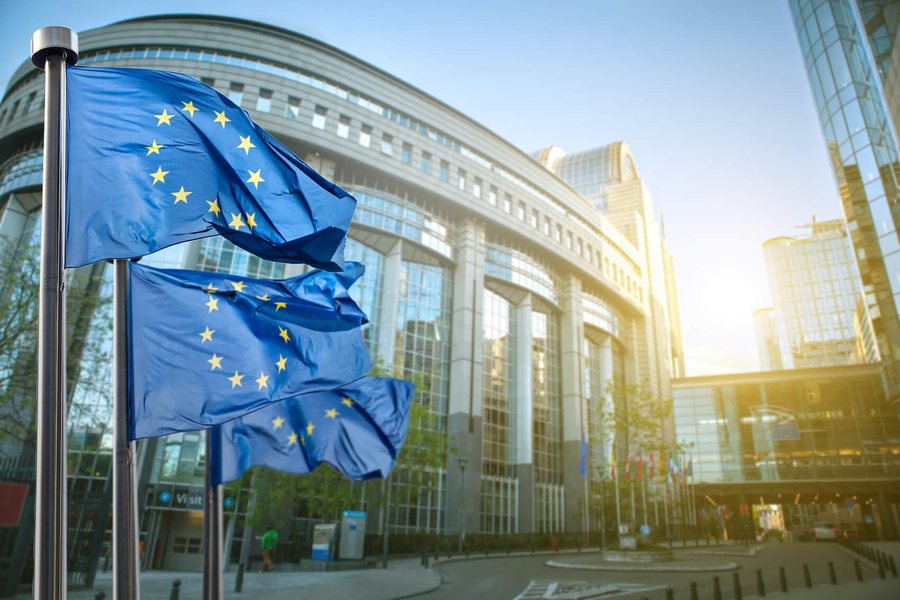
The European Union summit, to be held on Tuesday, November 4, marks a key moment for the EU's enlargement policy at the heart of Europe. In Brussels, the continent's most important political leaders will gather to discuss the 27-member bloc's expansion eastward and southeastward.
The President of the European Council, António Costa, has confirmed his participation, joining an extraordinary group of leaders who will shape the future of European enlargement. The summit will bring together the Presidents of Moldova and Serbia, Maia Sandu and Aleksandar Vuçić, the three Prime Ministers representing the Western Balkans, Edi Rama from Albania, Milojko Spajić from Montenegro and Hristijan Mickoski from North Macedonia, and the European Commissioner for Enlargement, Marta Kos.
The event provides a unique platform where leaders of candidate countries can express their perspectives on the path to the EU. The enlargement process is not an abstract issue, it affects millions of Europeans. Serbia has been in negotiations since 2014 after applying in 2009, but public support has fallen from over 70% in the early 2000s to around 40% today. However, both Belgrade and Brussels have stressed that the country belongs in the bloc.
Albania’s Prime Minister, Edi Rama, declared in September that “for the first time in history we can freely choose which empire we want to join… the empire of rights, values, security and defense.” Albania has made significant progress since applying in 2009 and is now one of the leading countries on the path to membership, with the goal of joining the bloc by 2030.
Montenegro leads the candidates with all negotiation chapters open and seven provisionally closed since the start of talks in 2012. The government aims to complete negotiations by 2026 and achieve membership by 2028.
North Macedonia, meanwhile, has waited longer than anyone, applying in 2004, but has faced ongoing obstacles due to disputes with its neighbors. After resolving the name issue with Greece through the Prespa Agreement in 2019, Bulgaria blocked the negotiations, demanding minority recognition, language and interpretation of shared history, a key obstacle that has yet to be overcome, while public support for membership has declined.
The summit also comes at a time when most Europeans support the enlargement of the 27-member bloc. A Eurobarometer survey shows that 56% of EU citizens are in favour of enlargement, with particular support from young people. The event will explore the benefits of EU enlargement, including access to new markets with millions of consumers, expanding the EU's global political influence and strengthening democracy and European values across the continent.

Customs collect 210 million euros in October - Fuel and cigarette customs clearances increase
The Customs Administration has closed the month of October 2025 with positive financial performance, generating 21 billion lek in revenue or about 210......

How much is the demand for employees in tourism? - Ozuni: Establishing the Tourism Academy is not a solution
The tourism sector in Albania is facing a significant shortage of labor, and as reality has shown, operators are seeking help from international markets.......
A Tirana resident holds 1.1 million lek in bank deposits - The capital, the highest average savings per capita. Elbasan, the last in the country
A citizen of Tirana holds an average of 1.1 million lekë in a bank deposit. According to an analysis conducted by Scan Television, calculating the amount of......

Can AI stop money laundering? - New platform identifies high-risk companies and individuals
Banks and financial institutions are facing an increase in fraud and money laundering, as well as pressure to adhere to increasingly stringent financial......
Leasing of seized and confiscated assets - Revenues increased by 48.2% in the 9 months of 2025
Revenue from the rental of seized and confiscated assets reached 162.2 million lek during the first 9 months of 2025, an increase of 48.2% compared to the......
Tax systems in Europe - France, with the weakest performance. Baltic countries lead
Tax revenues play a vital role in financing public services. According to Eurostat, the overall ratio of taxes to Gross Domestic Product (GDP) in the......

Where are banks investing billions? Record lending in trade, construction, tourism and agriculture
In September 2025, new loans to private non-financial corporations reached new highs in several key sectors of the economy, according to the latest data from......

Major currencies strengthen - How has this month started for foreign currencies?
The US dollar has started this month positively, being bought this Monday morning at 83.2 lek and being sold at 84.2 lek compared to last week according to......