Tax systems in Europe - France, with the weakest performance. Baltic countries lead


Tax revenues play a vital role in financing public services. According to Eurostat, the overall ratio of taxes to Gross Domestic Product (GDP) in the European Union was 40% in 2023. However, tax policies and rates vary significantly between European countries, due to their economic priorities and different social models.
According to the International Tax Competitiveness Index, which assesses how countries design their tax systems, the two main criteria are competitiveness and neutrality. A competitive system keeps tax rates low to encourage investment and economic growth, while a neutral system aims to collect more revenue with as few distortions to economic activity as possible.
Among the 27 European countries included in the 2025 index, scores range from 45.8 in France to 100 in Estonia, meaning Estonia has the most competitive and neutral tax system, while France ranks at the bottom of the table.
According to the report, Paris is in that position because of the implementation of several additional taxes on large corporations, which temporarily increase the top corporate tax rate to 36.1%. This is the highest value among member countries of the Organization for Economic Cooperation and Development (OECD) and almost 12 percentage points above the institution's average (24.2%).
On the other hand, the Baltic countries, such as Estonia, Latvia and Lithuania, dominate the index. Latvia (92.8) follows Estonia, while Lithuania (81.8) holds fourth place, behind Switzerland (86).
In general, Central and Eastern European countries have the most competitive tax systems, while Western ones rank lower. Next to France, at the bottom of the list we find Italy (50.3), Poland (54.7) and Spain (57.9). These countries are followed by Portugal, the United Kingdom, Ireland and Belgium, making up the eight countries with the lowest scores in Europe.
Where are banks investing billions? Record lending in trade, construction, tourism and agriculture
In September 2025, new loans to private non-financial corporations reached new highs in several key sectors of the economy, according to the latest data from......

Major currencies strengthen - How has this month started for foreign currencies?
The US dollar has started this month positively, being bought this Monday morning at 83.2 lek and being sold at 84.2 lek compared to last week according to......

"The most advanced chips, only in the USA" - Trump bans their export to other countries
US President Donald Trump declared that Nvidia's most advanced artificial intelligence chips will be reserved only for American companies and will not be......

Greeks retire "young" - Retirement age remains below European average
The retirement age in Greece has until now been one of the lowest in the world. Reforms implemented in recent years in the country's social security system,......
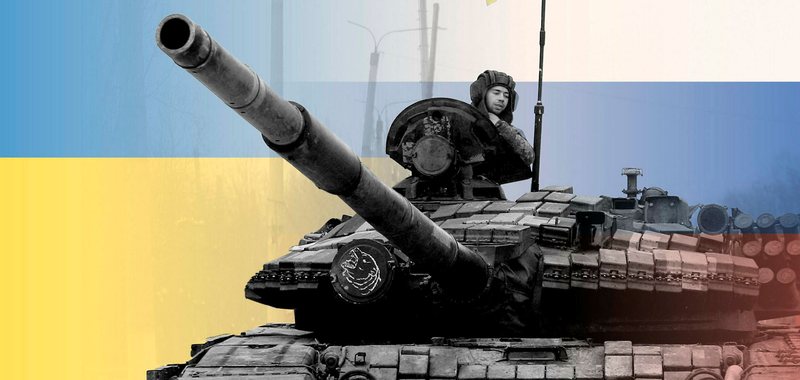
German companies "finance" the war in Ukraine - They have paid 1.7 billion euros in taxes to the Kremlin since the beginning of the conflict
German companies have paid almost 1.72 billion euros in taxes to the Kremlin since the start of the Russian invasion of Ukraine, enough to finance 10,000......
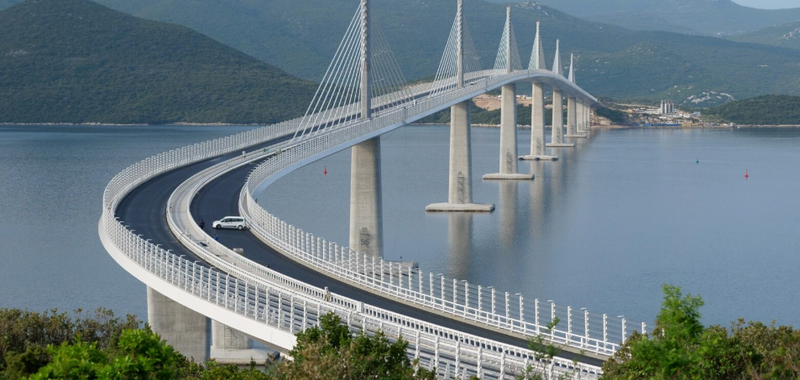
Trade deficit in Montenegro increases - Exports cover only 12.6% of imports
Montenegro's total foreign trade for the period January-September 2025 amounted to 3.69 billion euros, according to preliminary data from the Statistical......

“Insurance on the rise, but the market remains concentrated”/ AFSA: Compulsory insurance accounts for 61.8% of the total. Non-life also dominates
The insurance market in Albania is experiencing steady growth, but remains heavily dependent on compulsory motor insurance. The latest data from the......
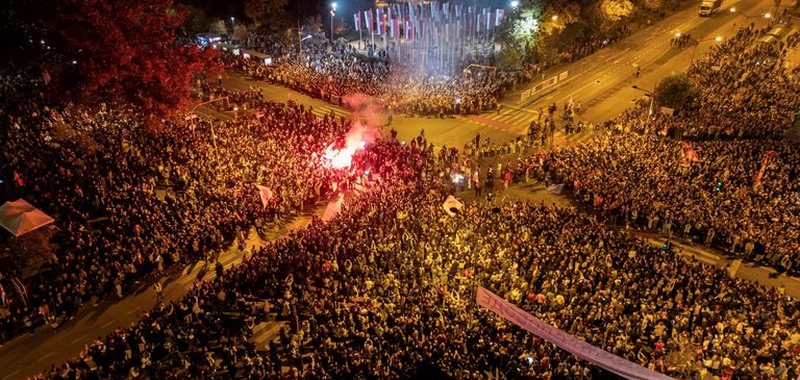
One year after the Novi Sad accident in Serbia, citizens erupt in protests. Vučić: There will be no change of government
Tens of thousands of students and opponents of Serbia's current president, Aleksandar Vučić, gathered in the northern city of Novi Sad to hold a memorial......