Europe turns to private savings/ The number of employees is decreasing, the elderly are increasing rapidly

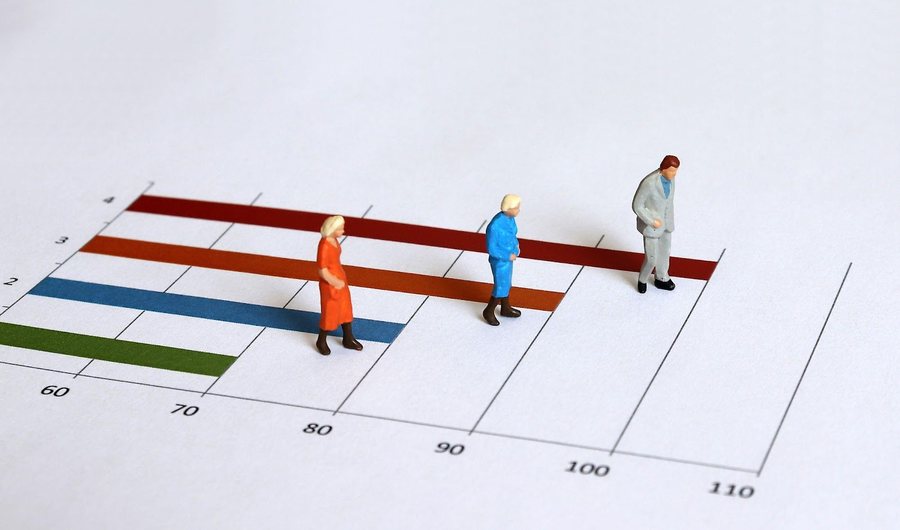
According to the latest ECB analysis, European households continue to hold a large portion of their wealth in low-yielding bank deposits, despite the fact that inflation and low real interest rates are eroding the purchasing power of these savings. Europeans appear to be much more conservative in terms of investments compared to Americans, as they invest significantly less in stocks, investment funds and pension products linked to capital markets.
This situation is causing growing concern in Brussels and Frankfurt for two main reasons. The first concerns the future of pensions themselves. Most European public insurance systems are based on the "pay-as-you-go" model: current employees finance the pensions of current retirees through their contributions. But the demographic reality is changing dramatically. The number of employees is decreasing, while the number of elderly people is rapidly increasing.
The Commission's forecasts show that by 2050, Europe will have one of the oldest populations in the world. In many countries, the ratio of workers to pensioners is steadily worsening, creating huge fiscal pressure. This means that without reforms, either contributions will have to increase significantly, or future pensions will be lower.
The second reason has to do with the competitiveness of the European economy itself. European institutions believe that the continent has a huge wealth of savings, which remains “frozen” in bank accounts instead of being channeled into productive investments. The European Union is now seeking to mobilize these funds to finance the green transition, new technologies, artificial intelligence, defense industries, and European companies trying to compete with the United States and China.
In this context, the idea of a Capital Markets Union, a plan that has been discussed for years but is now taking on new strategic importance, is returning to the forefront. The aim is to facilitate the participation of European citizens in investments and to create a deeper and more unified European capital market.
At the same time, there is increasing emphasis on private pension products and funded systems. Some European countries are already moving forward with reforms that strengthen individual pension accounts or offer tax incentives for long-term investments. The EU-promoted Pan-European Personal Pension Product (PEPP) is part of this strategy, although its penetration remains limited so far.
Supporters of this transition believe that citizens will be able to secure higher returns in the long run and reduce their dependence on public pension systems. They point out that historically capital markets have offered higher returns over decades than simple bank deposits.
The establishment of the Albanian Development Bank officially begins, OBP opens the procedure for international consultancy
The procedure for the establishment of the Albanian Development Bank, the first development financial institution with 100% state capital in the country, has......
Where in Europe do families save the most? Sweden and Hungary, at the top. Greece, in negative territory
Net household saving represents the portion of income that is not spent on final consumption. According to the OECD, net household saving rates vary widely......

High prices for British consumers/Only 16% of firms remain unharmed by the conflict
The disruption to global shipping, coupled with rising energy and raw material prices, has increased costs for UK companies, with the impact already reaching......
"ECB should raise interest rates in June"/ Schnabel: Decision-making even if peace agreement with Iran is reached
"The ECB should raise interest rates in June, even if peace talks with Iran produce a deal, as the conflict has lasted much longer than anticipated and high......

Nordics and Asians "discover" Albania/ Denmark and India, again with the strongest growth in April
April brought another increase in the number of foreign nationals entering Albania, but this time what stands out the most are not just the total figures,......

Applications open for the national agricultural scheme - Fund dedicated to 12 support measures, 5.2 billion lekë
Applications for the National Agriculture Scheme 2026, which provides for a fund of 5.2 billion lek, which will be translated into 12 measures and......

Small-sized gas plants - ERE initiates procedures for the approval of type licenses for LNG and CNG
The Energy Regulatory Authority has initiated procedures for the approval of standard licenses for the operation of small-scale liquefied natural gas (LNG)......
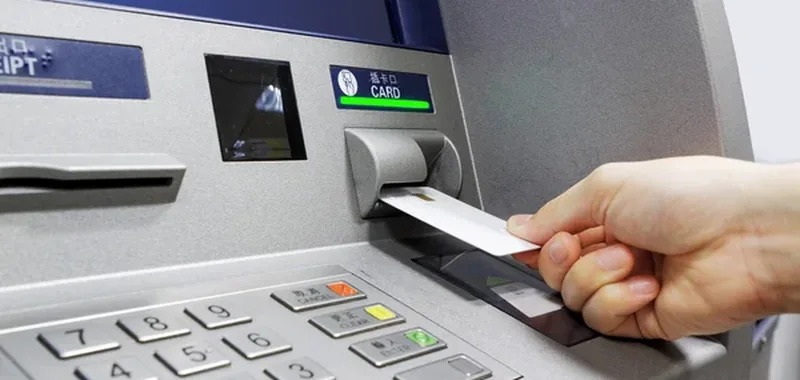
ATM network expands, but functions remain underutilized - BoA: Cash withdrawals dominate. Order transfers and deposits, minimal use
While the number of ATMs continues to grow, Albanians continue to use them primarily for a single function: withdrawing cash. According to the latest data......