Digital Euro, what it is and how it will work - The electronic version of physical money reduces dependence on American payment firms

Talks between the European Parliament, governments and the European Commission on rules for a digital euro begin on Monday, three years after the draft law was drafted. The negotiations aim to produce a law by the end of the year, paving the way for the ECB to officially adopt a digital euro on January 1, 2027, 25 years after the euro entered circulation.
The digital currency could be launched in 2029, after a pilot phase that will begin next year, involving about 36 banks and payment companies.
The digital euro would be an electronic version of the cash issued by the ECB, making it the only form of central bank money directly available to the public in digital form. The ECB has pledged to keep the money in circulation indefinitely, but the use of physical money is in steady decline. At the same time, cryptocurrencies - including stablecoins pegged to traditional currencies, mainly the US dollar - have grown in popularity.
The ECB argues that central bank money acts as an anchor of trust for the financial system. Supporters argue that a digital euro would reduce the eurozone's dependence on US payment firms such as Visa, Mastercard and PayPal, helping to protect the bloc's monetary sovereignty in an increasingly digital economy.
The ECB has also warned that stablecoins could pose risks to financial stability and monetary policy because they can attract deposits from banks and do not always maintain a stable value.
Consumers will be able to use the digital euro for free, either through a dedicated app or through mobile banking apps. People who are unable to use smartphones will have the option of using a payment card.
Retailers will generally be required to accept digital payments in euros due to their legal status as a means of payment. The fees that banks and payment providers can charge merchants will be limited by law. However, banks argue that they should be compensated for the cost of upgrading their systems to handle digital payments in euros.
The ECB is working with payments specialists to build the infrastructure and payment standards behind the project and unlike Visa or Mastercard, it plans to offer both for free to banks.

Daylight Saving Time will be permanent in the US - House of Representatives votes overwhelmingly, bill passes Senate
The U.S. House of Representatives overwhelmingly approved a bill that would make daylight saving time permanent and end the practice of changing clocks twice......

EU population hits record high - forecast to reach 453.3 million in 2029, before starting to shrink
At 450.6 million, the European Union's population is approaching its estimated peak before falling again, according to projections, as highlighted in a......
36 payment firms for the digital euro - The pilot project starts in the second half of 2027 and will last 12 months
The European Central Bank has selected 36 payment service providers, including some of the eurozone’s largest financial firms, to join a pilot program for......

Transformation of regional vocational education campuses - New ADF investment will modernize infrastructure
The Albanian Development Fund has announced the opening of the tender for the transformation of accommodation infrastructure in regional vocational education......
Reaction to the protests, Rama from Brussels: We repeal the strategic investment law, we approximate the law on protected areas
The Strategic Investment Law will be repealed, Prime Minister Rama said at the Intergovernmental Conference. In cooperation with the European Commission, a new......
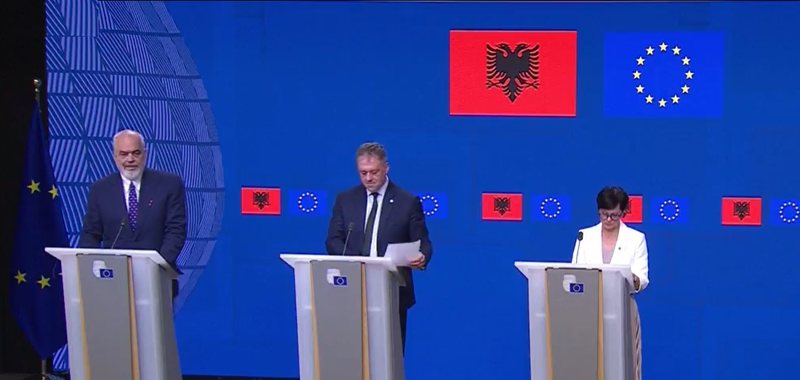
Rruga për BE, mbyllen 3 kapituj të negociatave, mbeten edhe 30, Rama: Vlerësim i qartë i progresit të Shqipërisë
Shqipëria mbylli sot 3 kapitujt e parë të negociatave me Bashkimin Europian. Në përfundim të konferencës së 9-të ndërqeveritare, në një komunikim të......
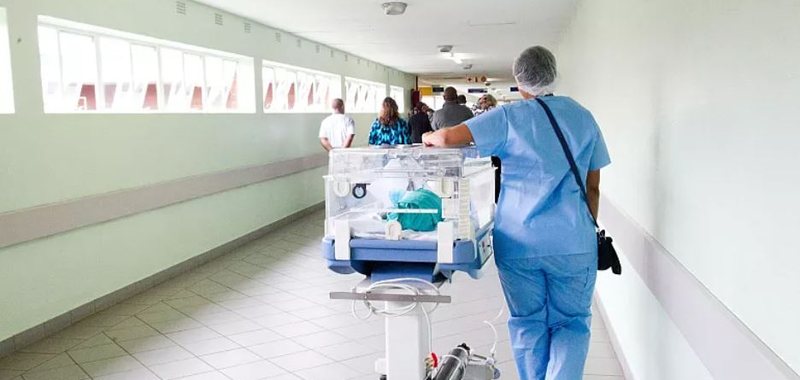
Shalsi: The donation platform at QSUT guarantees transparency, needs are met
The Vice-Chairman of the Health Commission, Eduart Shalsi, explained that publishing equipment needs on the QSUT donation platform is a regular and legally......
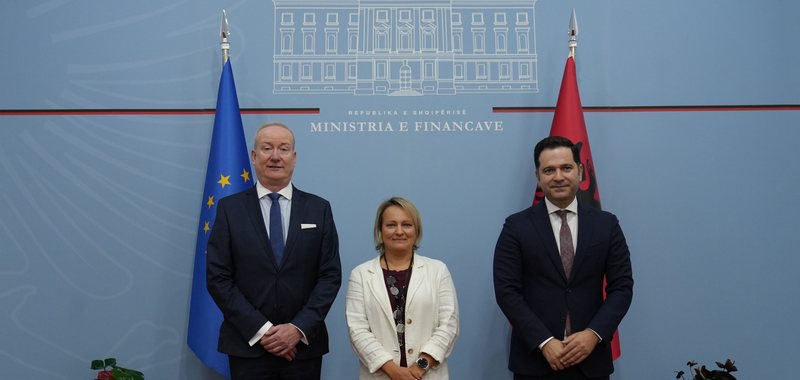
Malaj meets with the new head of the EBRD in Albania: We strengthen cooperation on strategic projects
The Minister of Finance, Petrit Malaj, hosted a meeting with the new Director of the European Bank for Reconstruction and Development in Albania, Hannes......