Eurozone economy ends the year on strong footing - Sustainability confirmed in 2025


The eurozone's largest economies grew at a modest but steady pace last quarter as consumption and investment rose to offset weak exports and heightened uncertainty over erratic U.S. trade policy, data showed.
The figures signal remarkable resilience for a bloc of 350 million people that was expected to succumb to a trade war with the US, increased export competition from China and years of military conflict on its eastern border.
Yet every quarter of last year, the eurozone produced respectable - if not spectacular - growth despite industry and exports, the previous engines of expansion, struggling to regain their balance.
Spain continued to be the bloc's main driver, expanding 0.8% in the quarter, well above expectations for 0.6%, while Germany, the eurozone's largest economy, was also above forecasts, growing 0.3% in the quarter, versus economists' bets for 0.2%.
French GDP rose 0.2%, in line with forecasts, overcoming fears that political instability would weigh on sentiment. Meanwhile, Italy grew 0.3%, slightly above forecasts, and the Netherlands expanded 0.5%.
Other figures suggest the bloc started 2026 on a relatively strong footing. A key sentiment reading released on Thursday showed an unexpected rise, led by France and Germany, with broad gains across all major sectors.
Meanwhile, industry is showing signs of stabilization, households have finally started to reduce their historically high savings rate, unemployment is hovering near record lows, and inflation is firmly around the European Central Bank's 2% target.
The outlook is further boosted by Germany's infrastructure and defense spending boom, which may be slow to get going but will have a measurable impact on growth from the second quarter.
However, exports are unlikely to fully recover anytime soon, as US tariffs, increasingly fierce Chinese competition and the dollar's decline over the past year point to a permanent shift in trade patterns.

Digital violence against women, no longer unpunished - New law provides for fines, account blocking, reaction from platforms
The Albanian Parliament has recently approved the law “on Prevention and Protection from Violence against Women and Domestic Violence” For the first time,......

Vocational training, increasing youth involvement - AKPA: Over 13 thousand beneficiaries from vocational training in 2025
The National Employment and Skills Agency reports that 13,363 individuals benefited from Vocational Training programs across the country last year. This......

US Dollar Trend Changes - How Did This Week End for Major Currencies?
The US dollar has reversed its downward trend that it experienced throughout this week, closing this period positively as it increased in value this morning,......

French economy slows down - Growth in the last quarter of 2025 was 0.2%
France's economy grew modestly in the fourth quarter of 2025, slowing after a strong recovery over the summer, as slightly weaker domestic demand and a drop......

3.1 billion euros for energy efficiency in Spain - European Commission approves state aid scheme
The European Commission has approved a Spanish state aid scheme of 3.1 billion euros to support electricity production from highly efficient thermal power......

Energy price hike in Kosovo again? - KESCO demands 21.3% price increase
The electricity supply company in Kosovo, KESCO, has submitted to the Energy Regulatory Office (ERO) a request for an increase in the price of electricity......
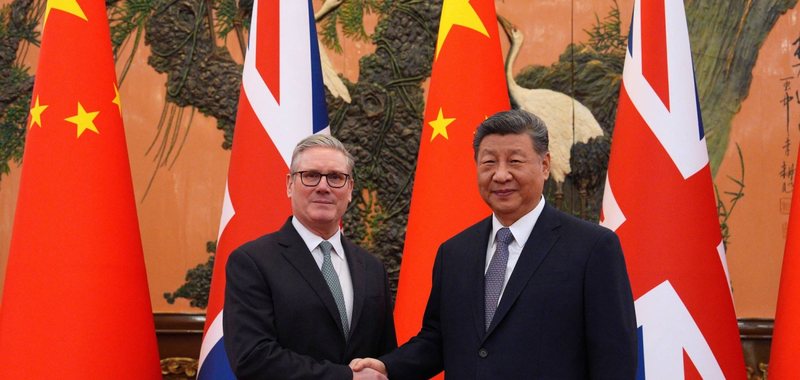
British Prime Minister optimistic about economic cooperation - President Jinping: Relationship promises long-term results
In a bilateral meeting in Beijing, British Prime Minister Keir Starmer and Chinese President Xi Jinping agreed on state-to-state relations, promising greater......
European Pandemic Fund Expires in August - EU: RRF Driven 40% of Overall Economic Impact
The EU economy is expected to grow by 1.4% this year, driven by investments and reforms implemented under the EU's pandemic recovery fund, Economic......