"8 member states are deviating from targets" - EU calls on states to limit budget spending


The European Commission warned that public spending in eight EU countries, including Spain, Hungary, Malta and the Netherlands, is deviating from agreed targets and risks non-compliance with the Union's budgetary rules. Under the current fiscal framework, the bloc's governments must keep budget deficits below 3% of GDP and public debt below 60% of GDP. The commission is assessing not only next year's budgets but also the credibility of long-term deficit plans.
“We call on member states to take the necessary measures to ensure compliance,” said European Commissioner for the Economy, Valdis Dombrovskis. “This is particularly important for countries under the excessive deficit procedure.”
The warning comes as EU capitals have secured more fiscal flexibility to bolster defense capabilities and boost industrial investment. The measures have come partly in response to US President Donald Trump's demand to spend at least 5% of GDP on defense by 2035. European governments are also finding it harder to comply with fiscal rules amid rising trade tensions with the United States.
On November 18, the Commission published its latest economic forecast, which predicts the EU economy will grow by 1.4% despite a tripling of US tariffs to 15%. Poland and Spain are leading the expansion, with projected growth rates of 3.2% and 2.9% in 2025, which are differentiated from the rest of the bloc. Meanwhile, the EU’s three largest economies, Germany, France and Italy, are growing at minimal rates.
However, the Commission warns that the medium-term growth outlook remains uncertain, even though the economic hit from the higher tariffs turned out to be smaller than initially expected. Brussels also stressed that, based on the preliminary budgetary plans of Croatia, Lithuania and Slovenia, these countries need to take additional steps to ensure that their fiscal policies for 2026 are in line with the agreed commitments.
Spain has yet to submit its preliminary budget for 2026, but along with Bulgaria and Hungary, it has been identified as a country at risk of breaching the bloc's fiscal rules, due to net spending rising beyond the limits set. For now, the Commission has only warned these countries to cut spending in 2026, but if the recommendations are ignored, Brussels could propose fines at the next budget review in the spring.

Fluctuations in the foreign exchange market – The US dollar loses points. The Swiss franc strengthens!
The US dollar has recorded a decline for the first time this week after a continuous increase since the beginning of the week, as it was bought this morning......

Greece, tourism brings in over 20 billion euros - Revenues increased by 9%. Over 31 million tourists visited the country
Tourism revenues reached more than 20 billion euros during the January-September period, marking a 9% increase compared to 2024. According to data from the......

AI will eliminate up to 3 million jobs in Britain - Many positions risk "disappearing" by 2035
Up to 3 million low-skilled jobs could disappear in the UK by 2035, due to automation and artificial intelligence. According to the National Foundation for......

German innovation stagnates - The country lags behind in future technologies
Germany's innovation capacity is stagnating, with the country sitting in 12th place, according to a recent study. This comes as competitors such as the......

Employment opportunities for every educational level - AKPA publishes 6 thousand vacancies
The National Employment and Skills Agency announces that there are 6,000 job vacancies, which are advertised on the puna.gov.al portal, offering a wide range......

"Environmental fines are not collected" - Qirjo: 23 million euros uncollected. Damages are processed as misdemeanors, not as crimes
Violations of the law that protects the natural environment, land, water, forests, air, etc., are a daily and flagrant reality, but the establishment of......

Performance system for municipalities - Demo: Grant, based on implementation of plans
Municipalities have made progress in financial management, public services, and good governance, moving closer to European standards. During the conference......
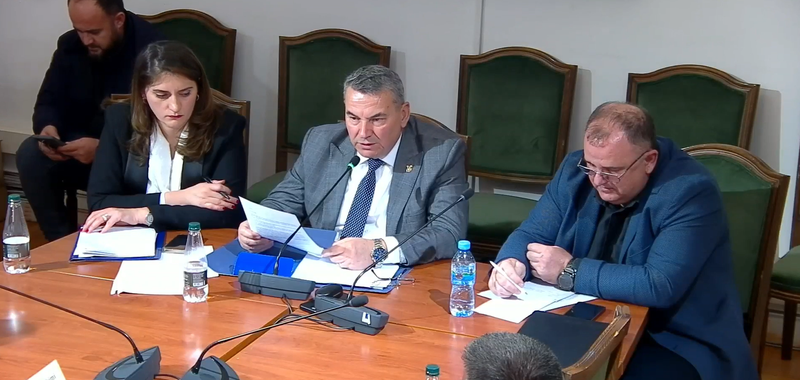
Civil emergencies, the fund should be allocated according to risk - Çako: The assessment by municipalities has begun. It should not be distributed only based on projects
The Civil Emergency Fund should be distributed according to the risk faced by each municipality and not according to projects. The 2026 draft budget......