The great danger of the Strait of Hormuz / Over 1,500 commercial ships blocked since the beginning of the war

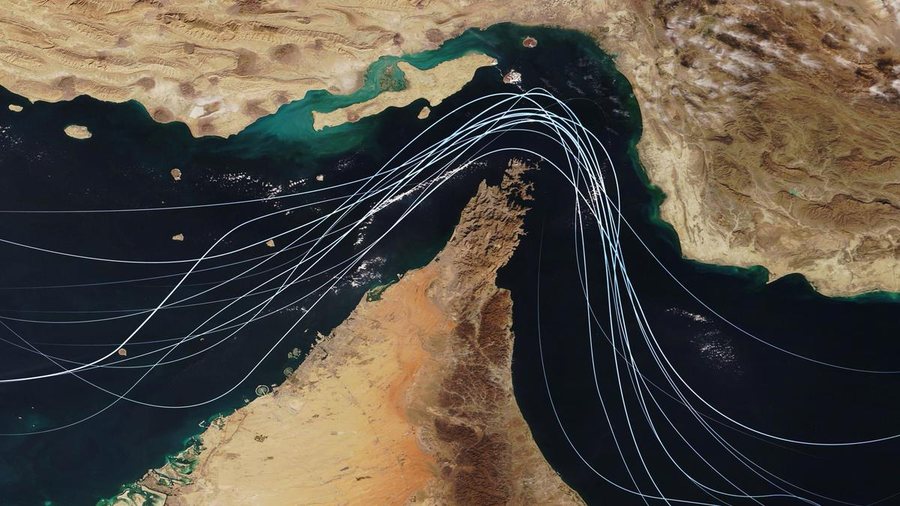
More than 1,500 commercial ships have been stranded in the Persian Gulf for three months since the start of the Iran war, and managing them will be one of the key challenges when and if there is an agreement between Washington and Tehran to open the Strait of Hormuz.
Initial estimates suggest that traffic could return to only half of normal levels within the first month after a mutually acceptable solution is found. Other estimates suggest that it could take four to seven weeks for shipping to return to normal, barring any further disruptions. These estimates were provided to The New York Times by shipping executives and industry intelligence firms.
Analysts say it will take at least 30 to 45 days for shipping flows in the region to return to normal, even if everything goes according to plan. Executives at shipping data provider Kpler believe that even if a smooth process for shipping can be established, traffic could only recover to 40 or 50% of normal levels over three to four weeks. Analysts also believe that the most likely scenario is not that there will be a full opening of the Strait of Hormuz immediately, but that ships will be able to move through it with restrictions. They will have limited routes, higher insurance costs for the risk of war and longer waiting times.
All this while Iran's Foreign Ministry said on Monday that Tehran collects fees for "navigation services" from ships passing through the Strait of Hormuz, but does not impose taxes.
Last week, Iran published a map claiming control over a section of the Strait of Hormuz that lies deep in the territorial waters of the United Arab Emirates and Oman. This prompted five Gulf countries to formally warn shipping companies through the International Maritime Organization (IMO) not to comply with Iran's demands.

Europe turns to private savings/ The number of employees is decreasing, the elderly are increasing rapidly
According to the latest ECB analysis, European households continue to hold a large portion of their wealth in low-yielding bank deposits, despite the fact......
The establishment of the Albanian Development Bank officially begins, OBP opens the procedure for international consultancy
The procedure for the establishment of the Albanian Development Bank, the first development financial institution with 100% state capital in the country, has......

Where in Europe do families save the most? Sweden and Hungary, at the top. Greece, in negative territory
Net household saving represents the portion of income that is not spent on final consumption. According to the OECD, net household saving rates vary widely......

High prices for British consumers/Only 16% of firms remain unharmed by the conflict
The disruption to global shipping, coupled with rising energy and raw material prices, has increased costs for UK companies, with the impact already reaching......
"ECB should raise interest rates in June"/ Schnabel: Decision-making even if peace agreement with Iran is reached
"The ECB should raise interest rates in June, even if peace talks with Iran produce a deal, as the conflict has lasted much longer than anticipated and high......

Nordics and Asians "discover" Albania/ Denmark and India, again with the strongest growth in April
April brought another increase in the number of foreign nationals entering Albania, but this time what stands out the most are not just the total figures,......

Applications open for the national agricultural scheme - Fund dedicated to 12 support measures, 5.2 billion lekë
Applications for the National Agriculture Scheme 2026, which provides for a fund of 5.2 billion lek, which will be translated into 12 measures and......

Small-sized gas plants - ERE initiates procedures for the approval of type licenses for LNG and CNG
The Energy Regulatory Authority has initiated procedures for the approval of standard licenses for the operation of small-scale liquefied natural gas (LNG)......