The Red Sea Blockade and Global Energy Supplies - Its Closure by the Houthis, a New Front in the Energy Crisis


Yemen's Iran-aligned Houthis will impose a naval blockade on Saudi Arabia, further disrupting the global energy market, which is already severely constrained by Iran's closure of the Strait of Hormuz.
Yemen sits on the Bab el-Mandeb Strait – the southern gateway to the Red Sea – and closing it would open a new front in the energy crisis and Iran’s all-out conflict with the US. With the disruption of Hormuz, the Red Sea has become a critical alternative point for Gulf oil and other products. A serious disruption would mean both major oil export routes to the Middle East would be closed simultaneously.
Iran's partial blockade of the Strait of Hormuz, after Israel and the US attacked it on February 28, cut off most oil and other exports from the Gulf, driving up prices and causing a global energy shock.
Saudi Arabia responded by diverting more than 70% of its normal daily crude oil exports to the Red Sea port of Yanbu. Ships from Yanbu bound for Europe go north through the Suez Canal. Those bound for Asia go south through the Bab el-Mandeb.
Shipments from Yanbu averaged 4 million barrels per day in recent weeks according to data from Kpler and Signal Ocean, up from about 973,000 barrels per day a year ago.
Total oil volumes transiting through the Bab el-Mandeb Strait reached 7.4 million barrels per day in June, or about 7% of global oil production, according to Kpler data, up from 4.2 million barrels per day last year.
This has provided a lifeline to the energy market, helping to keep global oil prices low. Saudi Arabia is considering an expansion of its crude oil pipeline on the Red Sea coast, Reuters reported last week.
Following Hamas's attack on Israel on October 7, 2023, and Israel's campaign in Gaza, the Houthis began shelling Israel and ships in the Red Sea, saying they were doing so in support of the Palestinians. The attacks severely disrupted global shipping, prompting other major companies to divert around Africa — a much longer and more expensive route.
Traffic in the Red Sea has not recovered since then, with traffic through the Suez Canal falling by 52% in 2025 compared to 2023 levels and at its lowest level in at least 50 years, Suez Canal Authority data show.
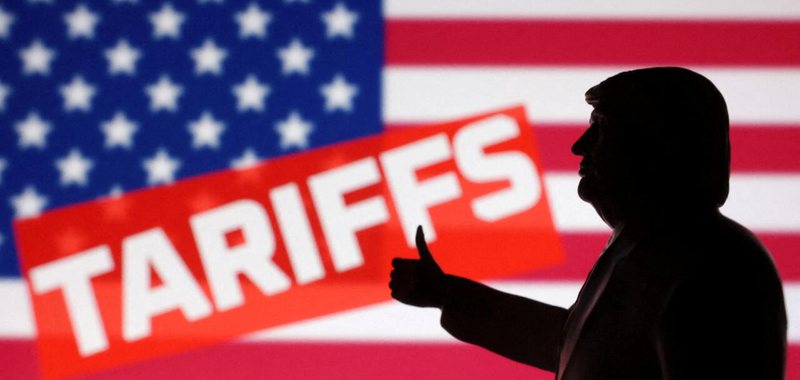
50% additional tariffs on Canada - Trump signs decrees: It is discriminating against American trade
US President Donald Trump signed three executive orders to impose an additional 50% tariff on some Canadian goods, saying Canada was discriminating against......
Aiming to reduce fossil fuel consumption - Brussels proposals to facilitate the process
The European Union economy must reach a 46% electrification target in transport, industry and buildings by 2040, aiming to cut 260 billion euros a year in......

Families in Europe, "drowned" in debt - The wealthy north leads, not the fragile economies of the south
The most indebted households in the European Union are found in the wealthy north, not in the southern economies that are usually known as the most fragile.......
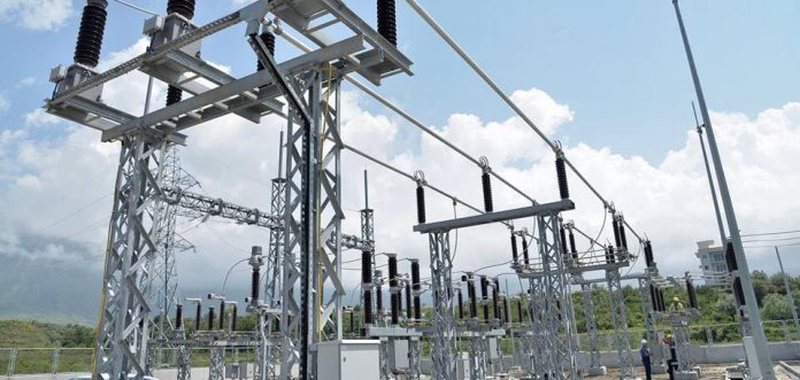
Reconstruction of the electrical substation in Kinostudio - OSSH opens the competition, the investment aims to reduce power outages
The High Voltage Directorate OSSH sh.a has announced the procurement procedure for the reconstruction and strengthening of the Kinostudio electrical......

Banks, more "generous" in granting loans - BoA: They eased standards in the second quarter. Demand from citizens increases
Commercial banks have been more "generous" with citizens in granting loans during the second quarter. According to the latest Bank of Albania survey on......

Rama: We doubled economic support for 11 thousand young people with disabilities
Prime Minister Edi Rama declared today that 11,000 children and young people with disabilities will benefit from the government's decision to double economic......
Bank of Albania increases euro purchases - In the first quarter, interventions in the domestic foreign exchange market reached 139.6 million euros
The Bank of Albania purchased 139.6 million euros in the domestic market during the first quarter of the year, with the aim of increasing foreign exchange......

Taxes: Over 15 thousand taxpayers benefit from the automatic cancellation of liabilities, 28.8 million euros are eliminated
The process of automatic cancellation of tax liabilities, in implementation of the Amnesty Law, continues throughout the country, the General Directorate of......