What are the risks associated with the new division of Albania? - From financial costs, to the quality of services and loss of trust


Territorial and administrative reforms are processes with far-reaching institutional, financial and social impact, which are inevitably associated with uncertainty and implementation risks.
According to the majority report, the new territorial division of the country could face risks of various forms.
Specifically, the most important risk is related to the institutional capacity to manage a highly complex reform. The reform affects a large number of institutions and requires continuous coordination between the central administration, regions, municipalities and other public institutions. In the absence of effective coordination, there is a risk of overlapping responsibilities, delays in decision-making and different interpretations of the legal framework.
The second risk is related to the financial one. The implementation process may be accompanied by a temporary increase in public spending, an underestimation of the real costs of the transition, or delays in securing financial resources.
There is also a risk that municipalities with more limited financial capacities will encounter difficulties in meeting the costs of organizational transformation, digital investments, and human capacity development.
To avoid these problems, it is recommended to plan for the transition costs over several years; establish a National Transition Fund; periodically monitor costs; and conduct a financial audit of the implementation process. At the same time, it is recommended that any transfer of competences be accompanied by a corresponding transfer of financial resources, in accordance with the principle “competence follows financing”.
One of the most common risks in reforms of this type is related to organizational resistance to change. Public administration may experience uncertainty regarding new structures, responsibilities, personnel mobility and work procedures. If this process is not managed professionally, it can negatively affect staff motivation and the quality of public services.
The draft also cites that the reform may face political risks and in the absence of a broad institutional consensus, there is a risk that implementation will slow down or undergo constant changes due to political cycles.
On the other hand, it is emphasized that if the process is not accompanied by clear information and continuous communication, there is a risk of creating wrong perceptions, local resistance and decreased trust in public institutions.

How has this week started for the major currencies?
The US dollar has started the week negatively, recording a decline in value this Monday morning, as it was bought today at 81.4 lek and sold at 82.4 lek......
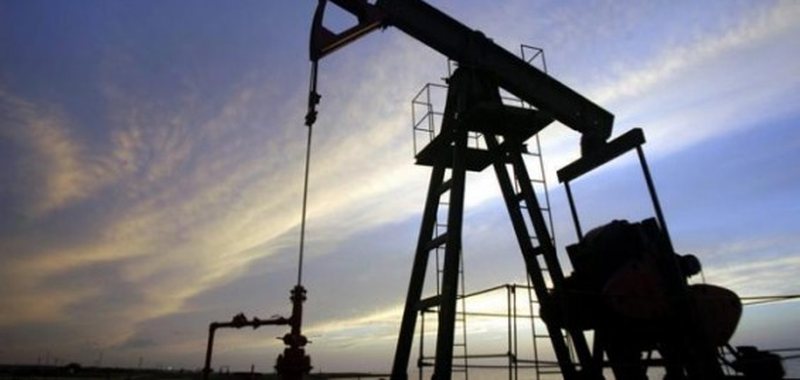
Oil starts the week down 6% - US and Iran announce halt to attacks, resume negotiations
Oil prices fell sharply in the first session of the week after Iran announced it would suspend all attacks as long as a ceasefire with the United States......

Europe, facing a long and cold winter - The Continent, on alert from the decline in gas reserves and imports at minimal levels
Europe is approaching winter with energy supplies at extremely fragile levels, while conflicts in the Middle East and the war in Ukraine are putting pressure......

Cost 1.35 billion euros to the British economy - Heat wave, 24 million working hours lost
The June heatwave in the United Kingdom resulted in the loss of 24 million working hours, equivalent to €1.35 billion to the economy, according to an......

Consequences of overproduction of renewable energy - Production stops as too much investment is required for storage
Solar and wind farms in Europe are actively choosing not to produce power, as experts warn that more investment in storage and flexible technologies is......

“Dyfisho Sipërmarrjen Tënde”, vijon fushata informuese/ zv.Kryeministrja Koçiu: Bizneset mund të përfitojnë kredi deri në 2 milionë euro
Në kuadër të programit mbështetës të qeverisë për bizneset, “Dyfisho Sipërmarrjen Tënde”, Zëvendëskryeministrja Albana Koçiu vizitoi një sipërmarrje në......
Milot-Balldren, Karakaçi: The cost is not just the construction. The Minister of Infrastructure and Energy explains the value of the contract and the details.
The Minister of Infrastructure and Energy, Enea Karakaçi, has decided to share a short message on social media regarding the costs of the Milot-Balldren......
Will the current euros disappear? New banknote designs, citizens invited to vote
After the European Central Bank (ECB) published the selected proposals for the design of the next series of euro banknotes, a public consultation has been......