Albanian businesses in agriculture and textiles: towards the EU market - UNIDO and the Swedish government support the green transformation

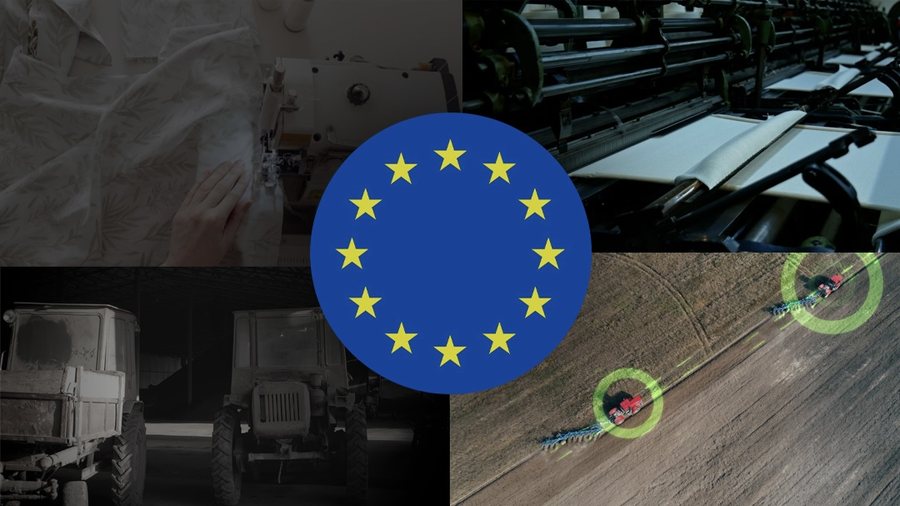
Albanian businesses in the textile, footwear and agricultural sectors face growing challenges: rising costs, stricter European sustainability requirements, declining orders and pressure to compete in the international market. To survive and thrive, companies need to innovate, modernise and adopt greener practices. “Resource Efficiency and Cleaner Production (RECP), a programme being implemented by the United Nations Industrial Development Organization, UNIDO, with the support of the Swedish Government, helps businesses reduce their consumption of energy, materials, water and chemicals, minimise waste and adopt circular practices. Increasing productivity is a competitive advantage. Beyond the methodology, it is about building a greener economy – ready to meet European standards, access export markets and compete globally.”
The President of ProExport Albania, Edvin Prençe, states that the application of RECP measures has helped significantly reduce electricity bills.
“Of course, there have been significant losses. I’ll give you my concrete example: in previous years I was paying around 800 euros per month for electricity, while today, as the same business with almost the same number of employees, I pay an average of 350–400 euros per month. This cost reduction has come thanks to the investments I have made in innovative and new machinery. This is the most concrete example, beyond the general focus of the sector, but I mention my personal example because it is something that others have also started to implement — just as they have started to invest in solar panels and other methods to offset the rising costs and unnecessary expenses that we encounter. It is one of the most positive effects. On the other hand, taking CAD/CAM as an example, there are many businesses that do not have a digitalized production methodology, and when the work is done manually, it is inevitable that there will be higher waste and increased technological scrap. By enabling training through CAD/CAM and any other necessary training, I guarantee that many businesses will experience reduced waste and increased profits. From the 800 euros I used to pay for energy to 300 euros, that difference of 500 euros allows me, when I present an offer to the client, to directly reflect this saving in the final price. And this is where every initiative and every offer begins — from the analysis of human resources, identifying what can be saved and what waste can be eliminated, to remain competitive today and tomorrow in the European market”, emphasizes Prençe.
Businesses in the agri-agricultural sector are also feeling the benefits of this project, making them more competitive and ready for the single European market.
“First of all, we need to pay attention to the processing of waste in the agricultural sector. I am talking about livestock waste, fishing waste, agricultural waste. I am also talking about waste that comes from the collection of products and from various hostels, from food waste — all of these can be recycled and we can produce organic and ecological fertilizer. Today, Albania has an undeniable need for more organic fertilizer to produce organic and high-quality products. We have about a million tons of waste in the agro-food sector, which can be used to produce the entire amount of organic fertilizer we need and eliminate its import — whether for cost or quality reasons. This is one of the recycling routes that interests us and should be further developed. If we want to reduce chemicals, insecticides and pesticides, of course the quality will increase and we will get closer to European markets. Recycling is one of the most efficient ways to achieve this process, especially for the quality and standards, which are our main source of income and reserves. I am mentioning the example of olive oil. Albania produces about 30,000 tons of olive oil per year and has sold it all, without differentiation of quality, for 3.5 euros, reaching about 105 million euros. If only 10,000 tons — extra virgin oil, high quality — were sold at its average price of 10 euros, this would amount to 100 million. So, only those 10,000 tons are the largest reserve that we have in terms of quality. UNIDO is working hard in this direction so that this is adopted by agribusiness and implemented as widely as possible, because through quality we gain more than through quantity. Innovation is the instrument through which agribusiness will face the challenges of bad weather conditions, unfair competition, will meet the demands of the EU market for quality products, will manage the high costs that we have today — "and all these new tools and models that we are using convince us that innovation and digitalization are the most useful instruments that we should use without hesitation ," says Agim Rrapaj, Chairman of the Albanian Agribusiness Council.
Meanwhile, textile companies emphasize that energy savings are estimated to be at the level of 30%.
“Now that sustainability has become a much more fundamental requirement for all businesses and clients we work with, it is no longer just a trend, but a set of strict requirements that must be met. That is why we have taken it very seriously and have launched important initiatives.
We have a sustainability plan — an annual plan that defines where we are and how we improve year after year. So this project that we did together helps us identify all the machines, equipment or processes where we can save energy and water. And of course, by improving these, we improve our sustainability performance, which is a very important competitive advantage today.
We will be able to improve the carbon footprint results for the shoes we produce. This is a concrete and measurable indicator that can be improved year after year. According to preliminary calculations in our action plan, we expect to save up to 30% energy by 2026. Regarding water, we think that the improvements will be around 12–15%, as we do not use water as much as energy. So, there is room for improvement, but at somewhat lower levels compared to energy”, says Etleva Laro, Administrator of “Prodyn”.
For project implementation experts in Albania, the application of these measures by businesses is essential for reducing costs and managing waste.
“I believe that this is the right moment for companies — it has actually been years, but now it has become essential — for companies to implement RECP measures. Firstly, because they are facing high energy costs, which are becoming very difficult to cope with. Secondly, waste management costs are increasing and companies need to eliminate them regardless. Thirdly, companies are facing high costs due to the fluctuations of the euro, which is pushing them to find ways to become more efficient and reduce production costs, to manage the growing challenges. So I think this is the best moment for companies to take RECP seriously, to understand how to be more efficient with energy, waste management, water and everything else within their operations, in order to reduce costs and provide greater benefits at the end of the day. Secondly, it prepares them for the new market ahead — a market that in the future will have more and more such needs and demands. I believe that "These measures are not just obligations; they prepare companies for the type of customer that tomorrow, in Europe, will demand standards that they must meet. These measures serve as a kind of test for companies, enabling them to face new customers and be ready to remain competitive in the market — because we must not forget that other companies and other countries have advanced and become efficient long before us," emphasizes Franceska Korançe, RECP Club Facilitator in Albania.
Meanwhile, representatives of companies operating in the agri-agricultural sector emphasize the necessity to embrace digitalization and innovation in order to achieve EU standards and enter the single European market.
“Projects like UNIDO’s have helped the agricultural sector see the situation from a different perspective than the intensive agriculture we were used to. Albania is now changing; we are moving away from primitive agriculture and moving towards integrated agriculture. Part of this is digitalization and mechanization on the farm, because today these are necessities, no longer innovations like a few years ago. This is the only way to attract young people to work, the only way to look towards a sustainable future, and of course it is profitable if we combine all these components — because we produce and sell at higher prices in European countries. Not only that, but we ensure sustainable standards for years. We can provide long-term contracts. Many companies have pioneered these good practices, which farmers will surely follow, because there is no other way to work. Without certification and without standards, we cannot expect to sell at higher prices. The important thing is that farmers, in order to sell, they need to know the price and have a stable and fair price. Whether we like it or not, as exporters we are under constant scrutiny — both by our customers and by the certification bodies that audit us. And this clearly shows that we need to implement these practices more widely — not only in our companies, but also on the farm — because that is where the main problems start and that is where the sustainable product, the product with controlled residues, starts; that is where we can truly talk about integrated agriculture. Integrated agriculture does not mean that we do not use pesticides, but that we respect the withdrawal deadlines and maintain control over pesticides — ensuring that they are allowed, not banned, in the European Union, which we are eager to join. Therefore, all these practices come as a result of the certifications that we build not only within our companies, but also by implementing them in farm production”, underlines Besnik Koçi, President of “BioBes”.
In Austria and other countries, companies implementing RECP practices achieved significant cost reductions, improved efficiency and their market positioning. These experiences offer valuable lessons for Albania as it seeks to increase competitiveness, adopt greener production and enter EU markets.”
A program dedicated to resource efficiency and cleaner production has now been included in academic curricula.
“ We, as a higher education institution, are the only ones covering the textile sector with an academic curriculum, research activities, scientific work and expertise. We offer two study programs — Bachelor and Master of Science — and we are also part of the third cycle program, the Doctoral School in Textile Materials. We work hard to stay up to date with technological developments, as well as with new regulations, procedures and concepts such as sustainability, resource management and cleaner production, entrepreneurship, innovation and digitalization. In this context, we make a strong effort to update the curriculum, not only through the literature we recommend to students, but also by introducing new modules. About two years ago, we introduced two new modules to the Bachelor program: one entitled “Resource Management and Cleaner Production,” linked to RECP, and the second “Entrepreneurship and Start-ups,” which help us keep pace with new developments. We have a long internship program — about nine weeks for Bachelor and Master students — and this period allows students to learn and put into practice what they have studied, as well as interact with businesses by sharing new knowledge on product sustainability, production processes and the circular economy. In this way, academia and higher education institutions act as a major driving force towards transformation, circular economy practices and sustainable production. The capacity of the department has been increased through the training and expertise that international experts have provided to our internal experts and staff. These staff members are directly involved with local textile and footwear manufacturing companies in implementing the RECP measures recommended by the experts. Also, the findings and results of the project are integrated into the curriculum and study plans, and are then transmitted to students, as we consider them the future force of the labor market — not only domestically, but also internationally ”, says Prof. Ermira Shehi, Curriculum Expert (UPT).
In the view of the Ministry of Agriculture, Albanian products will only enter the European market if they are of high quality and for this, innovation is key.
“Albanian agriculture and agro-processing must enter the European Union with high-quality products. In other words, the essential element of Albanian products must be quality. The product must have a low environmental impact and use resources efficiently; it must meet the expectations of today's European consumer.
Our path will not only focus on meeting the minimum requirements of the EU Single Market, but go further — by developing products that retain added value in the eyes of the consumer, which of course translates into higher prices for traders and producers across the country. We are at a crucial crossroads for our businesses. We are at a point where we need to — not just walk, not just run — but run, and do it very quickly. We need to raise these minimum standards for agricultural and processed products, so that by 2030 we can actually enter the European Union market with our goods. We have no time to waste. On the contrary, we need to move quickly in this direction, because it is the only path that determines the future of our businesses and the future of Albanian products in the European single market. Any form of support we receive in this direction is extremely important. This includes the assistance provided by UNIDO with the support of the Swedish Embassy. 'Smart businesses' are first and foremost businesses that have a more direct approach to innovation. Considering the current conditions of the Albanian economy, innovation should be the key principle guiding the functioning of our businesses”, emphasizes Fatmir Guri, Deputy Minister of Agriculture.
The Swedish government supports Albania towards green production and the transformation of Albanian businesses in this direction, as a condition for membership in the European Union.
“I would say there are several reasons. One is obvious: we need to think about the climate and the environment at a global and international level. The second is that, through our international commitments to reduce CO2 emissions and improve climate conditions, we have targets to meet, and this also applies to Albania. The manufacturing industry creates a lot of CO2, emissions and pollution that affect the air and water, so the industry needs to become greener and more efficient. In Albania, about 30% of CO2 emissions come from industry, so it is a significant part of the country's economy that pollutes, and for this reason we need to make it greener.
So this is related to climate and environmental goals, but it's also smart economics for businesses and the country. If we make production greener, I believe companies can save money; usually costs go down, which is good for businesses and for the country. I'm happy that Sweden — we cooperate with UNIDO on this topic because our companies are global leaders and our country is a global leader on climate and the environment — and it's natural that we're engaged.
I am pleased with the program we have with UNIDO. Albania has some good initiatives towards greener production, but more needs to be done, and the approach needs to be more systematic for both the country and the companies.
If you take Sweden as an example, it is a competitive advantage for Swedish companies that they can say with confidence that they operate according to climate standards, improve the climate, improve energy efficiency and are environmentally responsible companies. They also respect labor and working environment regulations.
This is a competitive advantage, therefore it brings them economic benefits. If Albania and Albanian companies become greener, they will be more reliable partners for international companies — both for investment in Albania and for facilitating the export of Albanian products, if they can guarantee that they were produced using environmentally friendly methods.
This will help your export industry and foreign investment. And for people, it is normal to worry that industry and other sectors create emissions and pollute the air. Sometimes we have problems with this in some Albanian cities as well as with water, and I think everyone would benefit from cleaner air and water.
So, it is also a health and well-being aspect. Green production can be good for business in terms of cost savings, but it is also an area where money can be made from recycling, reusing, inventing or adopting new technologies. So it is also a business opportunity. I should also say that this country wants to join the EU, and there are requirements that need to be met for green production, recycling, waste management and everything else in this area. So, if you want to join the EU, you have to improve in this regard, which is a big and important reason” , says Mr. Niklas Strom, Ambassador of Sweden in Tirana.
By embracing greener practices, resource efficiency and circular solutions, Albanian businesses are not just reducing costs or improving efficiency. They are transforming into sustainable, innovative and internationally competitive enterprises. Every step towards sustainability brings them closer to EU markets and global customers.
Sustainability is not just a method — it's a vision. For businesses, communities, and the country as a whole, green production and innovation pave the way to exports, EU integration, and a prosperous and sustainable future.
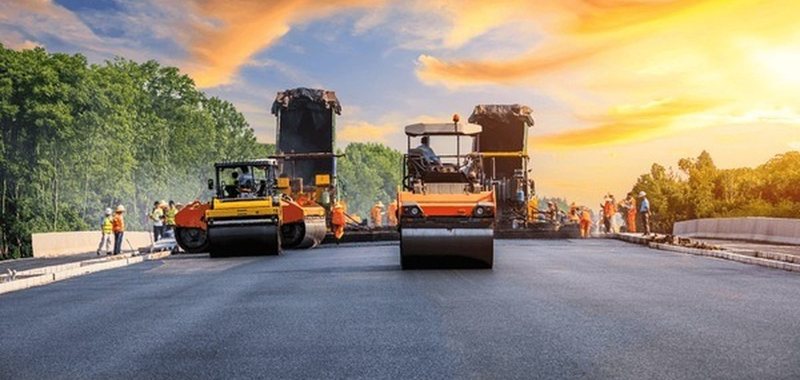
Investments in roads, parking lots and water supply - ADF budget increases by 17%, 19.74 billion lek planned for 2026
The Albanian Development Fund will have a budget of 19.74 billion lekë for 2026, or almost 17% more than a year ago. According to the tables accompanying the......

63.7 million lek from procurement fees - Which contracting authority complains the most to the PPC?
The Bulletin of the Public Procurement Commission reports 158 complaints from economic operators regarding tenders in October. Meanwhile, in the 10-month......
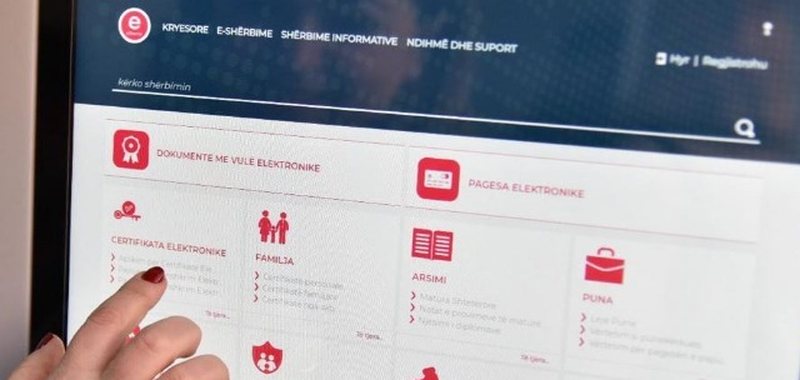
Students verify their matriculation number online/ E-Albania with new service, Prime Minister Rama: Procedures are simplified
The e-Albania platform has added a new electronic service, which allows students and former students from the academic year 2011–2012 onwards to be informed......

Businesses, "uncertain" about the performance of activity - BoA: Consumers, the only ones with increased confidence in the economy during November
Consumers were the only ones with confidence in the Albanian economy during November, while businesses were more pessimistic. According to the Bank of......
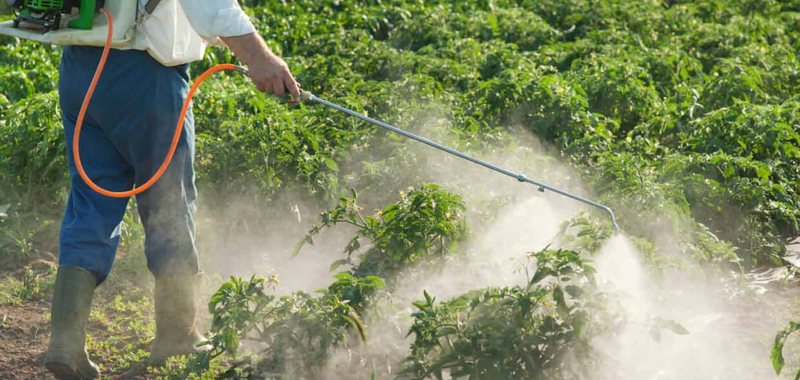
2.4 million euros for pesticide safety - New project to strengthen laboratories at ISUV starts in 2026
An important project to strengthen laboratory capacities and establish technical infrastructure for pesticide and heavy metal residue analysis in plants will......

Albanian families live "cramped"/ Eurostat: More than half of the population in overcrowded housing
At a time when the issue of housing is becoming increasingly central to social debates, the latest Eurostat data for 2024 place Albania in a position that......

Bulgarians protest against the 2026 budget - Opposition: Social security contributions and taxes on dividends will increase
Thousands of citizens gathered in the Bulgarian capital Sofia and several other cities, protesting against the 2026 budget plan, the first drafted in euros......
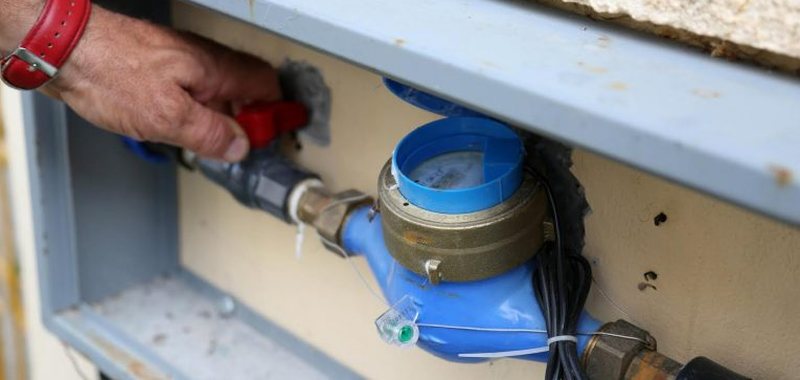
53.4 million lek for 24-hour water supply in Kamëz - New storage and purification system in Bovilë to increase quality
Kamëz Waterworks and Sewerage has announced the opening of the competition for the design of a new water transmission line from Bovilla to the Bathore area,......