Can Albanian businesses compete in the European market? - From legislation to technology, the path that awaits businesses towards the EU

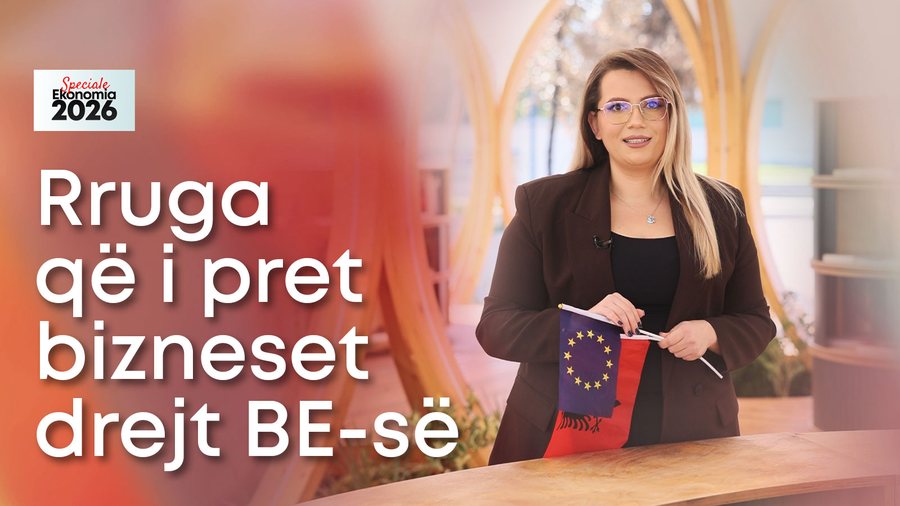
"As Albania moves ever closer to the European Union, the question arises: are Albanian businesses ready for this challenging market?"
Alban Zusi Chairman of the Exporters Association
"Partly, there is a group of businesses, mainly exporters, who are ready to enter this market, but they also have a lot to do, because at the moment of entering the European market, the inspection scope will be much wider, but most businesses are not yet clear about what their expectations are for entering the European market to naturally have the benefits they will have from this large community, from this large market."
“When we talk about the European Union market, it is not enough to have a good product or a beautiful idea. It is a market with 450 million consumers, with high standards and strong competition. To be ready, businesses must take clear steps, improve technology, invest in international certifications, train the workforce and create processes that guarantee quality and traceability. Many Albanian businesses still do not have a structured plan to address these challenges. Therefore, the first question to ask is: where should the adaptation for the blue market start?”
Alban Zusi Chairman of the Exporters Association
"Adaptation should start by giving each business its own checklist, with the things it needs to do. Because we need to give up on generalizing things. This work should start with the line ministries that are transposing legislation, which should create for each sector, their own documentation with the standards and adaptation that each sector should adopt, then immediately after that, this work should be done in parallel with the transposition, without the laws going to parliament, this kind of institutional checklist and immediately this checklist of standards that each industry, each sector, should meet, should go to businesses and businesses should fill it out themselves and say what they are achieving and what they are not achieving. This is the only way to send information to businesses, to make businesses understand what they want to do and to avoid businesses closing. Because lately, we are hearing time and time again, okay we are trying not to close, but there will also be closures. Why should there be "Closing, if this work is done in advance, there is no reason to have any kind of business closures at the moment we integrate."
To integrate into the European Union market, Albanian businesses must meet a series of standards that are often challenging for domestic companies. The EU operates with common rules that guarantee quality, safety and consumer protection. Every product or service entering this market must adhere to these norms, from the raw material to the distribution of the final product.
Alban Zusi Chairman of the Exporters Association
"The main standard is the safety standard. Because the EU says the product must be safe, then you have quality, because you have quality the market determines. This will be the main concern and the main investments, then in terms of quality, I believe that businesses must adapt themselves, they will understand what the market requires because that is why they are businessmen to understand market trends and to adapt the quality of their product, to be acceptable and suitable for the public. With quality, again the problem will be somewhat weaker, because not everyone will aim to export, while the safety problem is also for those who will not export, and for those who will produce for the domestic consumer, and for those who already have the market guaranteed in some way, which has accepted their quality, is satisfied with their quality, but they cannot not produce, after the date of entry into the EU, because they do not meet food safety standards, and food safety standards will no longer be separate, standard for Albania, standard for the EU, they will be one."
"This is the moment when many businesses realize that just an old certificate or an elaborate process for the domestic market is not enough. The European market is more rigorous, control does not compromise and food safety is an unchanging standard. Any omission can affect the company's reputation and can block market entry. But what does a manufacturing business need to have to successfully reach the European Union market?"
Alban Zusi Chairman of the Exporters Association
"And very importantly, what is the way to achieve those standards, because telling at least over 80% of Albanian businesses that you will achieve the standards without telling them how you will achieve them is an impossible mission. They will never achieve those standards because they do not know how. Because achieving some of the standards requires study, requires analysis, requires knowledgeable people, requires information on where these equipment can be found, these machines, because achieving standards is not achieved by cleaning, but requires machinery, equipment, and some of the businesses, large businesses and perhaps some of the medium-sized businesses, perhaps have the opportunity and ability to find this type of consultancy and this type of advice, and these too can often fall prey to fraud, unprofessional, wrong consultancy, but the rest, over 80% of manufacturing businesses, do not know how to do it, nor do they have the opportunity or the potential, neither human nor financial, to pay for the consultancy they need, to understand what they need to invest in." and where they should buy it at reasonable prices and how to put it into operation and how to manage it afterwards, because it is not a matter of simply buying some equipment, the issue is also to train the personnel to use this equipment. So, it is not a very simple process, which requires attention, but the attention must be focused. This is not done with "now businesses must adapt", it is not going to happen, businesses will adapt when we go to each of them in a personalized way and tell them what needs to be done and go in a general way with solutions to their problems, because generally the problems of one person are the problems of 100 people. So the government must start, take measures to guarantee this too. Whoever solves it in a personalized way, let him continue his work, let us have as many such businesses as possible, but for the rest, we must definitely think about having focused solutions and concrete solutions, let's say even controlled to some extent, in their output by public institutions.”
“Competitiveness in the European Union is not just a matter of product, but of clear criteria. To enter and remain in the European market, a business must offer proven quality, modern technology, digitalized processes and sustainable production capacity. The EU requires transparency, traceability and efficiency, from raw materials to distribution. Without these elements, there is no successful entry. But this does not happen just by reading instructions; it requires planning, training, investment and a clear vision of business development. Only then can an Albanian product be competitive and enter this market with high standards.”
Ilir Pilku Agribusiness Expert
"What I will say is that Albania has not yet established its economic-agricultural profile to have a competition, to compete in European markets. So, that agricultural business model, suitable on the basis of a good regionalization, based on the climatic changes that have occurred, and the varieties that are pleasing to foreign and domestic consumers, we still lack. If we had done these elements, we would have been prepared for these elements. Years ago we would have been very ready to penetrate very good markets and we would have been ready to penetrate very good markets and we would have an added value and a very high competition in a common market such as the EU market. We continue to look at old business models without giving priority to what we will produce to compete. There are studies from the best, methodologies from the best. We are not determined that we will be with greenhouse vegetables, we will be with field vegetables, we will be "With citrus fruits, we will be with olives, with nuts, fruit trees, medicinal plants, with products of animal origin. We are in an unclear situation, to be ready at the moment of obtaining the status of an EU candidate country."
This is a key moment for the agricultural sector. Without a clear profile of the products to be exported and without defining the strategy for each product, Albanian farms risk missing out on major opportunities in the European market. It is important to identify those crops that are most competitive, as well as the most efficient technologies for production and processing. Only then can the agricultural sector become an engine of economic growth and sustainable exports. Albanian entities targeting the European market should start with the analysis of technology, quality and certifications.
Ilir Pilku Agribusiness Expert
"You raise the question rightly when you say certification and standards for the European market. But we must also think about the Albanian market. So, if the law requires you to have a HAASAP certification, as is the legal basis of the food law in Albania, you are obliged to keep it. If you have to keep those records, which we say are part of traceability, you are obliged to keep them. So, I would say that at the beginning what is important and mandatory are those standards that the EU requires of us, those minimalist standards that the EU requires of us. Then it is understood that European and global entrepreneurship also has their certifications that are voluntary certifications, not mandatory, but that you cannot become part of a market, of a global marketing if you do not have higher standards such as ISO 9001, such as Global GAP, so all of these are parts that Albania will be obliged to fulfill in order to compete."
“This highlights that in addition to minimum standards, businesses must aim for higher standards to be competitive. For example, ISO and Global GAP certificates are not mandatory, but without them it cannot enter the supply chains of European companies or large supermarkets. This means that every farm or processor must invest in processes and training, ensuring that the final product meets international standards. At a time when Albania has opened the negotiation chapters on Agriculture and Rural Development, this demonstrates a step that brings the sector closer to EU standards and the market. This development gives Albanian agribusiness more opportunities for investment, certification and access to European funds. With increasing demands for quality, traceability and processed products, farms and agribusinesses are expected to modernize faster. In this process, agribusiness can become a sustainable engine of economic growth and rural development.”
Ilir Pilku Agribusiness Expert
"It is a big challenge, being part of the European family is a very big challenge. It is a challenge related to our policy-making, related to the legality and enforceability of laws and all these processes related to policy-making, then we come to how capable and willing the agricultural business is to invest and meet the standards that the EU requires of us. So, I see that a 5-year period is insufficient, while I am sure that we will have a 3-5-year transitional period after 2030 in order to have as few risks of bankruptcies as possible, which for the sake of truth will happen. So I am talking, both at the farm level and at the agro-processing level. Standards and traceability, because these two names are very identifying names, with influence even in the EU because they are related to food safety, they are related to food for the citizens of Europe, for which we cannot play games.
To benefit from the European Union market and programs, Albanian institutions need to cooperate closely to provide information, access to financing and training for businesses. At the same time, support mechanisms for certification, standardization and innovation need to be created, so that Albanian products are competitive in the European market. Continuous dialogue with businesses ensures that programs are effective and tailored to their needs. This cooperation is key to the integration and sustainable growth of Albanian agribusiness and businesses.
Ergis Sefa Economics Expert
"There are government programs, but they are far from being sufficient considering the situation on the ground. However, together with the EU, within the framework of the growth plan, joint programs are being prepared to help businesses, especially small and medium-sized ones. Better coordination is needed, especially from our side, from the Albanian side, with those EU institutions that deal with market expansion, with all the different programs related to the Western Balkans. We have very good initiatives, despite that, institutional coordination needs to be at an even better level."
This shows that in addition to existing programs, Albanian businesses need a clear path of coordination and guidance, where every business knows which funds are accessible, how to apply and how to receive technical assistance to meet European standards. It is not enough for funds to be distributed; they must go directly to the business, accompanied by mentoring, training and ongoing support. Albanian businesses must carefully follow the opportunities of European funds and seek programs that suit their sector. The search for funds is done through official EU portals and supporting institutions, while applications must be detailed and accurate. An informed approach increases the chances of obtaining funds and expanding the business in the European market. But do entrepreneurs have the knowledge to track the funds that the European Union allocates?
Alban Zusi Chairman of the Exporters Association
"No, you lack this knowledge, and this is another very important element. First of all, we are harmed by IPARD funds, I am talking about the agriculture and food sector. Which would be a great help for the entire sector to adapt because in fact those funds are precisely for achieving standards, they are not for business growth, they are for achieving standards, and that is why half is financed to encourage the business to do the other half and achieve standards. But in the meantime there are other funds, which are community funds. I have heard senior officials of the EU diplomatic corps and other countries who talk about funds, which are in function of the Albanian economy, but Albanian businesses with a very small exception, maybe 1-2% of them may be aware of this. Here then I would make an appeal, not only to the government, but especially to civil society, especially to universities who know how to apply, who apply. I would make an appeal to you, who stop making applications for projects that are of no use to anyone, which often end up in drawers, which are repetitions of themselves, the same project maybe presented 5-6 times, simply to get funds. But to start making application projects together with businesses, because I assure them that they will feel much more professional and intellectual satisfaction, they will grow much more professionally by doing such challenging projects together with businesses, and why not, by doing projects with businesses there is a high probability that they will enter business, no longer be lecturers there, but will enter with businesses, with those businesses where they are cooperating, or they will come up with other ideas to create their own businesses and other things about the things that they will solve for such projects with enterprises. On the other hand, it will be an extremely important contribution to the Albanian economy for the entire environment of doing business in Albania, if universities, agencies, non-governmental organizations, which work with international funds, will "to start absorbing these funds to make them available precisely for the adaptation of businesses within the framework of integration and to pass this transitional period as easily as possible."
Here we see another key element, the cooperation between public institutions, universities, non-governmental organizations and businesses must be practical, active and direct. It is not enough to send instructions or distribute funds. There must be mentoring, assistance and cooperation to see results on the ground. But what are the main obstacles that keep Albanian businesses away from the European market?
Ergis Sefa Economics Expert
"First of all, I would say it's the mindset, what we call mentality. The fact that they don't yet understand that a big wave is coming, both in terms of difficulty and opportunity, and secondly, the relationship they have with quality and investment. Mostly, Albanian businesses don't invest in quality or in the long term. And above all, it's the way we treat and treat human capital, the staff they have. They don't invest much in professionalizing their staff, so that they have people with very good skills who can then compete more easily and more worthily in the European market."
Gertjana Hasalla Employment Expert
"More than anything, to align with the European Union's labor standards and to understand that the European market itself has changed over the years. And what is happening today, in the European market, is that there is an extraordinary approach to technology, in any type of profession. And technology is no longer necessary only for a certain field, so for those who deal with Artificial Intelligence, or those who deal with programming, but for any other type of profession you need to have some basic computer, digital knowledge, which then helps you in your work, which has changed over the years. So it's not like before, where you could do a routine daily job turned into a way that didn't need updates. Now everything needs updates, especially our digital skills to participate and be part of the labor market. Also Europe itself, what has changed is also an aging population. There is an increasing need for what is called the care, so there is a need for nurses, there is a need for doctors, there is a need for care centers, for social workers, for psychologists, and everything else. We see something like this in Albania as well. There is a change in the way the demography, or the population of Albania, has changed over the years and we see an aging population itself. Which means, in the coming years, just like in the European Union, we will need more work in this field, in the field of care. There will be a need for nurses, for doctors, for social workers, for psychologists. It will be more difficult for us if we do not have these things prepared, or we will have fewer doctors than we have today in Albania. We have an exodus of doctors and nurses, especially in countries like Germany, which needs this care industry, but the day will not be too far away when Albania itself will have an extraordinary need for the care industry, especially for the elderly, especially for the third age, which is very has grown rapidly, rapidly and is becoming what is called the dominant age group in Albania, due to the departure of young people, due to the general change in demography, the way people are having children now at a later age. We must be careful that the way the labor market functions in the European Union has changed, and it will change in Albania as well. If we aspire to become part of the European Union in 5 or 10 years, if not earlier, we will have to make sure that the European Union itself is working hard on the green economy. What does this mean? The Green Economy itself is all those jobs that are related to environmental protection but also to its conscious use. So all environmental engineers, everything related to solar panels,and everything else related to environmental protection, are professions that will be increasingly in demand and if there is something that the European Union is doing a lot today, all the countries that are part of it, it is what is called remote work, or working with reduced hours in the office. Very often, companies in the European Union are choosing to give their employees the opportunity to work two days in the office and three days to work at home, or in other facilities. Meanwhile, there are other companies that also choose working days, which is 4 days a week, which is also an achievement that is still very early for Albania, but it is something that should perhaps be looked at in the future and in this time frame of 5-10 years it will definitely be possible for companies in Albania to start offering work with reduced hours in the office, or working 4 days a week. It's not far off, as if it's extraordinary, but it will happen in Albania very soon, and this is the trend we are heading towards, so these are some of the main areas that the European market itself is changing and we will have to follow it if we want to become part of it."
Integration into the European Union will not be simply a political or diplomatic process, it will be a real test for Albanian businesses. From Tirana to Brussels, the road passes through standards. Being part of the EU means operating with high standards, being transparent, efficient and competitive.

Is Albania "disappearing" the paper lek? - What is the government's plan to reduce cash payments?
"By the end of this decade, Albania should be "cashless", meaning that all interaction and all financial transactions should be digital. This is completely......

Albania, for every taste and budget - From the hidden "pearl", to the destination for everyone
Tourism has become one of the most important sectors for the economy and development of the country, becoming one of the main engines of economic growth.......
Rama uron shqiptarët në prag të Vitit të Ri: Kemi bërë realitet një Shqipëri tjetër
Në vigjilje të ndërrimit të viteve, Kryeministri Edi Rama iu drejtua qytetarëve shqiptarë, brenda dhe jashtë vendit, me një mesazh reflektues dhe urimi, ku......
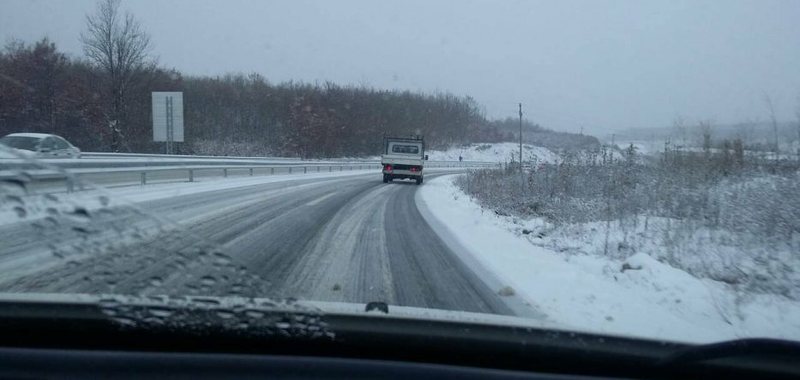
ARA, plan of measures for the end-of-year holidays/ Director Ami Kozeli: Vehicles and employees, on standby on icy roads
The head of the Albanian Road Authority (ARRSH), Ami Kozeli, has published the measures taken by this institution for the end-of-year holidays. According to......

How did this year end for the major currencies?
The US dollar, after a continuous decline this week, has closed this year positively, marking an increase as it was bought today at 81.3 lek and sold at 82.8......
Owners receive financial compensation - Minister of Justice: For over 13 thousand families, the money is transferred to bank accounts
Over 13,000 families will receive financial compensation for their properties from the Property Treatment Agency. In a video message, the Minister of......
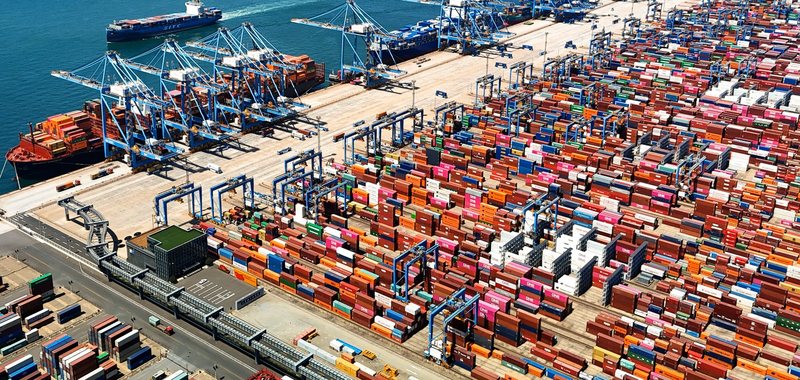
Mexico to raise tariffs on China - President Sheinbaum: We aim to increase domestic production
Mexico's sweeping new tariffs on imports from mainly Asian countries will take effect on Thursday, in a move that will bring Mexico closer to the United......
The FED will lower interest rates in 2026 - It is expected to see the performance of the American economy
The US Federal Reserve is signaling that there will be further interest rate cuts, but it will first suspend successive cuts to give officials more time to......