Is Albania "disappearing" the paper lek? - What is the government's plan to reduce cash payments?

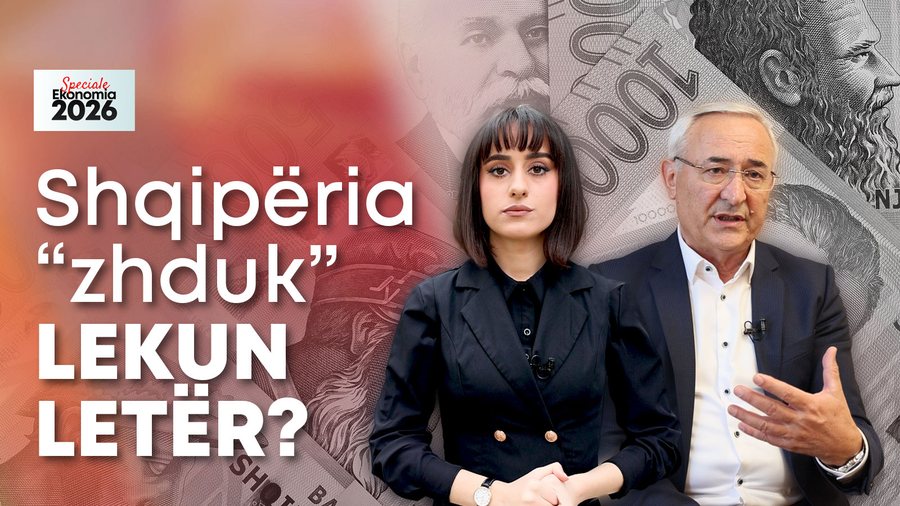
"By the end of this decade, Albania should be "cashless", meaning that all interaction and all financial transactions should be digital. This is completely feasible and will free the country from a huge burden of dust and thorns in all of daily life," Prime Minister Edi Rama previously stated.
With a card or with cash? Most Albanians buy or receive services using physical money and not through electronic payment methods. Despite the fact that in recent years there has been an increase in electronic payments, whether those made by phone or through POS terminals, we continue to be among the most dependent economies and the most cash-dependent people.
However, the government aims to "eliminate" physical money by 2030. When I say "eliminate", I'm not talking about total elimination, but rather a reduction in the use of paper money.
But what would an Albania without physical cash look like? Almost every payment in stores, bars and restaurants would be made by card through POS terminals in stores and bars, through the QR Code quick payment system or by phone.
What has been done so far in this regard?
So far, important steps have been taken: the law and bylaws on payment services have been adopted, electronic money institutions have been licensed, progress has been made with open banking, and integrations have been made with international systems such as SEPA and AIPS EURO.
"Many people think that physical money is a gift. They are born with it, and money comes into their hands, whether in the form of gifts from parents and relatives, or in the symbolic sense that to live you must have money. However, for centuries now, since a human society has been accustomed to having cash as a means of payment, because there was no other alternative, it has been considered by people as a necessary thing and a part of them that cannot be replaced and cannot be removed.
In fact, money is a tool for people to use, it is not their property. It is owned by central banks, those who issue money and those who issue it have costs. And this cost is not tracked in its circulation. It is estimated that the cost of cash there is somewhere around 1.7-2% of the total gross domestic product. So it is a very high cost that kills the economy, also due to the fact that we have cash, but over 400 billion lek are outside banking channels or in circulation. So we do not know about the quality of how they are being maintained for the number and execution of transactions and so on, the central bank, measuring the movement in the economy and the need, always makes predictions to print other money, to replace damaged money and so on. So there is a high cost that costs us a lot, 1.7-2% of GDP is a high value.
The second is that physical money does not allow for transparency, so many actions that are done are done in the black and in this way neither the commercial activity of companies, nor the income of the state budget is realized to the extent that it should be. Let's accept for a moment that the informal economy in our country, according to the estimates that are made, is somewhere around 30-40%. So this entire part, let's say 30-40%, of economic actions that occur without being declared, without being recorded in the books and without being invoiced as actions that occur, means that little money comes into the state budget coffers, commercial activity remains less, competition is damaged, and when it comes to financing the economy or these entities that carry out these actions, then those who want it and the banks do not take them into consideration, and the number or volume of requests that are needed to finance the economy is also reduced.
So in every aspect we take, micro or macro, we only lose with cash. We see that even through social networks there are people who talk, that banks are fighting because they want to replace money, that they are introducing other means because they want to take commissions. No, I mentioned to you that physical money today costs more than any other part, any other element that can replace it. It is a cost that is not borne by the client, it is borne by the central bank, it is borne by the economy, and it seems to us that it is costless. Other channels and security circulation are many times cheaper. In fact, today through e-banking, transactions up to twenty thousand lek, which were for orders in banks of forty thousand lek, are costless and there are banks that even beyond these do not pay at all in e-banking.
So, we say that they should be done in other ways than alternative channels, where we offer very low costs to alternative channels. The fact that happened with SEPA or with Open Banking, are channels, other ways that help the market and saved 13 million euros from the commissions that customers were paying until now. Of course, you couldn't do it before because the technology exists, because there is a rule, because there is this cooperation, because they want an agreement not only within the country but also abroad on the methods and standards that will be used to make these payments, but here we have moved in this direction and we don't say like 10 years ago that we want cash. No, we say today that we want cash, because today we also offer other options", said the Secretary of the Albanian Association of Banks in an interview with journalist Ledina Elezi.
What is expected to happen next?
The Ministry of Finance has drafted a plan with 12 measures to reduce physical cash in Albania. The plan is divided into 3 pillars that include promoting electronic payments, improving infrastructure and costs, and financial education. This national program for cash reduction, drafted by the Ministry of Finance, the Bank of Albania, the Association of Banks, as well as international actors such as VISA and MasterCard, foresees the establishment of a Digital Payments Council that will coordinate actions.
"Of course, even the cash economy has its own difficulties. It cannot happen overnight or even in a year, especially in a country like ours where the culture and way of life is very closely linked to the existence of physical money."
But the first thing that remains to be appreciated is the fact that the government finally expressed political agreement with the measures to reduce cash in the economy. We have been fighting for so many years together with the Bank of Albania, even through the money week that we call and try to raise awareness among the public and other institutions that people need to learn finance. And the first lesson of finance is to use money, not to keep cash. In order to have the lowest possible cost and to profit as much as possible.
We see that in this change that has occurred within the activity, it should be appreciated that we already have a clear and firm stance that we definitely want the economy to be cashless. Second, when we say cashless, it should not be understood that there is a lot of speculation that if the economy is not 100% cashless, there will be no cash. It is not talked about. In the literature and in the standards that are made to categorize a country that is cashless or not, it is generally the market where over 50% of transfers and payments occur in other channels, not with physical money. So physical money for small things will exist and people can also carry out actions. But it cannot be predominant; in our country, cash, actions in cash are predominant.
With cash you can buy everything. But if you use a card in every store, there may be stores that you can't pay. Or in hotels, in restaurants you can't pay. It means that cash is accepted everywhere today as we are. But other alternative channels are not yet established to cover the entire territory. The second thing that is important is the fact that we require a lot of financial education. So people need to be aware that other ways already exist. So money is not a means of decoration, it is not a means that you go here and there. Money is a means that you go here and there to pay for a service. Whether you pay by holding it in your hand or pay in another way from your mobile phone, with a card, at a POS or in any other variant, what matters is that you finish the job.
And today, the whole new culture, the whole philosophy of circulation is precisely this, that you don't need to keep money as a thing, as a separate object. You need to receive the service or the goods, in exchange for a method of payment. And today, the methods of payment have enriched. It is no longer just cash or check as it has traditionally been in other countries, but there are many channels: QR, instant payment, card, POS, mobile from the computer, there are many other channels that have transformed, today, the financial system into a system completely unthinkable before.
And the last thing I would say is that the measures that will be taken to reduce cash in the economy must be well coordinated and harmonized. Money is, let's say, the responsibility of the central bank, and for the payment system it is the central bank that is responsible. But the other rules with businesses on how to accept payments are not the central bank's, so they are the government's, and in this regard, in this area the government has a lot to do. For next year, it has been decided that by May almost all public state institutions that accept payments must have an alternative method in addition to cash, which is very good because the state must be the first to set an example that we are not only for physical money.
And they have decided, they have made improvements, or all the self-service points do not only accept cash but you can also pay by card. You can now pay for traffic taxes by card, not only in cash, so their concrete implementation has also begun. And secondly, by May all hotels and restaurants, especially on the coastline but also in areas that are more touristic, must offer the customer another payment method besides cash, physical money", said Spiro Brumbulli.
Next, the fast payment system is expected to be implemented, which was initially planned to be operational by June 2026, but due to the inclusion of Macedonia and the wider Western Balkans, the deadline may be extended until the end of the year. This system is closely related to the use of the universal QR Code. In May, the implementation of the MasterCard program for providing 4,750 free POS terminals for one year for businesses also began.
The aim is to achieve universal POS terminal coverage, 60% of payments to be made digitally and all public institutions to accept electronic payments by 2028. However, the challenges are obvious: POS transaction costs are high for businesses, citizens' financial literacy remains low, there is a lack of full coordination in policymaking and infrastructure is limited, with only 10 POS terminals for every 1,000 inhabitants.
To overcome these challenges, 12 concrete measures have been drafted, divided into three directions. The first direction is related to the promotion of digital payments, through the gradual reduction of the cash payment ceiling, the establishment of a legal obligation for merchants and public institutions to be equipped with POS, the elimination of cash transfers in government payments and the promotion of the use of electronic methods by public administration.
"The fact that on one side it is reduced and on the other it is decided for the first time, in principle, are two positive things and should be welcomed. So the fact that we had for the business and we estimated that it was 150,000 lek and we are coming to 100,000, is very much in the right direction, a welcome measure, long-awaited and finally realized. As for individuals, for 500 thousand lek, it is in addition to the fact that it is the first time it is decided and should be welcomed, the initiative and political will of the government to undertake this measure, is certainly high.
It is high for a developing country like Albania, compared to countries in the region and beyond, but also in general for countries that are drowning in cash and are cash economies, such an amount does not correspond to what most people have as physical money in their hands. In our country, the average salary is somewhere around 80-90 thousand lekë and setting a limit of 500 thousand lekë is several times the average salary. In this sense, 500 thousand lekë in cash is not realistic and cannot help us in the direction we want, to fight cash and the existence of physical money in circulation. Let alone 500 thousand lekë, with 500 thousand lekë a person runs out of everything and plus even more than he needs. It means that there is no need for other ways of making payments.
However, as a first step, it should be welcomed and from all the messages we are receiving, it will also be reviewed by the working group established for the plan of measures to combat cash in the economy, which will, of course, be gradually reduced and perhaps by the end of next year there may be a review. But, of course, it does not correspond to our reality in our opinion and judgment.”
"It means that citizens will be able to use a QR code to make payments in shops, bars, restaurants, hotels, taxis and others. There is also another measure foreseen for next year, where by the end of the year all businesses must be prepared and have another way to accept payments. This may perhaps be premature in the sense that not as a decision it does not make sense, it makes a lot of sense, but for practical implementation, because we do not want to force businesses only to POS. With POS we have had a lot of resistance from small businesses to accept because they claim that the costs are high, it is paid and so on, even though a change will happen next year.
But because next year another important reform is foreseen, a major project related to Instant Payment, with immediate payments on a national level, which will be free of charge for all those who will accept payments and this is very important. The business will receive the money in the account within 10 seconds. And this is another measure that brings a very important change in our entire financial and economic system for the way the buyer and the seller will cooperate. It is expected that this project will probably be finished within the year, at the same time as the deadline has been set, or it will be finished in December, but the deadline has been set in December.
But with all this, there may be room here because it matters that it will be done. Business must definitely have an alternative acceptance. So we are finally walking on a safe path and this path as an association we have been really looking for for about 7 years, to start and see how the economy can react without cash, without this great pressure to have physical money with you. Today, if you move around Albania, if you don't have physical money in your pocket, you are unsure of what can happen in another city; you can't even pay for the bus, you can't pay for the restaurant, you can't pay for the hotel and so on.
Under Instant Payment conditions, anything can happen from your account to the seller's account, all these difficulties become zero and the seller is obliged to accept you. So if he does not have an alternative, it is his responsibility, not the buyer's. The buyer says: "I have money in my account and I want to send from the account", and the story ends. If he does not have an alternative, the seller is responsible. So we are dealing with a big change, it is time that technology on the one hand, but also the whole society has agreed and has also prepared the relevant standards on how it can be worked.
So let's not say why we came up with the idea now; it came to us now because now things are ready, we couldn't ask for it any longer, even though we have constantly asked that transactions for large amounts should not be made in cash. And some steps have also been taken; you can't buy a house, let's say, or a car if you haven't deposited the money in advance in the bank, in the notary's account, and then do the other actions.
So, in general, a program is being launched that will help Albania to be over 50% cashless by 2030. During this year, in May, the implementation of Mastercard's program to provide 4,750 free POS terminals for one year to businesses also began. It is intended that by 2028, through other government efforts, universal coverage with POS terminals will be achieved, 60% of payments will be made digitally and all public institutions will accept electronic payments. However, the challenges are obvious. The costs of POS transactions are high for businesses, citizens' financial literacy remains low, full coordination in policymaking is lacking and the infrastructure is limited with only 8 POS terminals for every thousand inhabitants.
We have had two years since the situation with POS has changed. From the situation when banks went and pushed businesses to accept POS, to another situation where it is the business that comes and asks for POS. And this is not because we have done something strange, but the fact that there is a lot of tourism and tourism has increased, now restaurants, hotels, various establishments that see that there is a tourist influx and tourists definitely ask to pay with cards, are forced to supplement themselves. So we have another way of accepting payments.
And this has greatly increased the number of POSs, we are about twenty-two thousand added POSs, but also the fact of the pilot project that you mentioned by Mastercard, which provides a free POS for a year and up to a certain amount there are no commissions for the merchant. Meanwhile, they have also helped with the well-developed banks, especially during the summer period, the rates have decreased somewhat now after the first months, but we continue the efforts. And in the meantime, we want to expand it, because you can't go endlessly with tourism alone. We have other problems; for example, taxis today and tourists travel a lot with taxis and they can't pay with cards, they have to have cash. These are small things, as I said, that today they can't pay with cards, they definitely have to have cash.
And we definitely want to build another program that should serve both urban and taxi services, the payment method also with cards, not just cash. But this requires a specific program, and we have set it up, we are in discussions, and we hope that if this is done, of course, the remaining part will also be faster, because the program itself had limited 4 areas where it will be free. The rest then continues in the traditional way", according to Brumbull.
The second direction focuses on improving infrastructure and reducing costs, including limiting interchange fees, linking payments to the public platform and fiscalization system, deploying a universal QR Code, implementing a national instant payments system, and collaborating with the private sector to expand infrastructure.
"If the assessment we make, as we mentioned, 30-40% is the informal economy, then of course many payments are still in cash. But, even in the rest, even those payments that are formalized and still have invoices, most of them are made as cash payments, so payments are not made in other alternative channels. So you can buy a jacket in a boutique, let's say, and they tell you it's 25,000 lek. 25,000 lek that they don't do either with a card or an account, but they do it in cash. And this action, ok, is legal, but it's in cash. This increases what we call the weight of cash transactions in the economy. So we want even those who are truly legal, not to pay in cash, but to pay in another way. To pay by card, to pay one after the other in instant payment, and so on."
While the third direction has to do with financial education, through the national awareness and information campaign "Albania pays digitally", which aims to change the payment culture in the country.
"When we talk about financial education, we're not just talking about whether we should make payments with physical money or not. Financial education means managing your money, in the sense of making a family budget. How much income do I have, how much do I spend? If I have enough income for the expenses I plan, right? If I don't, where should I go to find the difference? I need to get a loan, but how should I get the loan and how much should I get the loan, and being aware of how long and how much power this loan is for.
The second is if you don't keep this income that remains in the form of savings outside the boxes, but put it to use. So you can open it in a savings account, a term deposit, you can play in investments with securities, such as government bonds, but today there are spaces where you can also play in international markets, you are allowed to buy shares on the stock exchanges of other countries, or even in other tools such as crypto-assets for those who are well prepared and know the risks of these financial tools.
But to do this, you need to know; if you are going to invest in treasury bills, you need to understand what treasury bills are. If you are going to invest in bonds, what is a government bond? If you invest in subordinated, in that undervalued debt that banks have and take for the effects of capital replenishment, what risk do you have? Where is the good? It is not only to look at the interest rate, but you also have to understand the risk. So financial education is broader than just paying in cash, or not paying in cash. You need to understand finance, those basic elements, from the simple interest rate and the compound interest rate. When you earn, when you leave 2 years, let's say a term deposit, why do you care? Because in the second year you earn interest not only on the amount you invested, but also on the interest you earned in the first year, okay?
But you also have to understand the penalties; if you don't pay a loan installment on time, it means you still have to pay. So over time, that amount doesn't remain the same, it penalizes you with the interest that is calculated for each day of delay, and then you pay even more. So it has to do with some concepts that are necessary in our lives, especially in the market economy where whether we like it or not, in all the relationships we have, all our efforts are measured in monetary units. And to accept this, you definitely have to understand some things from finance", said the Secretary of the Albanian Association of Banks.
Europe
But which countries in Europe have almost completely eliminated physical money?
In first place is Sweden, which has the most advanced model in the world, with only 1% of transactions carried out with physical cash. Second on the list is Norway, where banks have reduced physical cash counters. On the other hand, debit cards and online payments account for over 95% of transactions in the Netherlands, while Denmark has invested in financial education of the population for the gradual elimination of cash.
Thus, Scandinavian countries, among many other fields, also lead in electronic payments.
According to the national program for reducing physical cash and the medium-term revenue strategy of the Ministry of Finance, the Bank of Albania, the Ministry of Finance and the Albanian Banking Association will create a working group to reduce POS terminal commissions.
"The working group has not yet started. It is being set up. So, the names have been collected, the candidates from the institutions that will be part of it, but the first meeting has not yet taken place. Meanwhile, we and the Bank of Albania, in the meetings we have had, have agreed that within the framework of the approximation of our legislation with that of the European Union, within the first half of next year, 2026, our respective regulation on interchange fees, on mutual commissions related to debit cards and credit cards, is expected to change, and we will follow the model that the European Union countries also have, with 0.2 and 0.3% for debit cards and credit cards, respectively.
"So it is a measure that will be taken, but in order to reach the guideline, an amendment to the law on payment services must be made, so parliament must definitely help by prioritizing that amendment as soon as possible in the first quarter of 2026, so that time is then allowed for the implementation of that new article, and to pave the way for the amendment of the regulation," he said.
Albania officially launched payments on October 7th of this year. From that date, any Albanian immigrant can send money to their family in Albania using SEPA. Albanians within the country can also initiate transactions in euros to other countries through this system.
For transactions up to 20 thousand euros originating from Albania to other countries, commissions are a maximum of 2 euros, for transactions up to 100 thousand euros they are 0.01% of the value, while for transactions over 100 thousand euros, commissions are a maximum of 25 euros.
For transactions originating from SEPA countries, fees do not exceed 3 euros. For example, if a relative of yours sends money from Italy to Albania via SEPA, Albanian banks will charge a maximum of 3 euros in fees from this amount.
"The data is preliminary, let's say operational, and to my knowledge, there are about 400 million euros in outgoing transfers for October, while there are about 22,000 incoming transfers coming from SEPA countries to Albania with a value of about 200 million euros, while in November there is almost a 7% increase in the number of transfers. What is important for SEPA is not simply to measure the number, what is important is that people now pay less, because someone who sent money from Germany will continue to send, but if they had to send 70-80 euros, today they only pay 2 euros or 5 euros, which is a great benefit in terms of commissions. And in a recent assessment we had, the benefits of SEPA are not 20 million, but could go up to 70 million, money that institutions that serve individuals and entities no longer receive, but remains in the pockets of individuals and entities. So it is a very good platform that should "It was widely used and from the contacts we had with individuals and businesses, they praised it extremely highly, so it was a complete success," said Brumbulli.
A draft law is being prepared to create the Credit Bureau, a structure that will help banks better assess how reliable a citizen or business is to receive credit.
Unlike the current register of the Bank of Albania, this Bureau will collect more information, not only on bank loans, but also on obligations to taxes, state institutions or utility bills such as energy and water. Based on this data, a credit score will be prepared, which banks will use when someone applies for a loan.
The sharing of data will be done with the consent of individuals and businesses, but in practice the credit scoring report is expected to be a standard requirement for obtaining credit. The bureau will be set up by a private entity and will be supervised by the Commissioner for Personal Data Protection, to guarantee the protection of personal information.
"Another important project is the creation of the Credit Bureau, which will help banks better assess the risk of lending to individuals and businesses, through a standardized credit score system. This system will change the way loans are granted and will increase financial transparency. Following certain internationally standardized algorithms, the Bureau gives the assessment. If the number says it is 10, when you come and apply for a loan at the bank, it means that with the number you have no risk, give the loan immediately and the risk is very close to zero. If the number is 6, let's say, then be careful because there is also a risk here and you need to take into account some elements to protect yourself. If this is at a certain level, let's say below 4, the number does not promise the loan, do not give it because you do not know how to repay the obligation. So the way individuals and businesses approach borrowing against a score, a note that you will have and that represents all your relationships with third parties. So with banks if you have loans to repay, with taxes if you have outstanding obligations, with electricity, water, or even with a company that sells on credit and you haven't paid. So every other relationship that has to do with money must be reflected in the Credit Bureau. And the Credit Bureau keeps the entire register and helps when you need to get it, makes a request, gets the score from them and presents it to the relevant institution and it is much simpler to measure the risk of the person or entity against a new credit relationship.
"The year 2026 will see changes because it will be a year that the financial sector must fulfill its obligations within the framework of legislative approximation. We have the new draft law on banks, for the Bank of Albania, we will have new regulations that interest us as banks and a very sensitive project for the economy will be instant payment. We have that one as the most important one, together with the other two draft laws, because this configures the payment system. On the other hand, the legal framework may also see changes because approximation with the conditions of the European Union certainly raises standards."
NEW BANKS IN 2026
For 19 years, no new bank has been licensed in Albania. Currently, 11 banks operate in the country, most of them with foreign capital and a smaller part with local capital. This will change in 2026.
Two more banks will be added to the banking system, one with physical branches and the other fully digital.
In 2024, the Turkish Ziraat Bank submitted an application to the Bank of Albania for the licensing of its first branch in Tirana. The Central Bank granted preliminary approval for licensing in 2025, while it is expected to start operations in 2026, after fulfilling all the conditions stipulated in the law "On Banks in the Republic of Albania" and its implementing bylaws.
Ziraat will be the second bank with Turkish capital in Albania. Such a bank, which specializes in lending to businesses operating in the agricultural sector, is expected to further increase financial support to this sector.
"Ziraat Bank" is a commercial bank operating in Turkey since 1863. Outside the territory of Turkey, its activity extends to 19 other countries, such as: the United Kingdom, Bulgaria, Greece, Kosovo, Northern Cyprus, etc.
Many years ago, there were attempts to establish a bank specializing in rural credit in Albania. In May 1930, the government of Ahmet Zogu promulgated the Law on Agrarian Reform and the creation of the Agricultural Bank, with a capital of 5 million gold francs, collected from public and fiscal sources. The first funds were secured, but they were used to cover the budget deficit, delaying the establishment of the bank. The initiative was revived in 1936–1937, with a capital of 2.8 million gold francs, this time fully financed by the Italian state.
At the end of 1937, the bank began operations in Tirana, Korça, Vlora and Shkodra, offering loans at 6–7% interest for seeds, fertilizers and agricultural machinery – the first institution specialized in rural lending.
After May 15, 1939, the bank was absorbed by the Bank of Naples Albania, losing its sole state autonomy in the agricultural field and becoming a symbol of the combination between the need for development and financial dependence on Italy.
After Ziraat, the Bank of Albania has paved the way for another bank to enter the market. The Central Bank has given preliminary approval for the licensing of the first digital bank in the country, JET Bank, which is expected to start online operations during 2026.
Fully online banks typically have lower margins than traditional banks, due to higher deposit costs and fixed expenses. They generally offer higher interest rates as they seek to expand their market to a customer base that is more price-sensitive than that of brick-and-mortar banks.
The entry of two new banks into the banking market could increase competition and force other banks to lower interest rates, offer new products to borrowers, and also invest in new technologies.
Plan to reduce the use of physical money in Albania
Pillar One: Promoting electronic payments
1. Gradual reduction of the cash payment ceiling
2. Legal obligation for merchants to be equipped with POS terminals
3. Legal obligation for public institutions and companies to be equipped with POS
4. Elimination of cash transfers in government payments
5. Promoting the use of electronic payments by public administration employees
6. Respecting the daily cash register (cash in the till)
Second pillar: Improving infrastructure and costs
1. Limitation of interchange fees
2. Cooperation with banks and IPEs for connection to the public electronic payments platform
3. Interconnection of payments with the fiscalization system and the establishment of a universal QR Code for electronic payments
4. Implementation of the national instant payments system
5. Cooperation with the private sector to expand electronic payments infrastructure
Third pillar: Financial education
1. National awareness and information campaign on digital payments (“Albania pays digitally”).
Albania, for every taste and budget - From the hidden "pearl", to the destination for everyone
Tourism has become one of the most important sectors for the economy and development of the country, becoming one of the main engines of economic growth.......
Rama uron shqiptarët në prag të Vitit të Ri: Kemi bërë realitet një Shqipëri tjetër
Në vigjilje të ndërrimit të viteve, Kryeministri Edi Rama iu drejtua qytetarëve shqiptarë, brenda dhe jashtë vendit, me një mesazh reflektues dhe urimi, ku......
ARA, plan of measures for the end-of-year holidays/ Director Ami Kozeli: Vehicles and employees, on standby on icy roads
The head of the Albanian Road Authority (ARRSH), Ami Kozeli, has published the measures taken by this institution for the end-of-year holidays. According to......

How did this year end for the major currencies?
The US dollar, after a continuous decline this week, has closed this year positively, marking an increase as it was bought today at 81.3 lek and sold at 82.8......
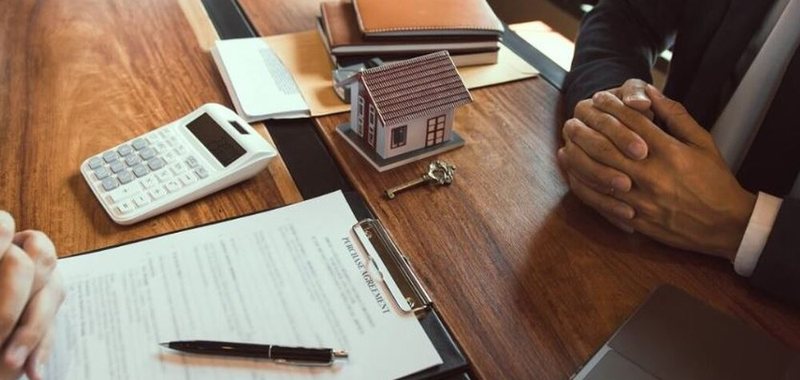
Owners receive financial compensation - Minister of Justice: For over 13 thousand families, the money is transferred to bank accounts
Over 13,000 families will receive financial compensation for their properties from the Property Treatment Agency. In a video message, the Minister of......
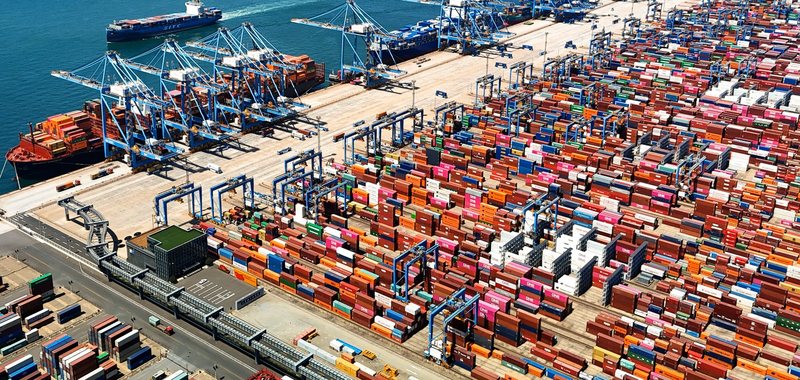
Mexico to raise tariffs on China - President Sheinbaum: We aim to increase domestic production
Mexico's sweeping new tariffs on imports from mainly Asian countries will take effect on Thursday, in a move that will bring Mexico closer to the United......
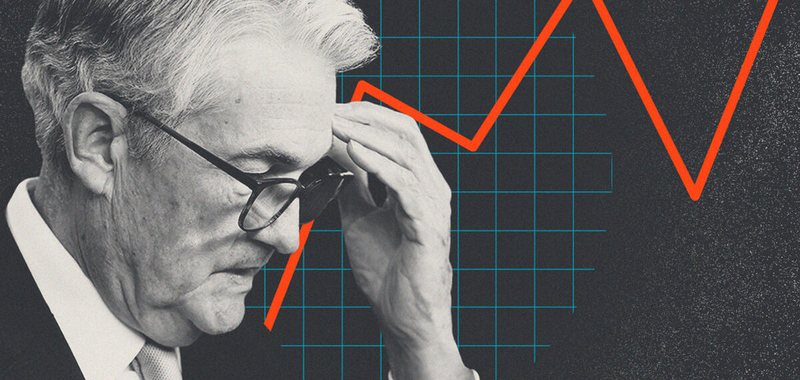
The FED will lower interest rates in 2026 - It is expected to see the performance of the American economy
The US Federal Reserve is signaling that there will be further interest rate cuts, but it will first suspend successive cuts to give officials more time to......

Trump is expected to choose the new Fed chief - Powell threatens again, expected to fire him in January
US President Donald Trump said he would nominate a new Federal Reserve chairman in January, adding that he was considering filing a lawsuit against current......